The “Institutional Excellence Awards” Ceremony – Third Cycle 2025, Monday 12
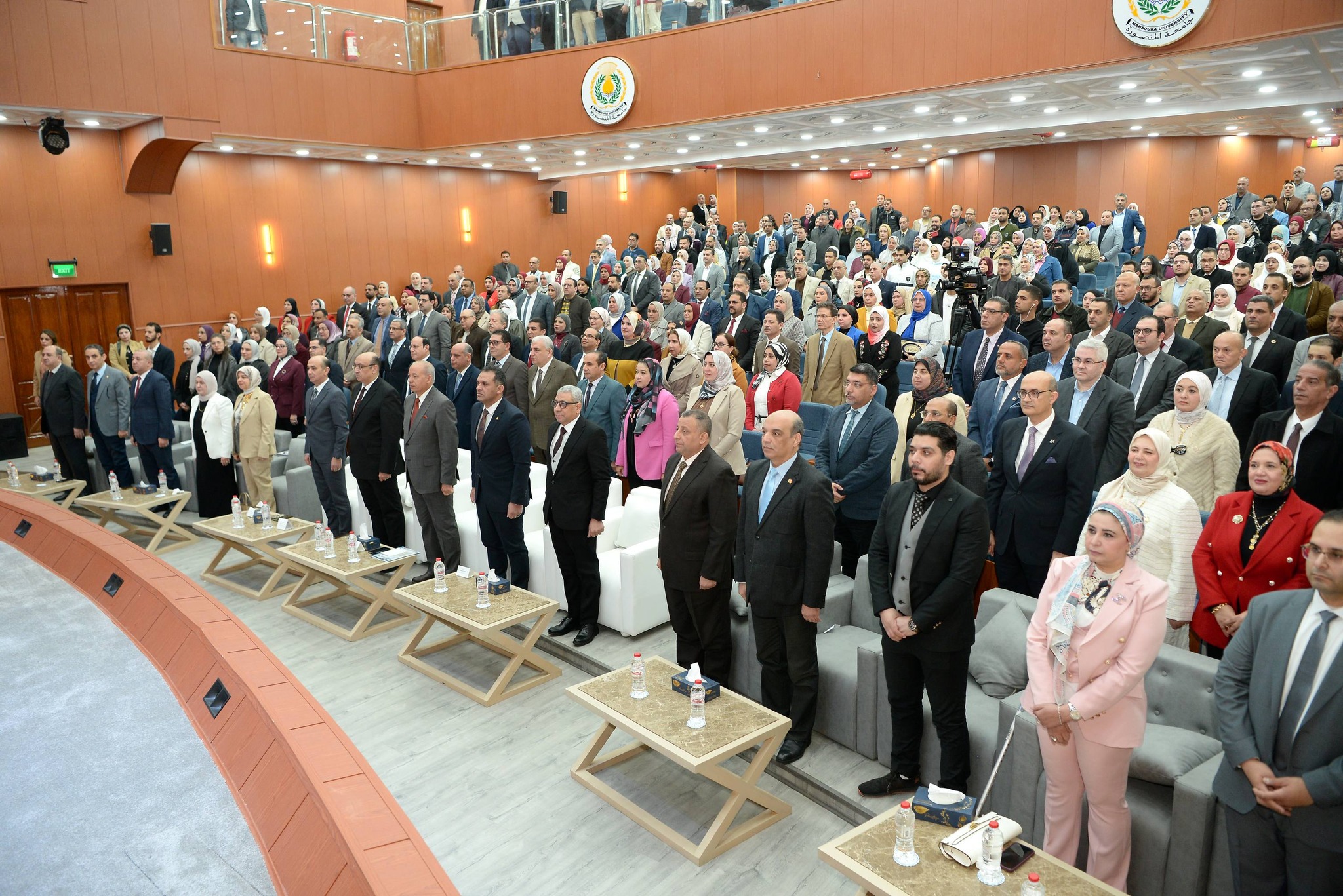
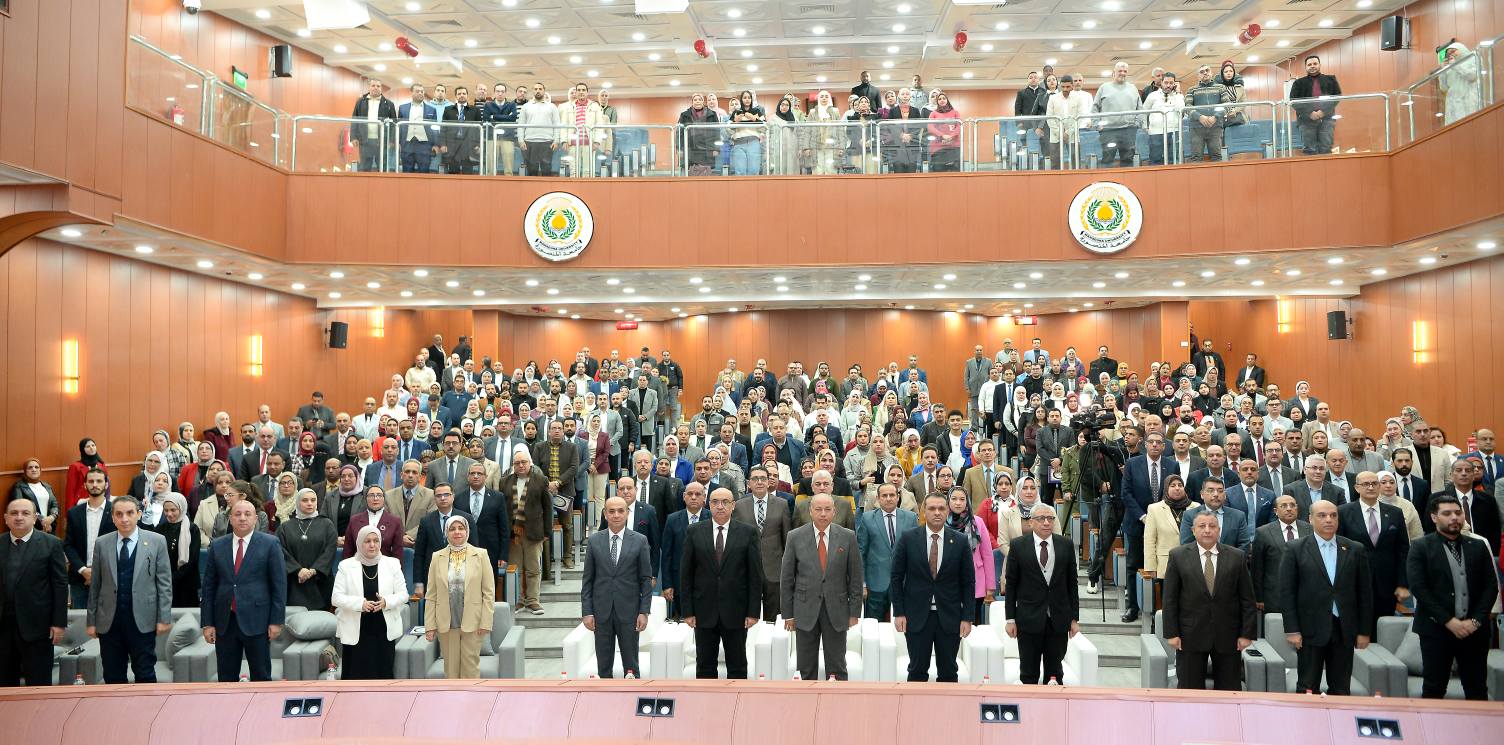
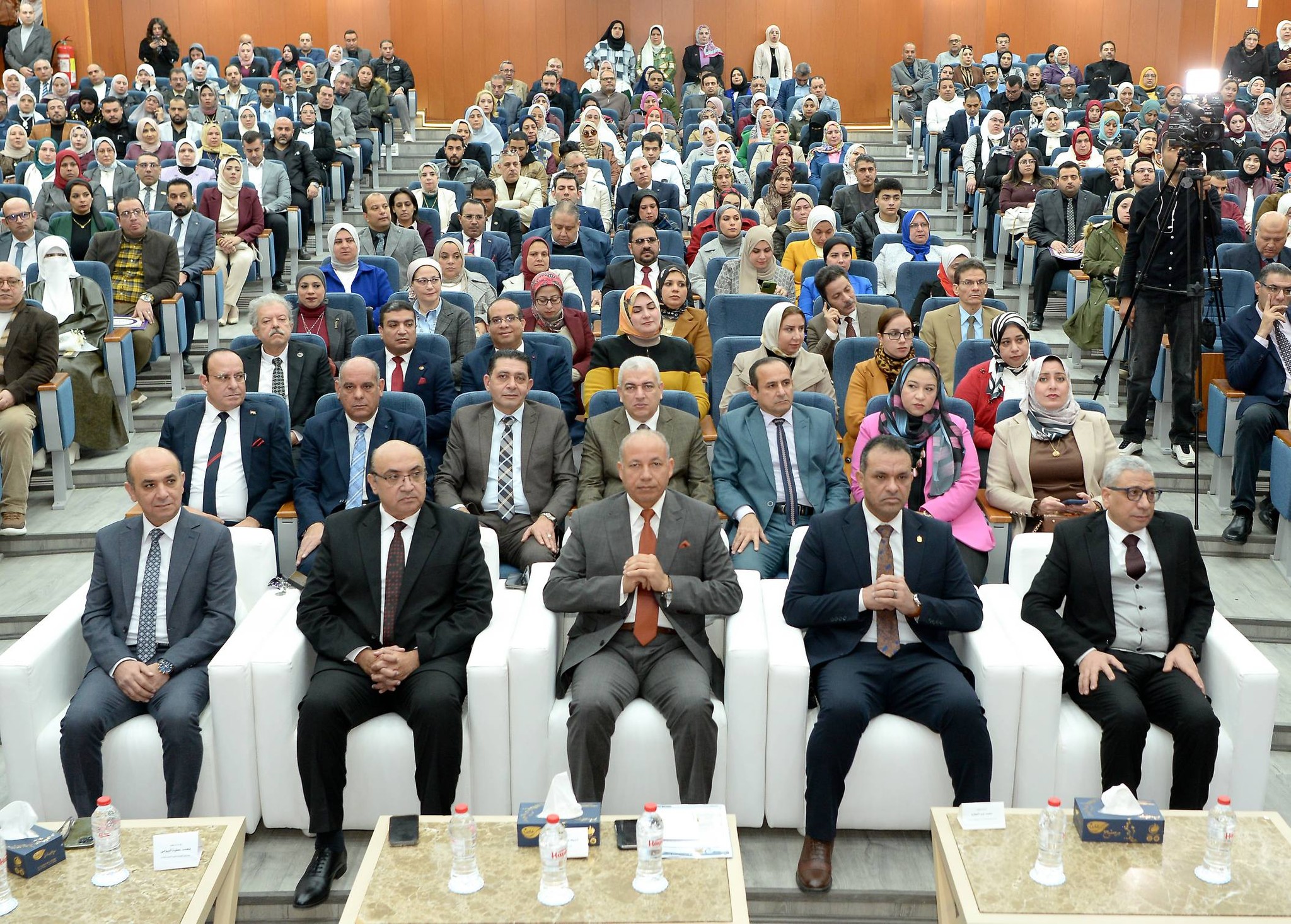
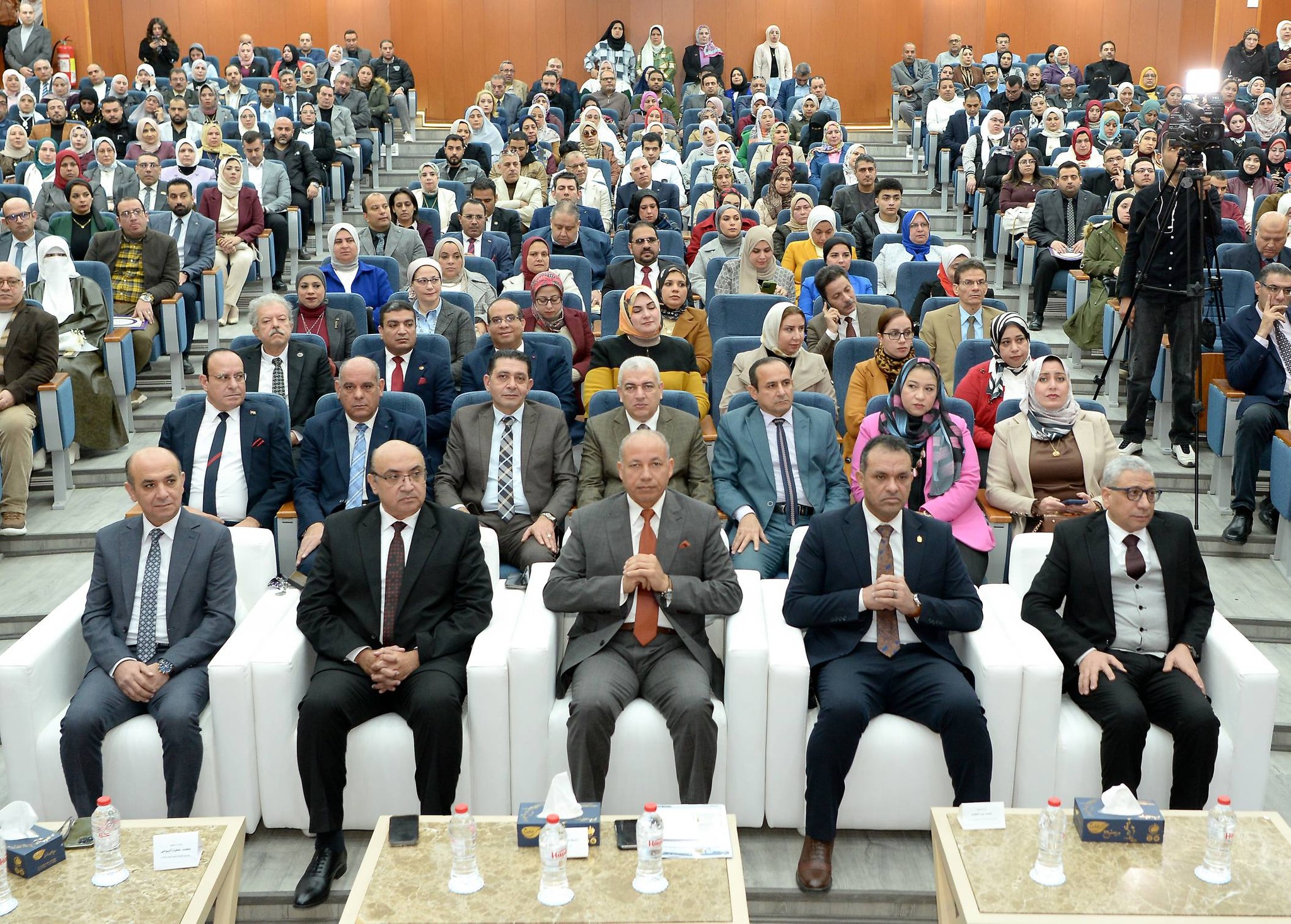
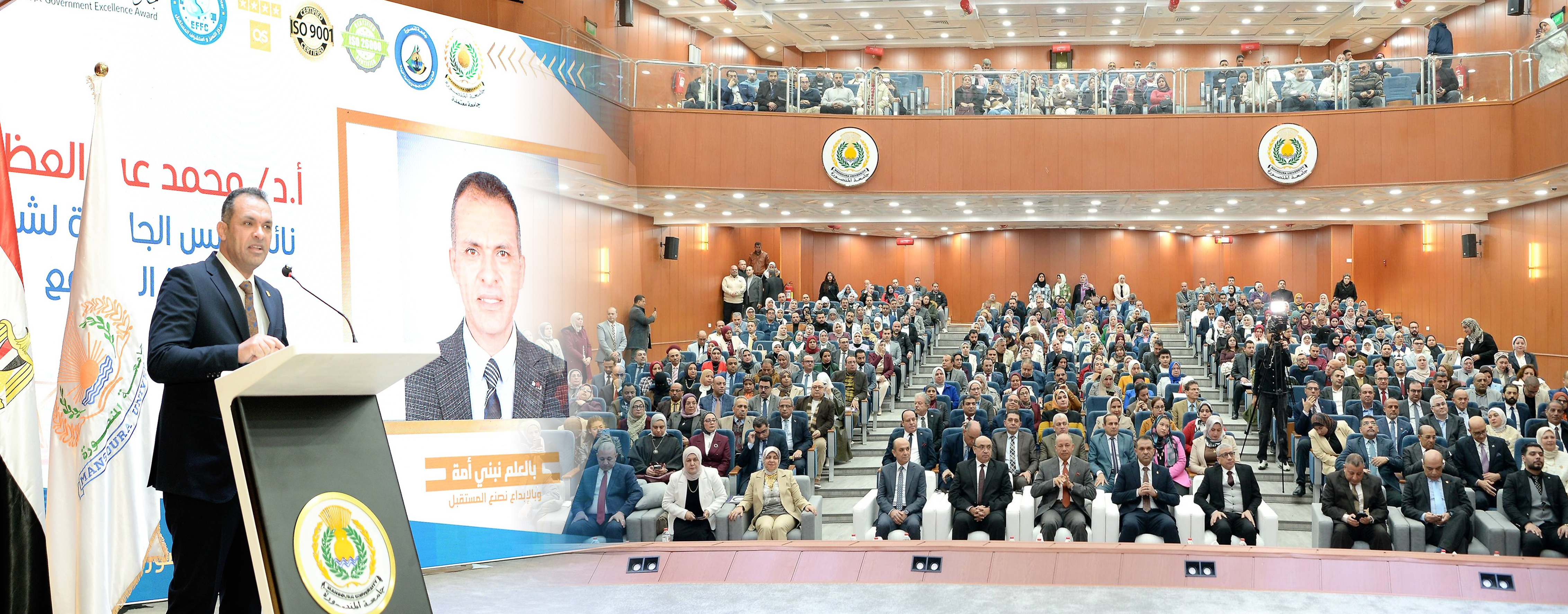
Dr. Sherif Khater, President of Mansoura University, attended the activities of the “Mansoura University Institutional Excellence Awards – Third Cycle 2025,” which was organized by the university on Monday, January 12, 2026, at the Grand Conference Hall in the General Administration Building.
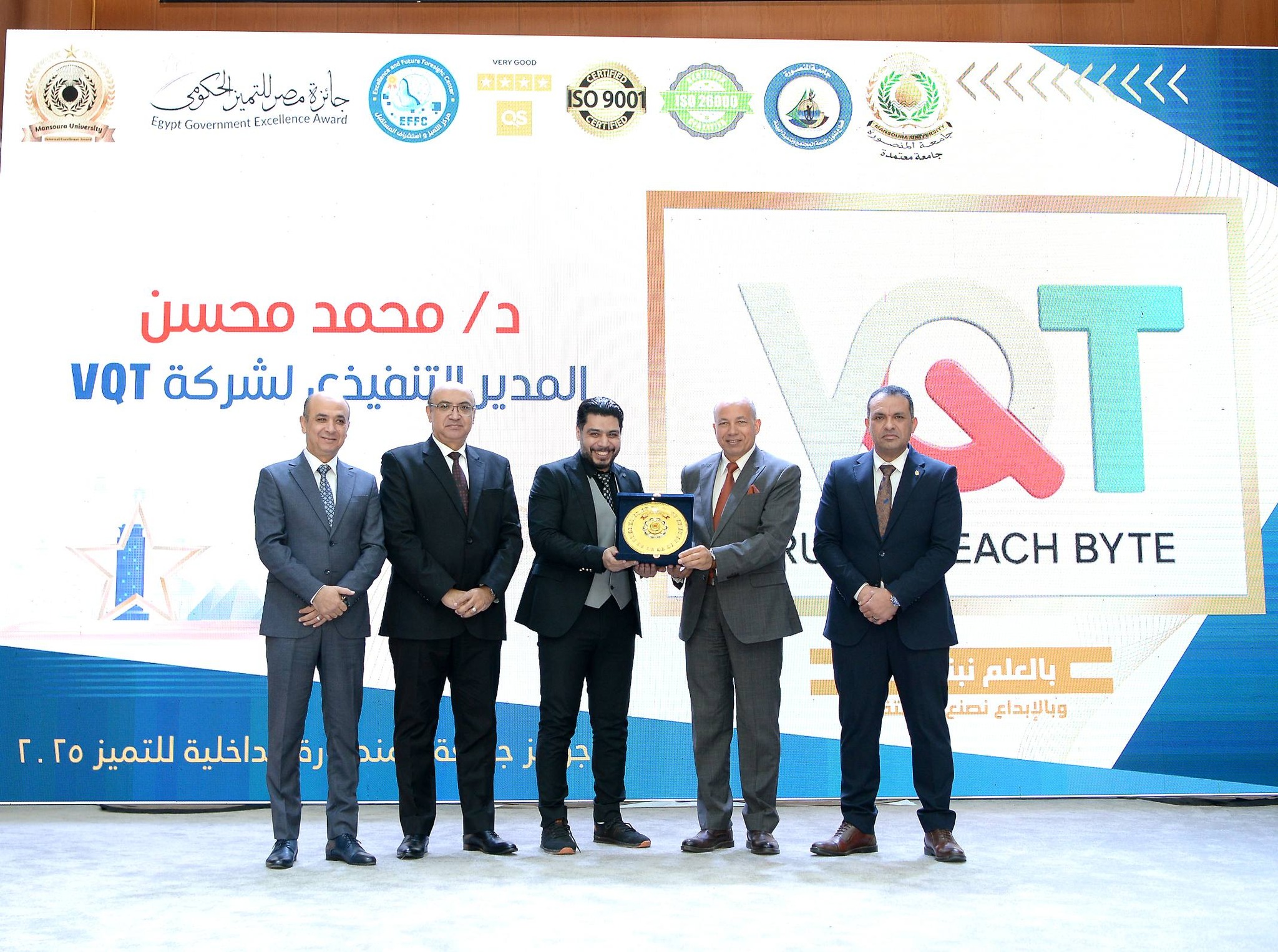
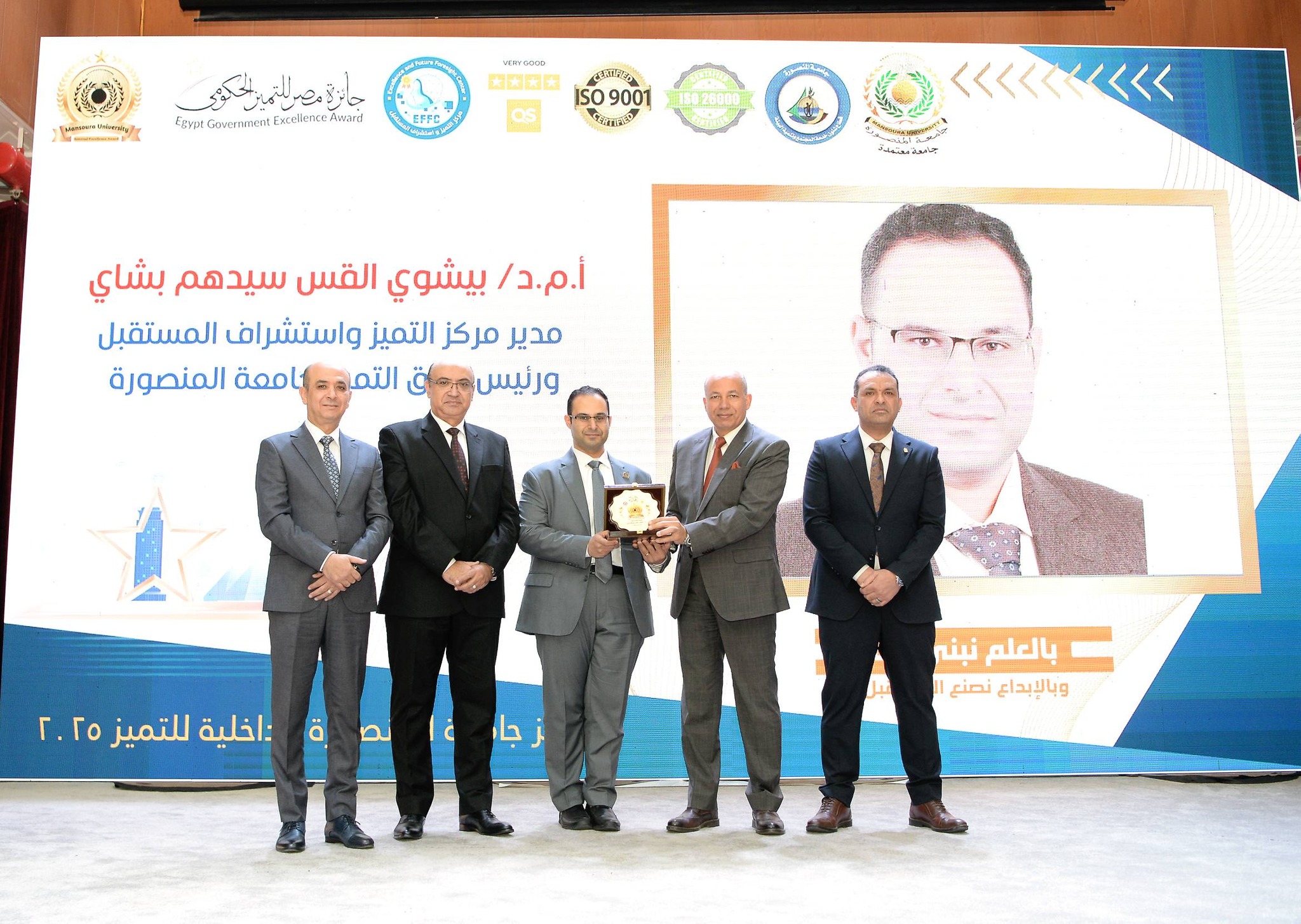
The ceremony was attended by Dr. Mohamed Atiya El-Bayoumi, Vice President for Education and Student Affairs; Dr. Mohamed Abdel Azim, Vice President of the University and Head of the Supreme Committee for Internal Awards; Dr. Tarek Ghaloush, Vice President for Graduate Studies and Research; Mr. Saad Abdel Wahab, Secretary General of the University; in addition to college deans and vice deans, assistant secretaries, Dr. Bishoy El-Qoss Sidhom, Director of the Center of Excellence and Future Foresight and Head of the University Excellence Team, a number of academic and executive leaders, as well as Dr. Mohamed Mohsen, Executive Director of VQT Company, and Dr. Ebtisam, Quality and Accreditation Consultant.
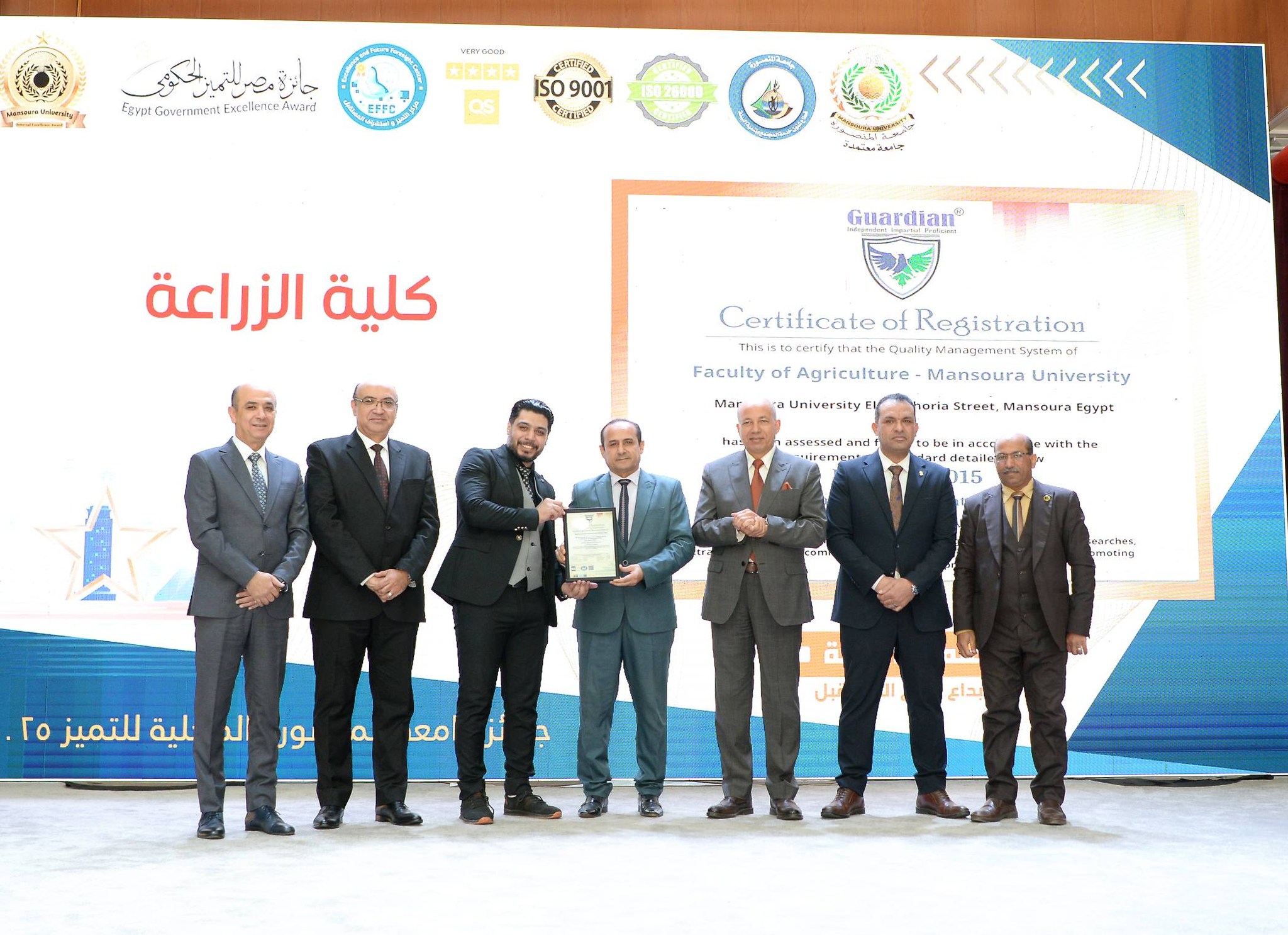
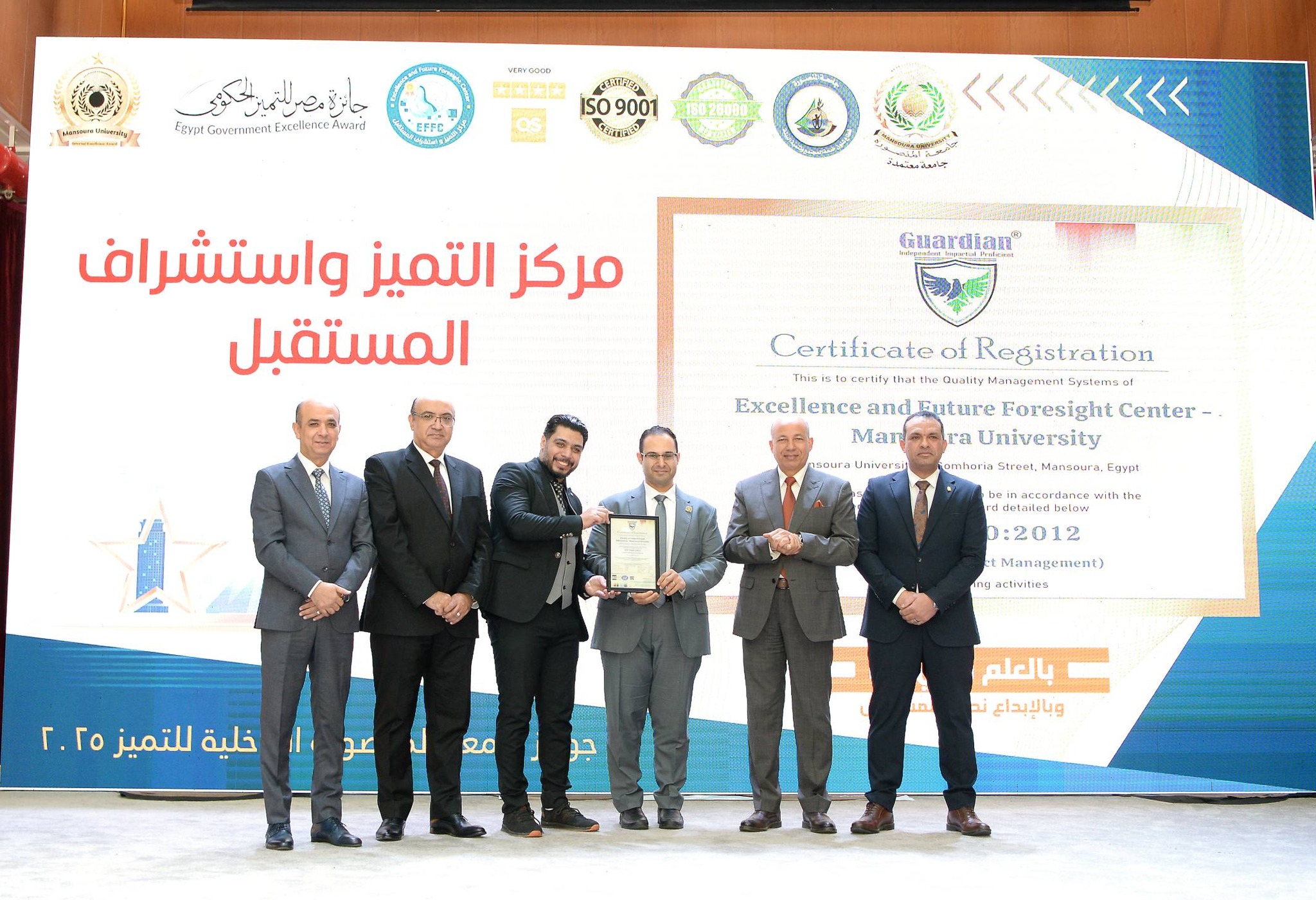
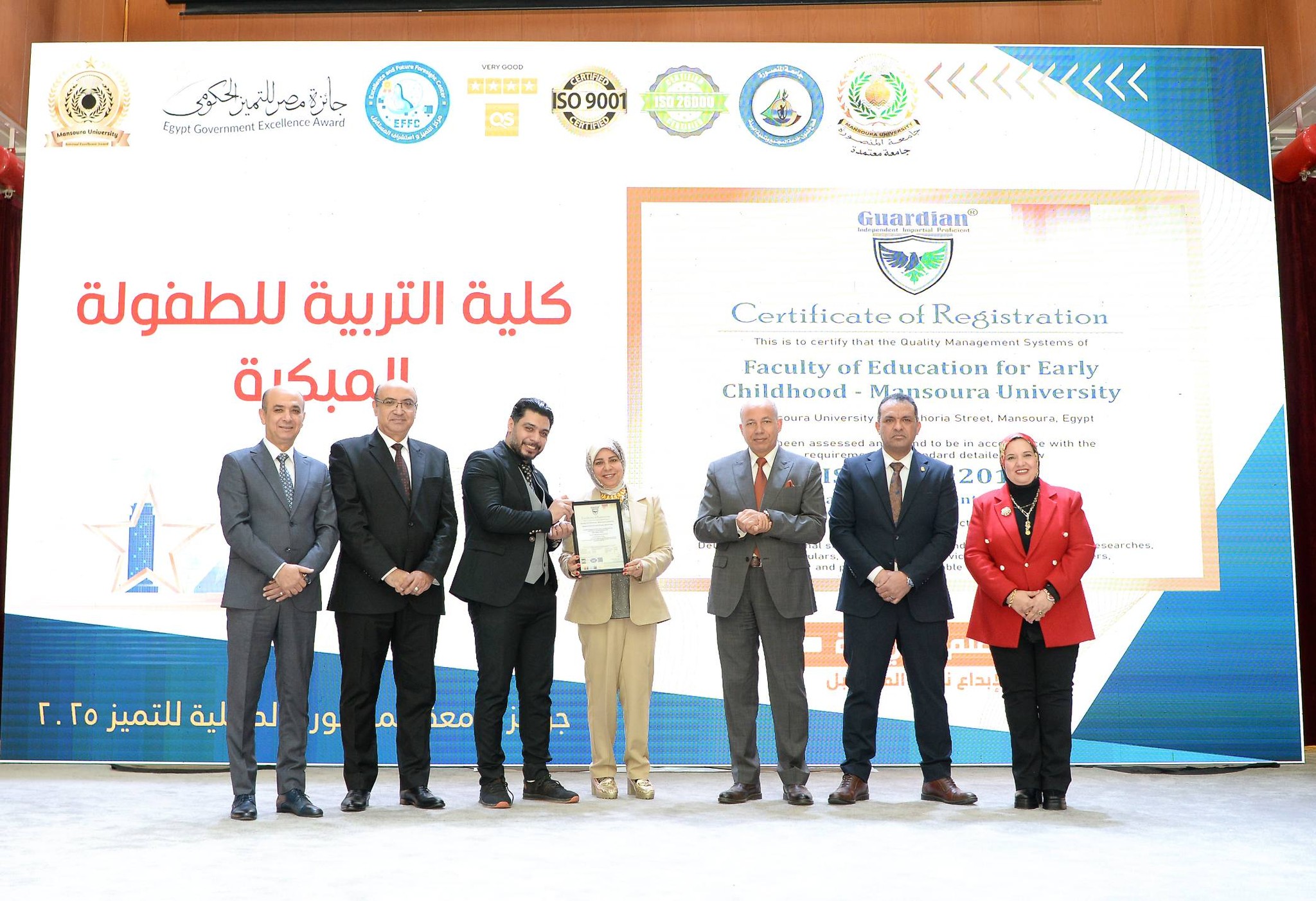
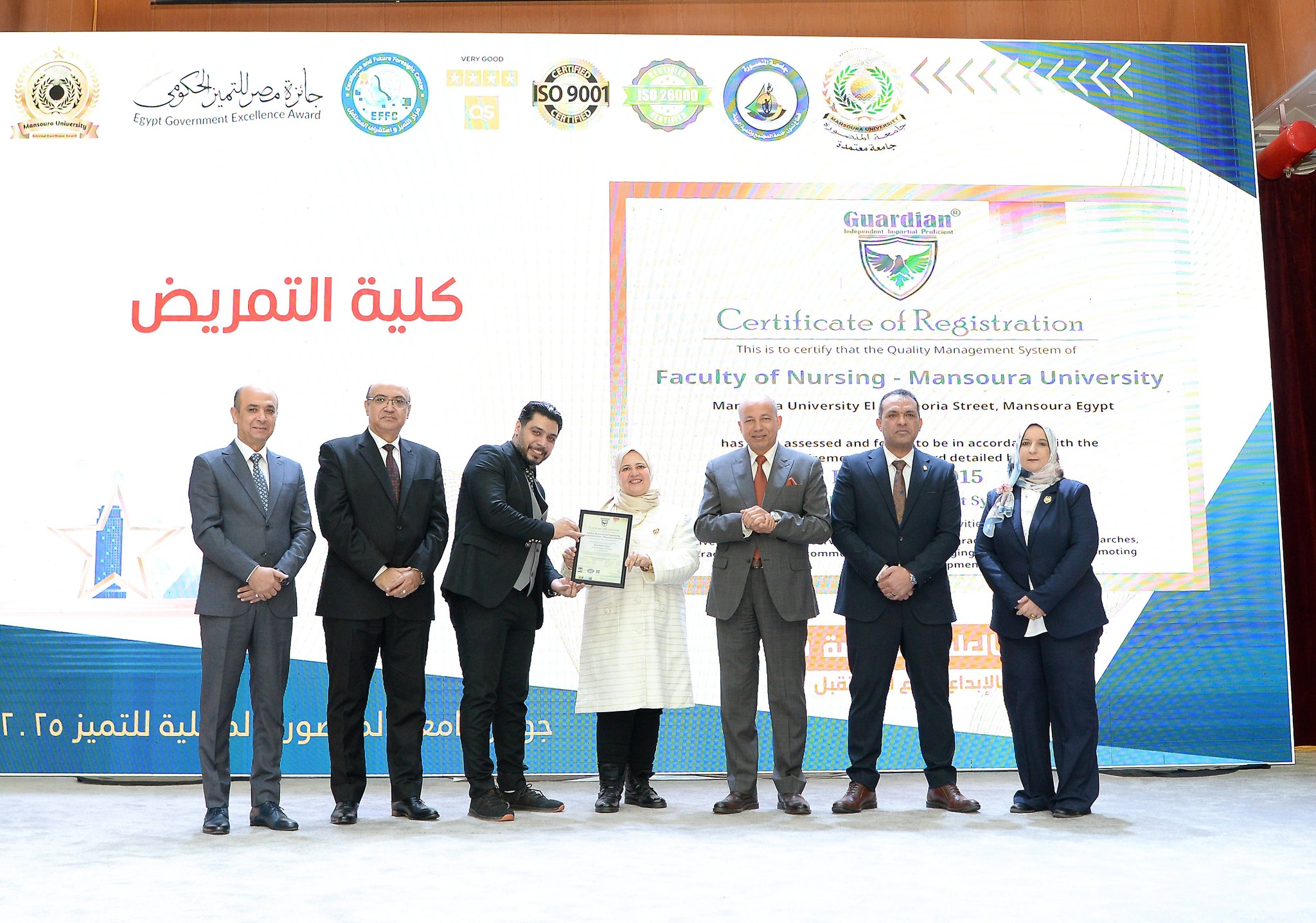
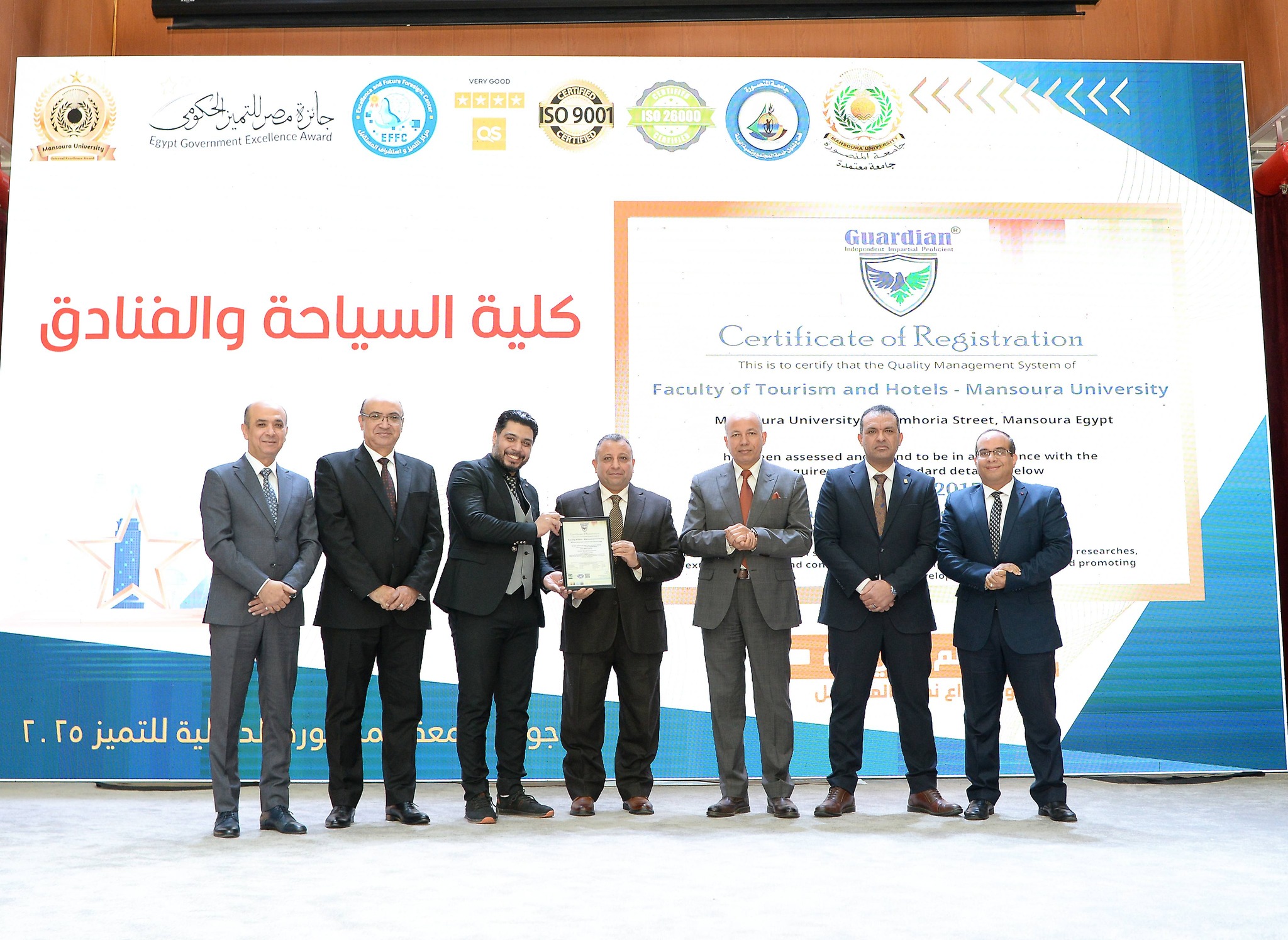
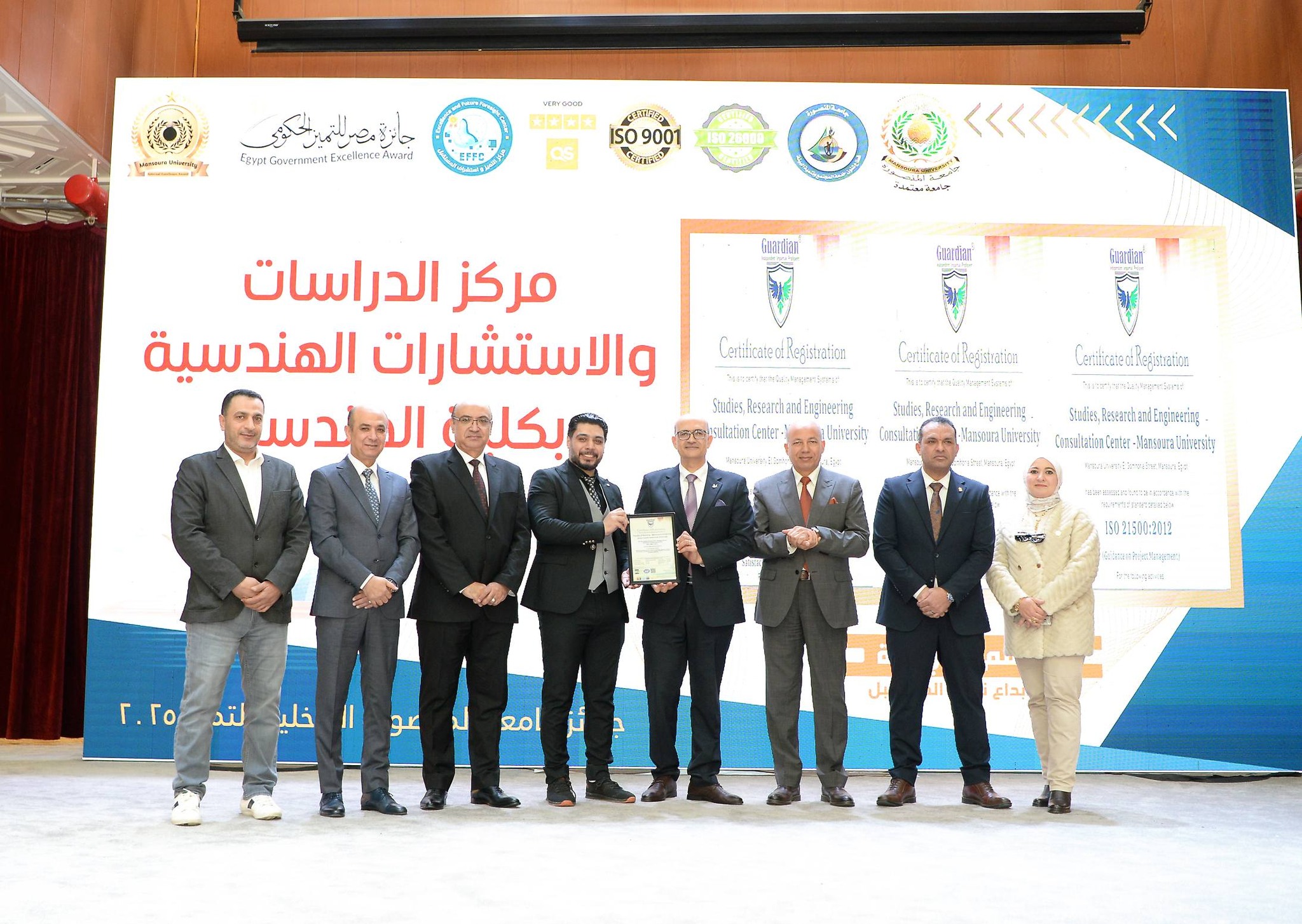
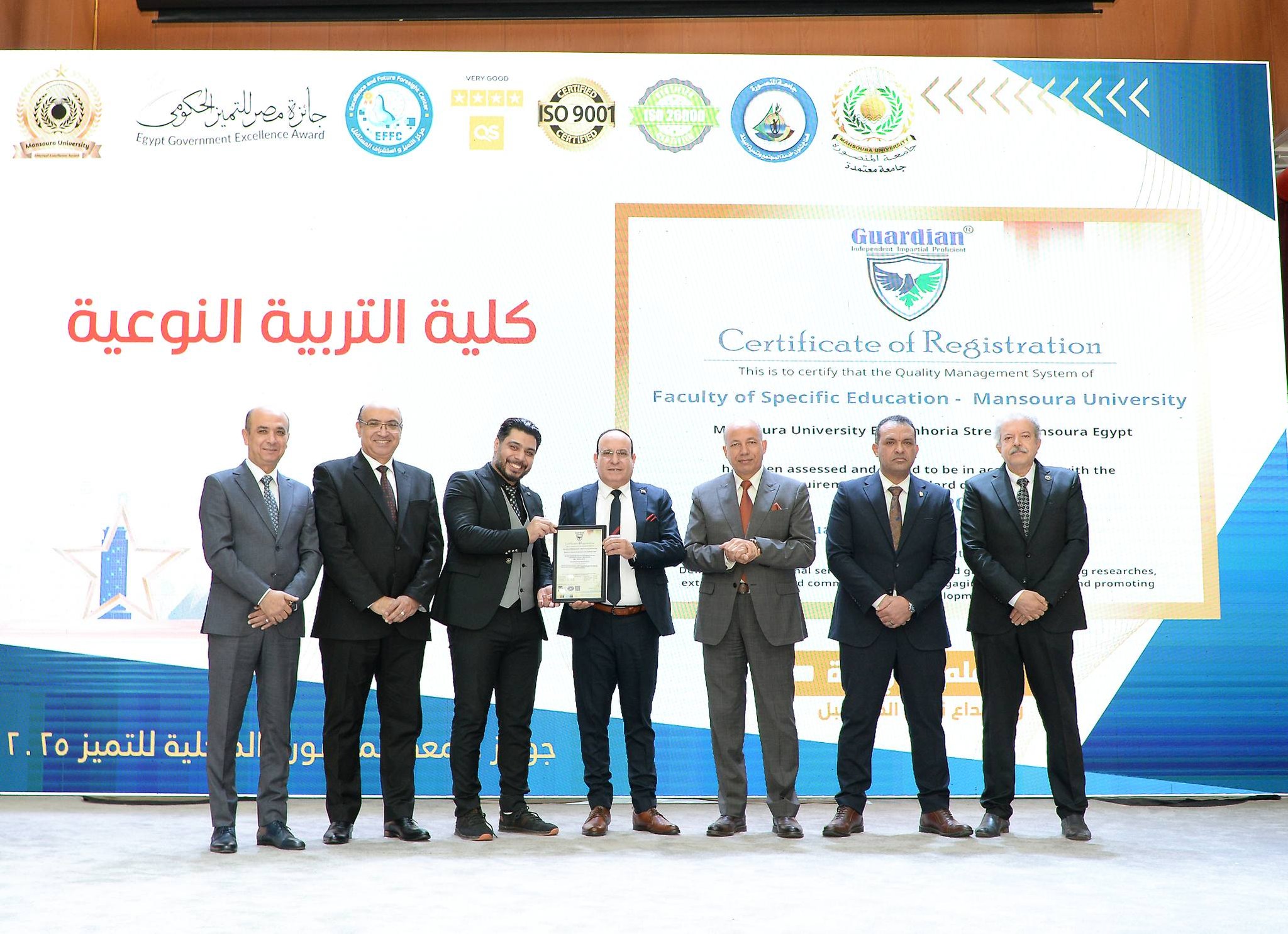
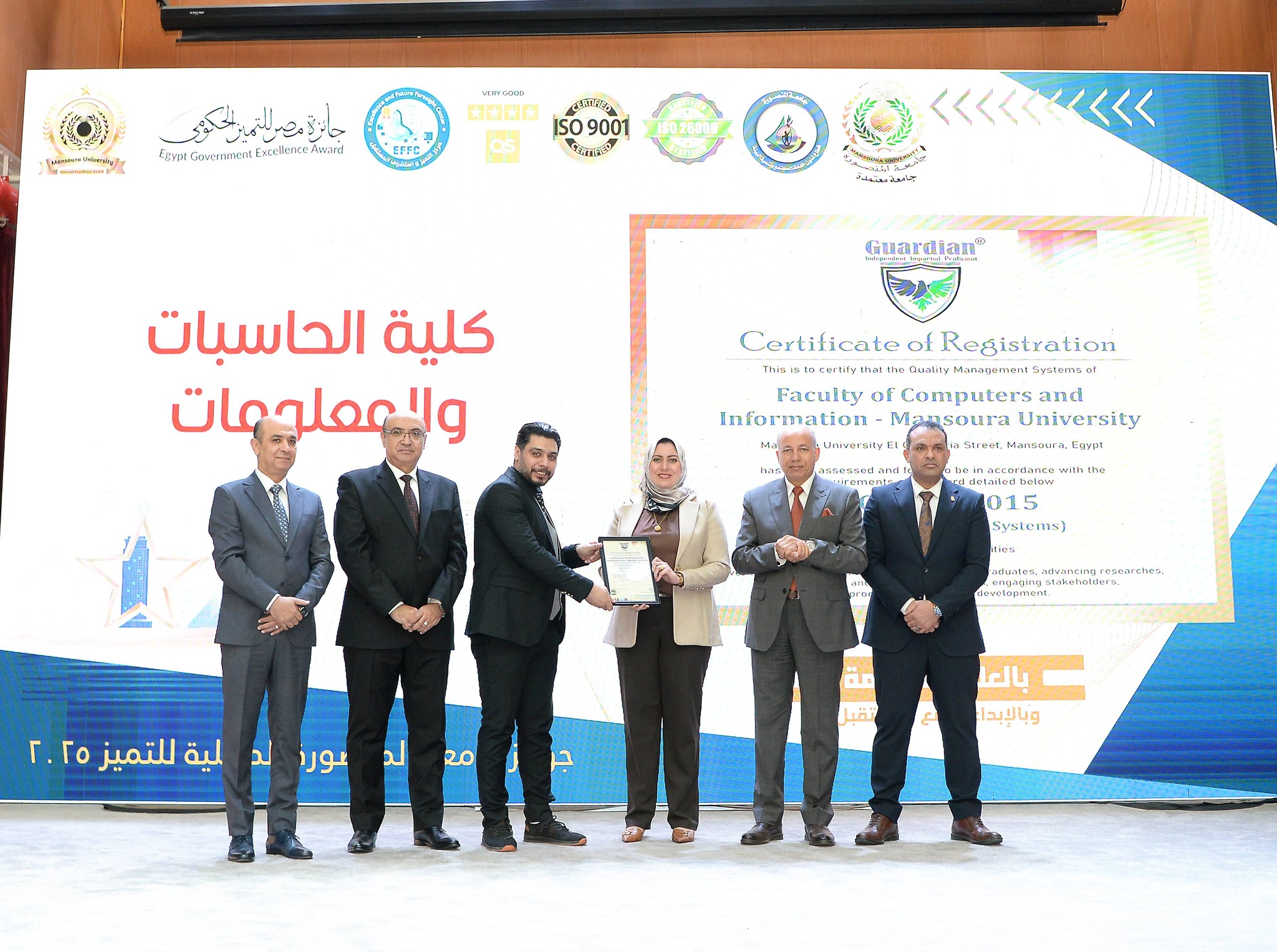
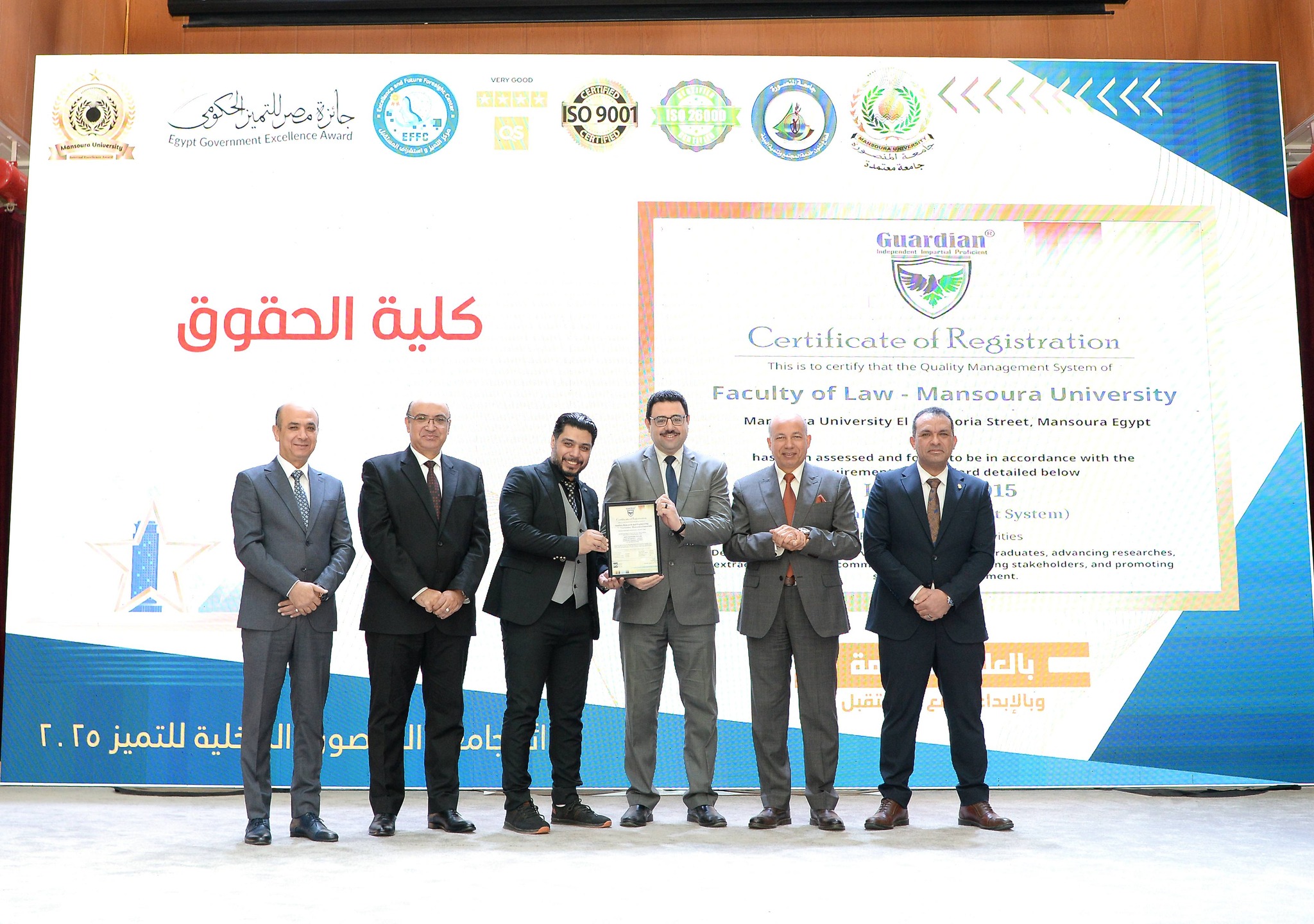
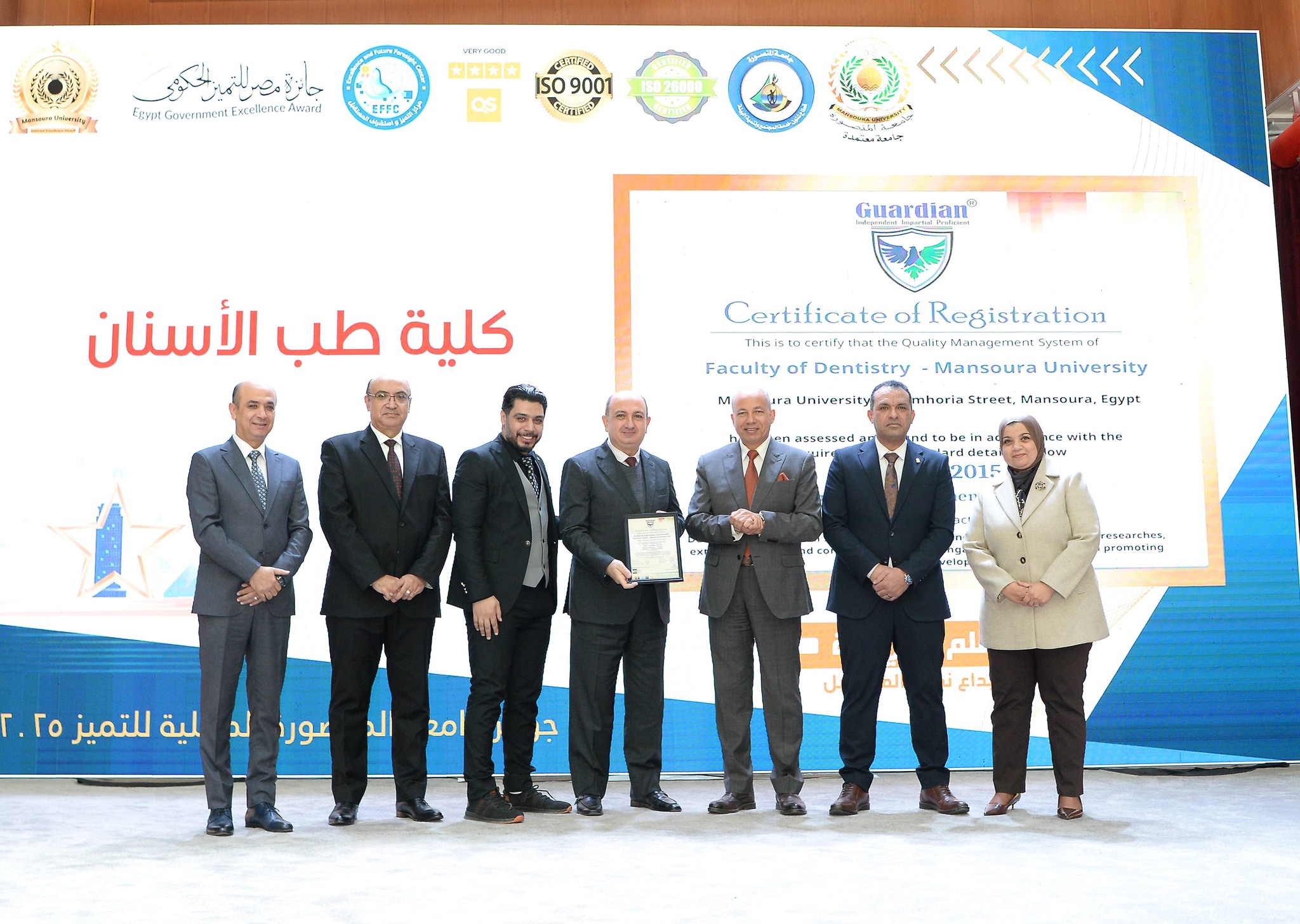
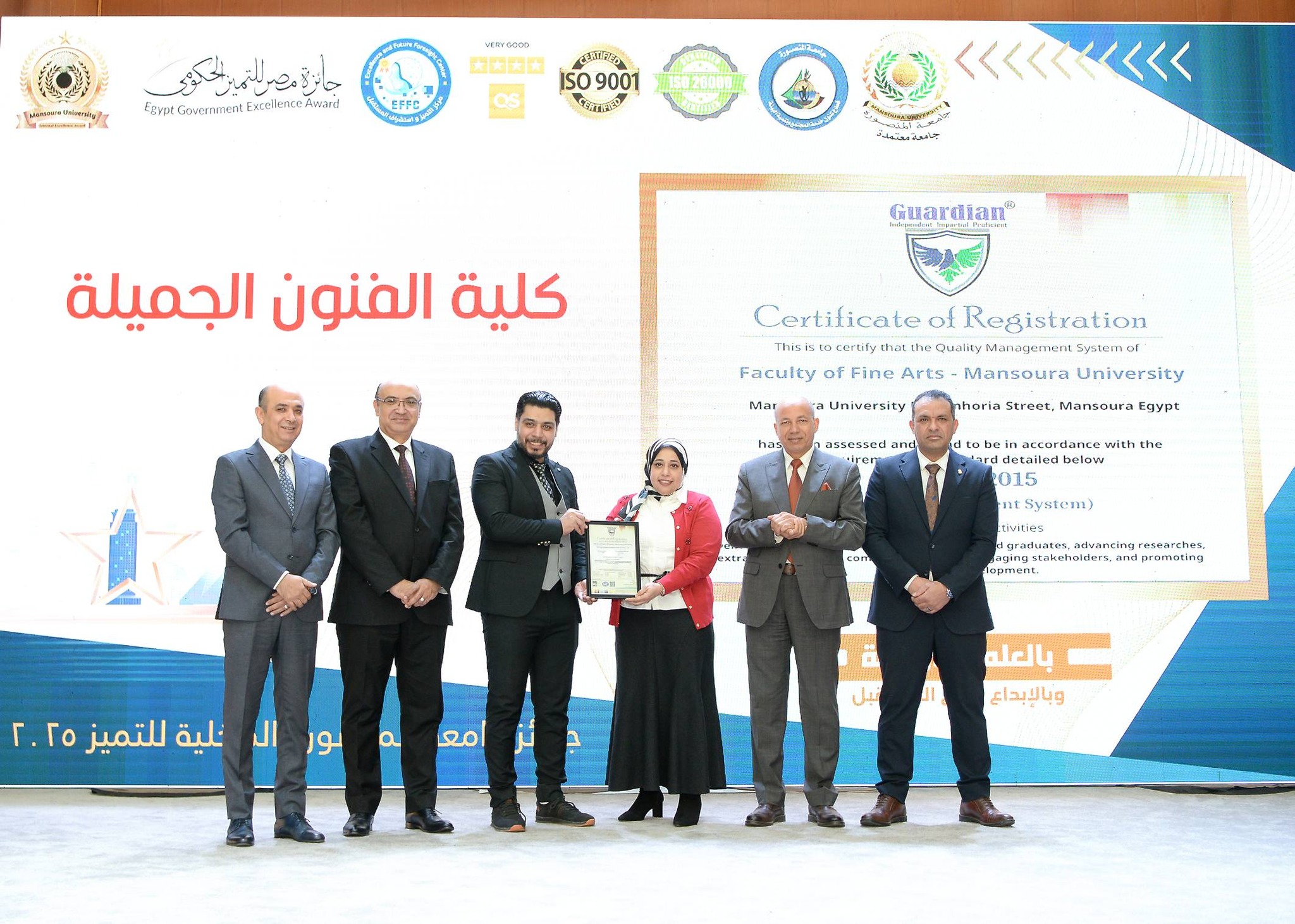
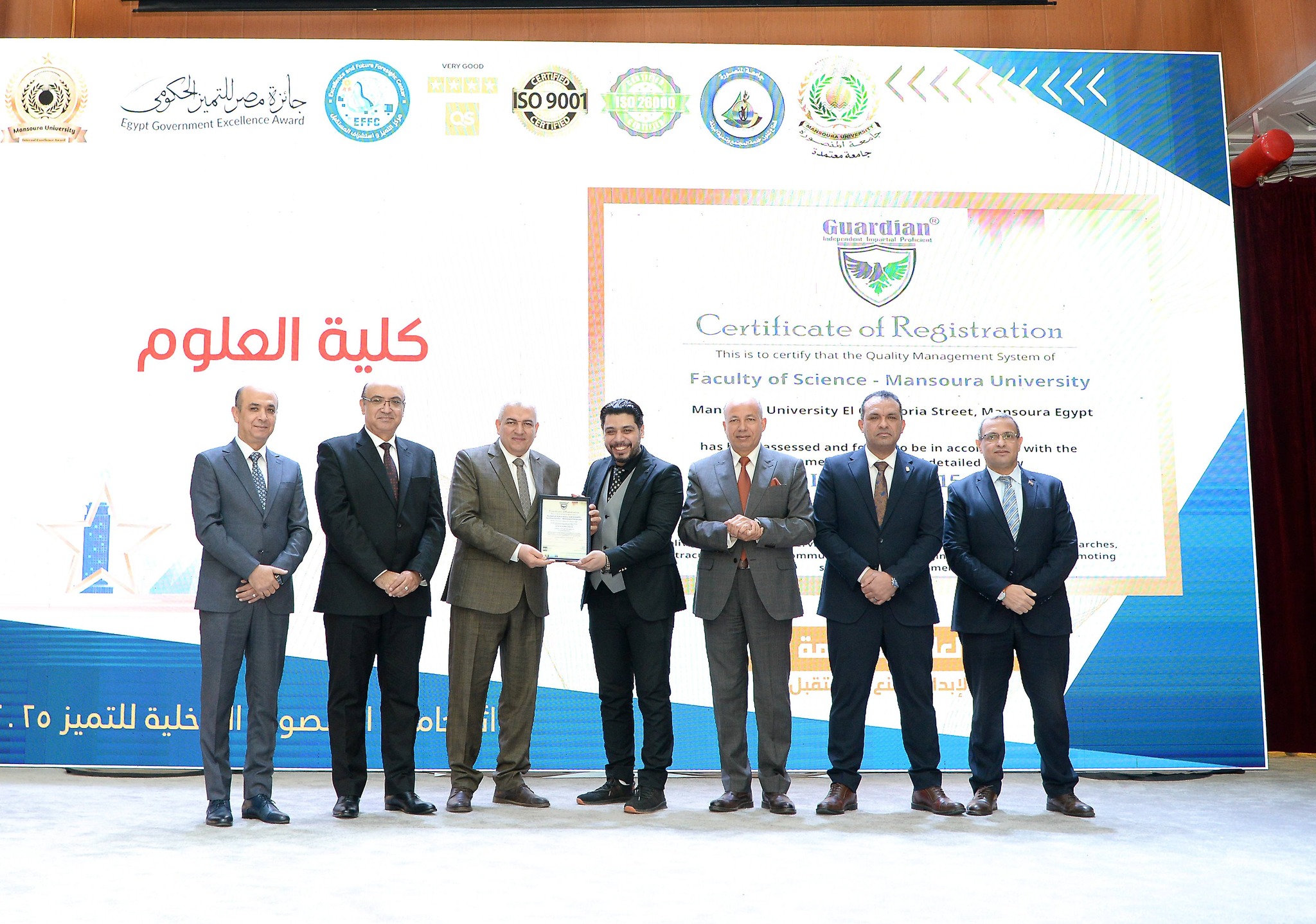
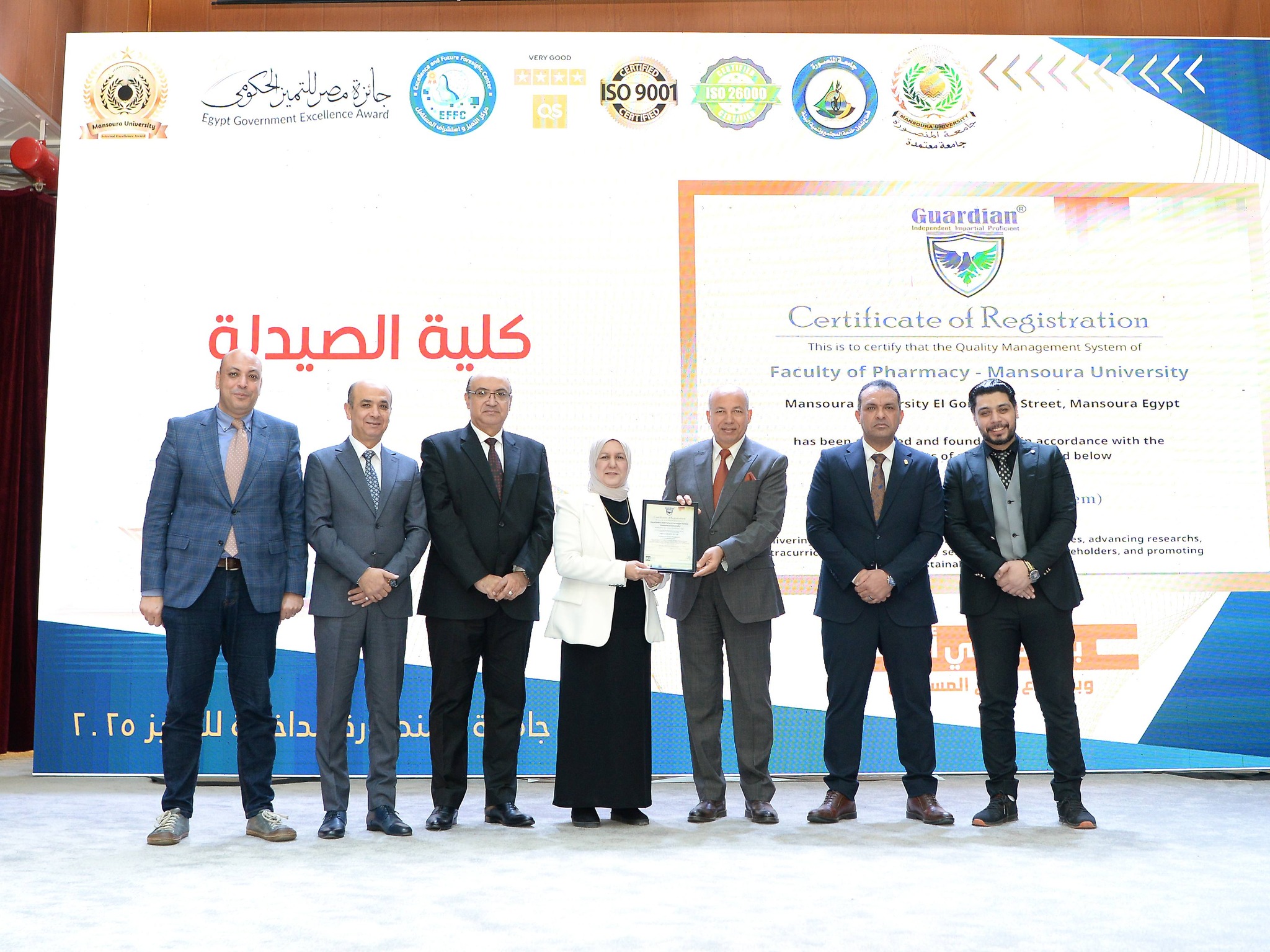
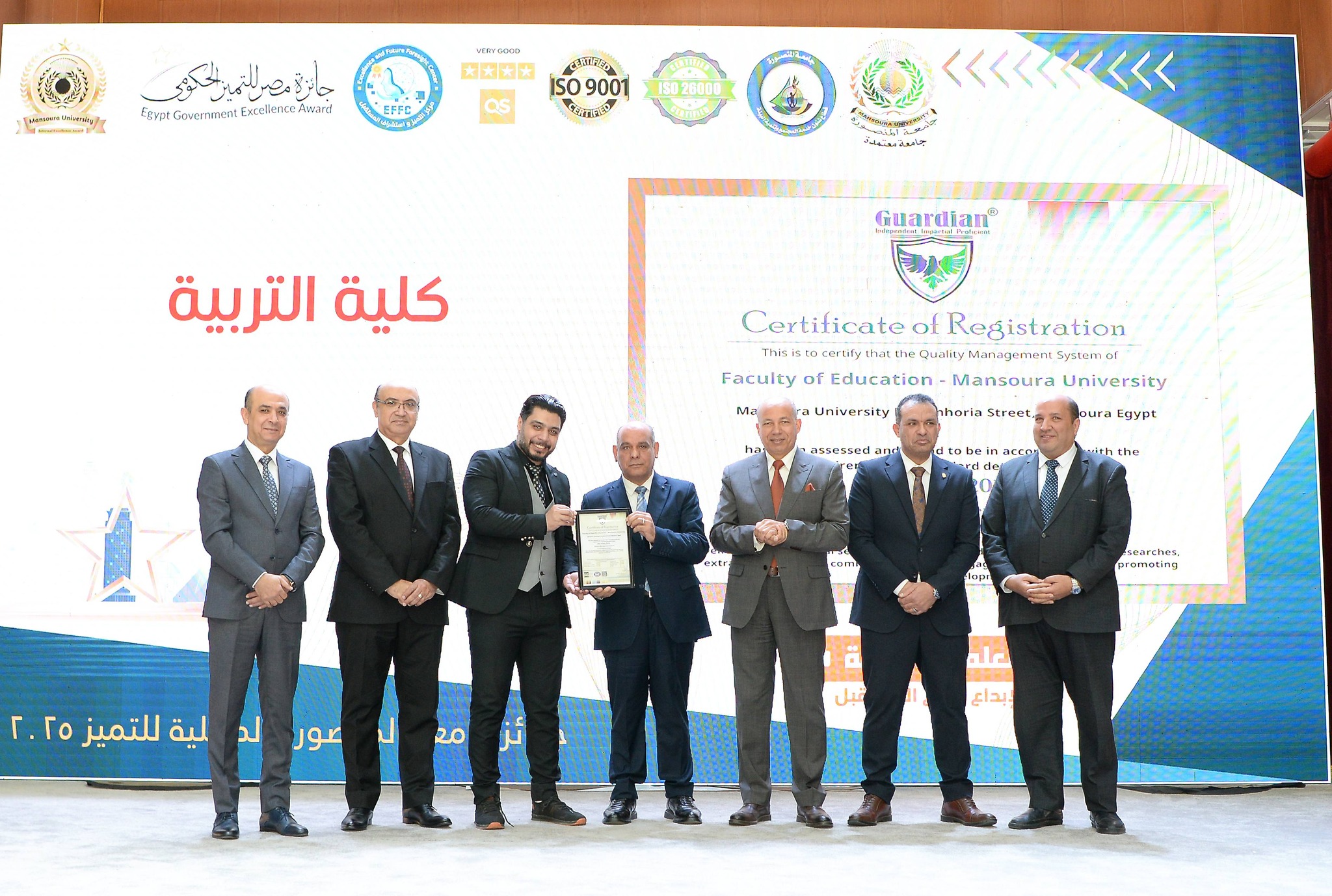
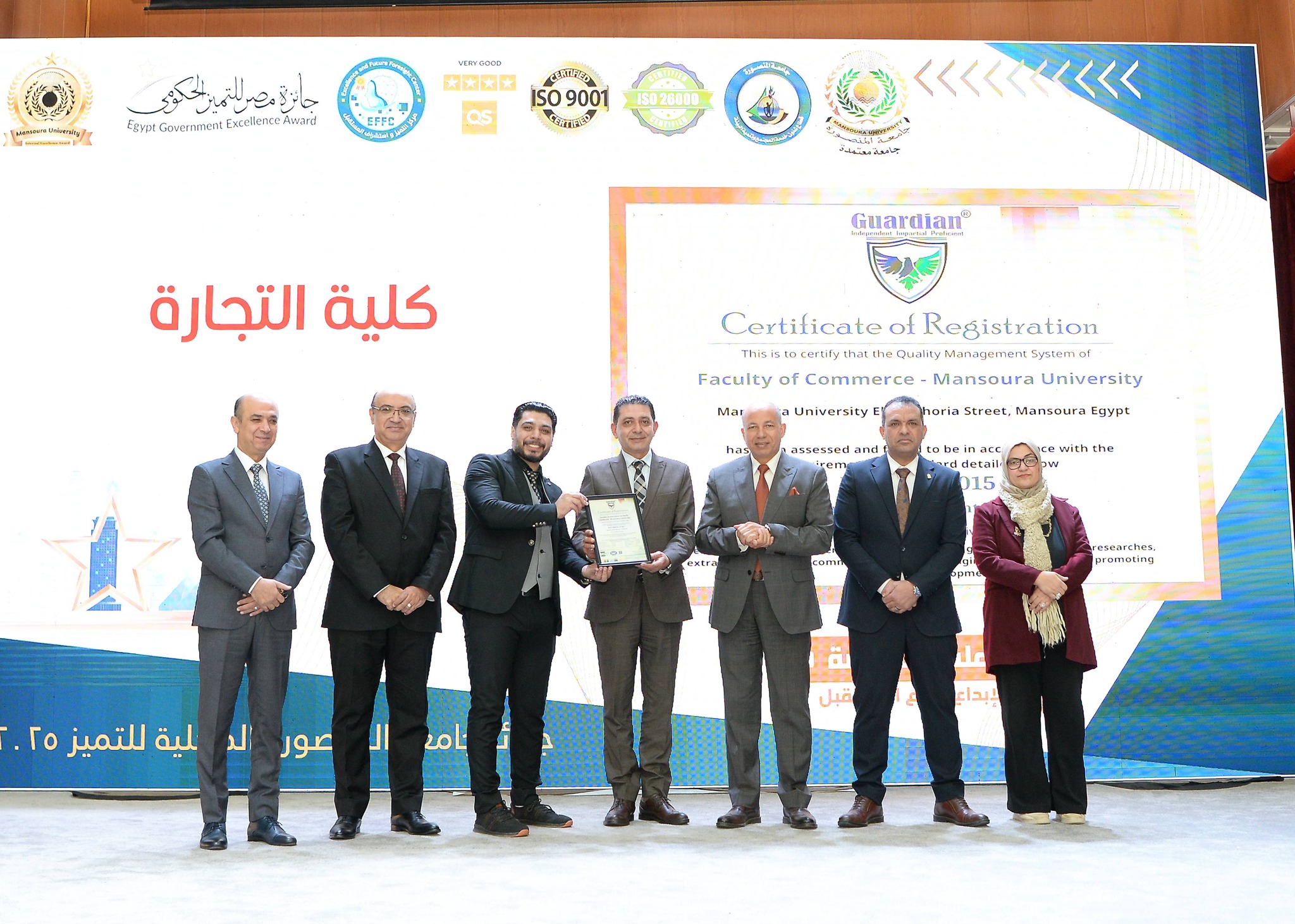
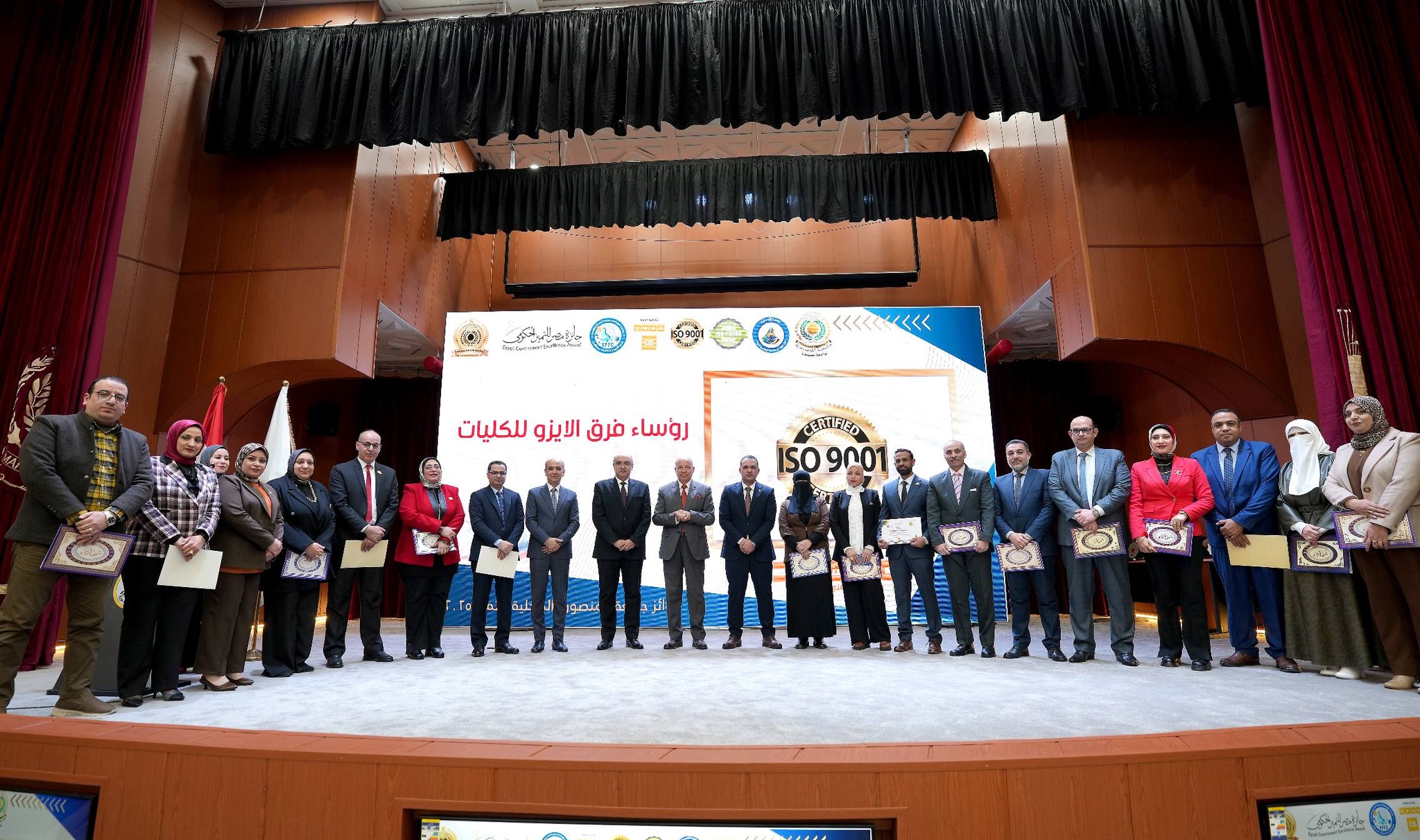
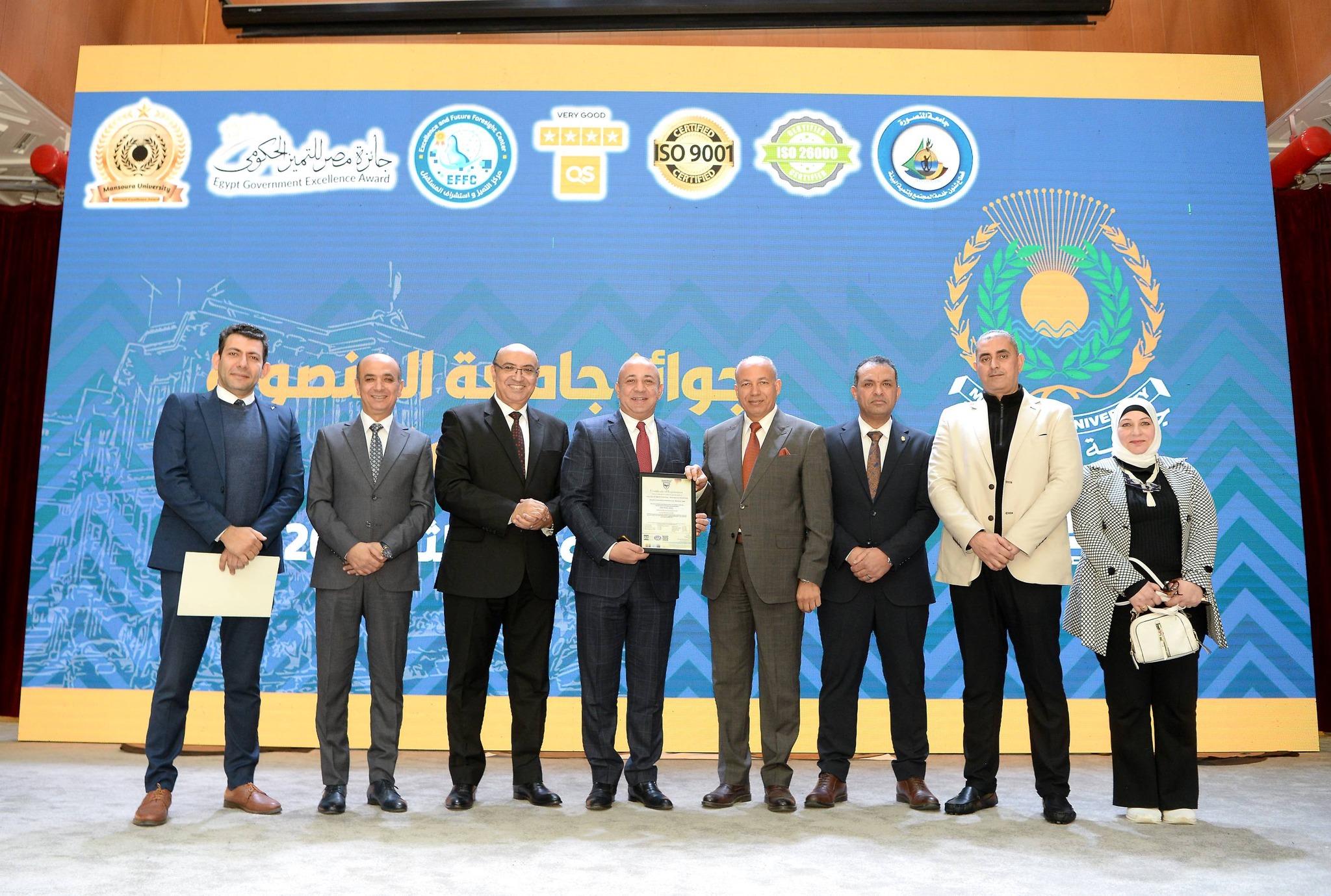
The organization of the ceremony comes within the framework of Mansoura University’s keenness to consolidate a culture of institutional excellence, honor distinguished models among its staff, and award international ISO 9001 quality certificates to 16 accredited faculties, in addition to the Center for Engineering Studies and Consultations and the Center for Technical and Laboratory Services. The Center of Excellence and Future Foresight also obtained ISO 21500 certification.
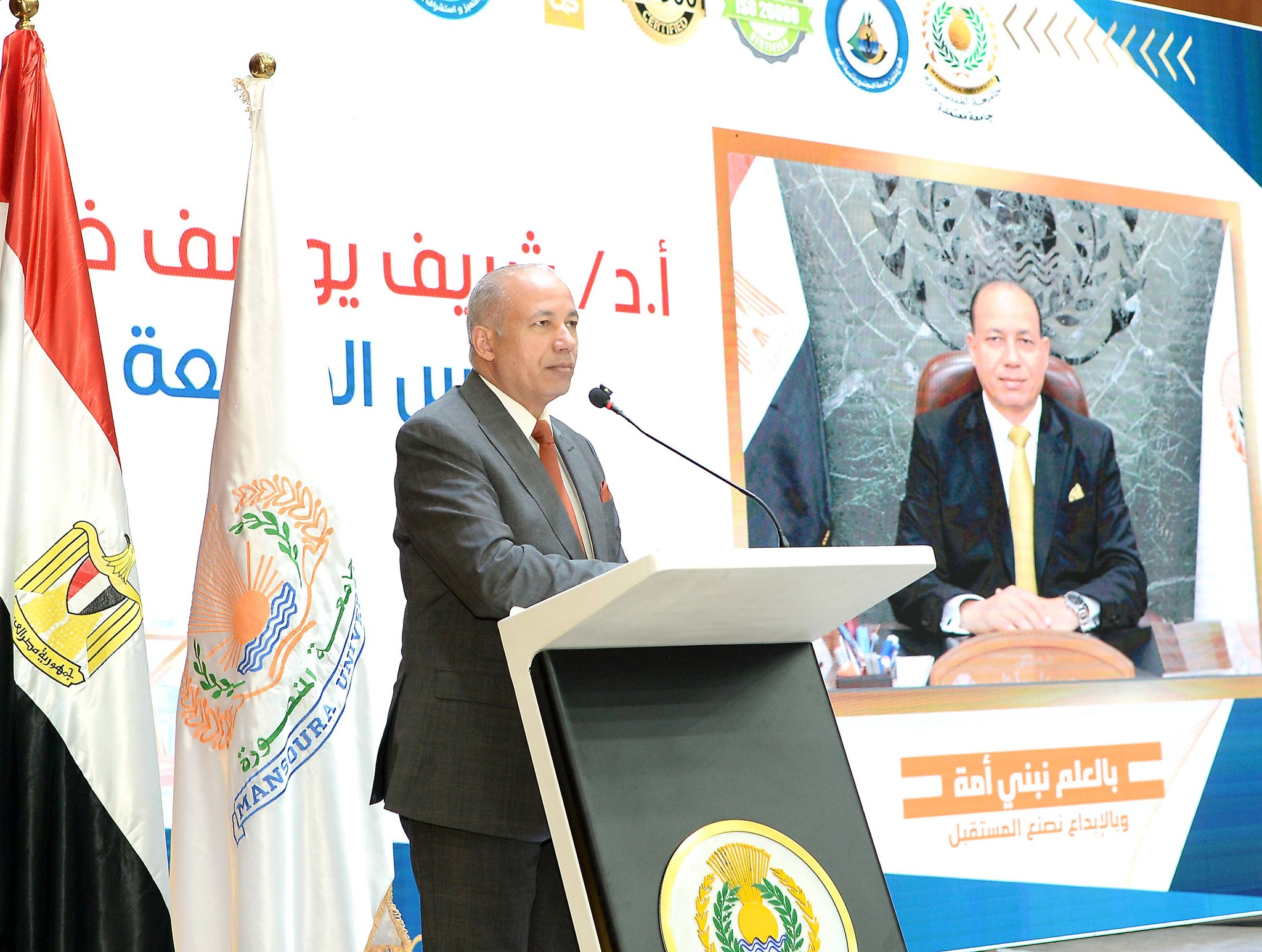
In his speech, Dr. Sherif Khater affirmed that this day “represents an unprecedented leap for a venerable university with a history of more than fifty years,” noting that the quality and excellence file is among the strongest areas in which the university has achieved tangible success, especially since the launch of the first edition of governmental excellence. He extended his thanks to the distinguished work teams and their effective role in supporting the excellence system, as well as to the Egypt Government Excellence Award administration, all evaluation teams, and the company granting the ISO certificates.
The University President explained that work was carried out over six months through a comprehensive plan to qualify all university faculties, adding that the university “does not suffice with obtaining certificates, but rather follows up on the actual implementation of procedures throughout the year.” He emphasized that all education sectors and university hospitals operate “under a unified system of governance, transparency, and non-discrimination in service delivery.”
He pointed out that Mansoura University is among the leading universities in the field of governmental excellence and has obtained the largest number of excellence certificates, noting that the Faculty of Engineering won first place among 508 faculties nationwide in the Egypt Government Excellence Award in 2023, in addition to the selection of five Mansoura University faculties among the top ten faculties in Egypt.
Dr. Sherif Khater confirmed that the university is preparing to advance five faculties this year—Engineering, Medicine, Pharmacy, Dentistry, and Veterinary Medicine—to compete for the Egypt Government Excellence Award, adding that the university “does not view ISO accreditation as an end, but rather as the beginning of a new phase of strict commitment to quality standards.”
He stressed that the university will continue periodic follow-up of all procedures applied within faculties and university hospitals to ensure the sustainability of governance, transparency, and equal opportunities in providing educational and medical services, affirming that this achievement reflects the unity of all university sectors and demonstrates their ability to work with a one-team spirit.
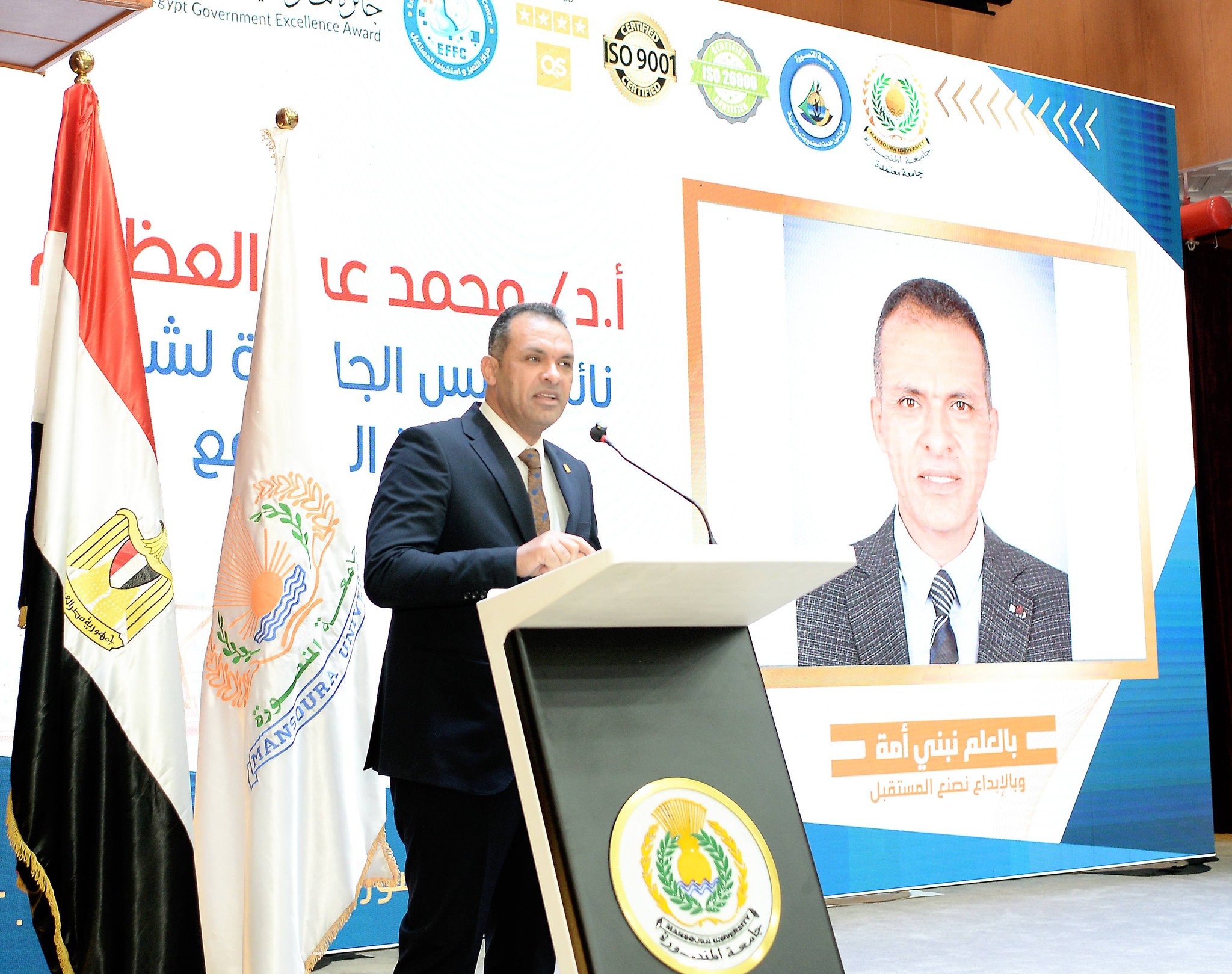
For his part, Dr. Mohamed Abdel Azim affirmed that “the team that creates success must have continuity,” referring to the university’s figures who laid the foundations of this approach, foremost among them Dr. Mounir Abdel Razek, Dr. Mohamed Ghoneim, the pioneer of kidney transplantation, and Dr. Hisham Salam.
He explained that the university relies on “horizontal mobility” to train and qualify the largest possible number of cadres to compete at the national and Arab levels, stressing that institutional work “is not linked to individuals; rather, the entity creates individuals, and the ideas created by individuals are what build entities.”
He pointed out that each faculty has a solid administrative system with the highest level of efficiency, emphasizing that the ISO system must be practiced in reality and not remain merely a certificate, and that “the Excellence Award creates generations capable of assuming responsibility within an entity of this size.”
He added that the achieved accomplishment “is the result of collective institutional work not linked to individuals, but based on a strong entity that shapes its members and produces leaders capable of competing at the national and Arab levels,” clarifying that the university operates under a horizontal training and qualification system aimed at preparing qualified cadres to participate in the national excellence award in its fourth and fifth cycles, and that institutional excellence awards “represent a real factory for building generations and establishing institutions capable of sustainability.”
In his presentation, Dr. Bishoy El-Qoss explained that the idea of generalizing ISO certificates began on June 25, 2025, after the university obtained ISO 9001 certification, following a direct directive from the University President to qualify all faculties.
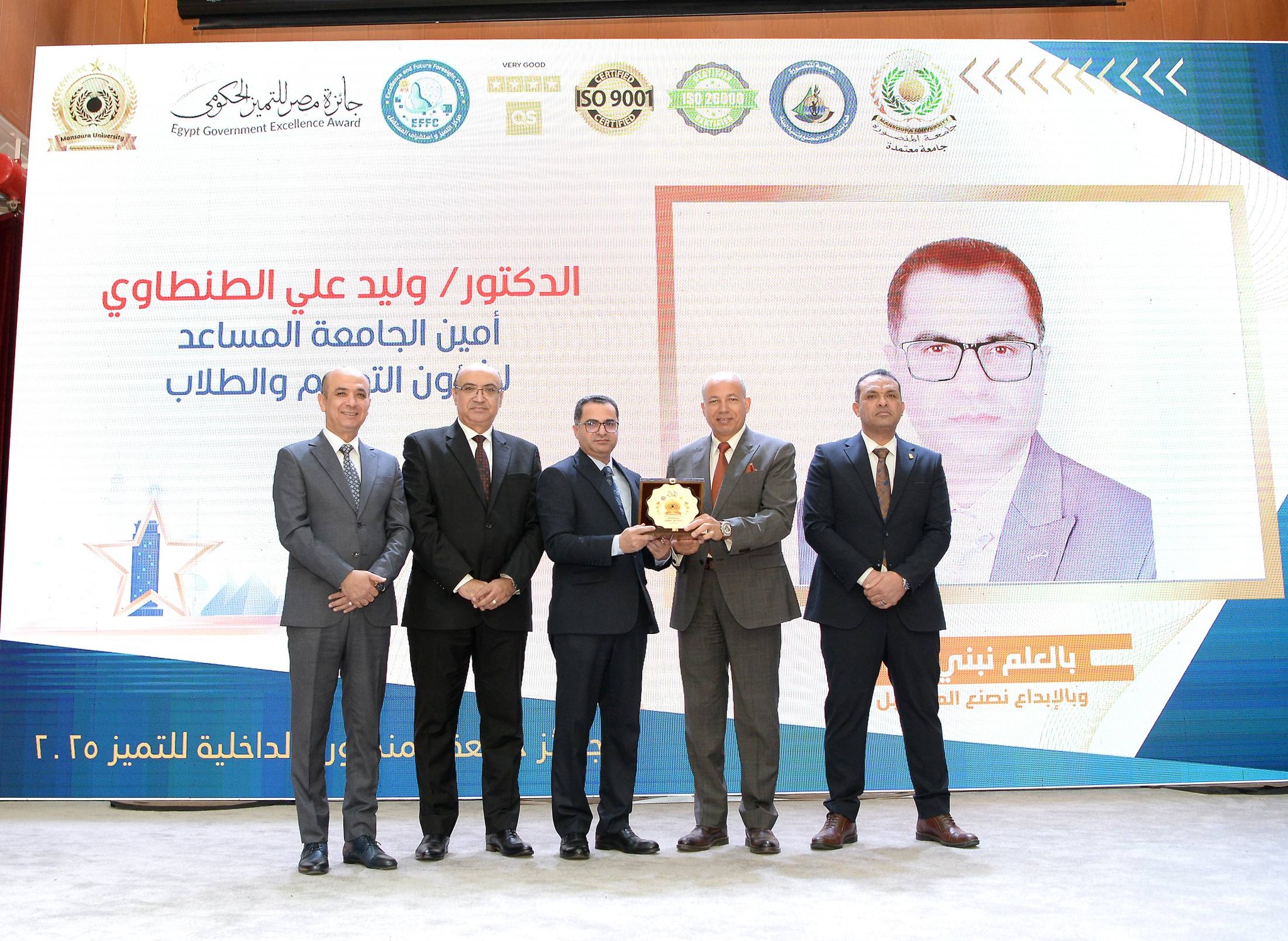
He added that a supreme committee was formed, a project manager and a head of the auditors’ team were appointed under the leadership of Dr. Walid Ali El-Tantawy, 85 internal auditors were prepared, and communication took place with faculty deans and vice deans to form ISO teams in each faculty.
He indicated that around 12 training courses were implemented, totaling 40 training hours for 494 trainees, with the participation of 85 internal auditors and a total of 5,100 working hours. This was followed by internal and then external audits, until all participating university faculties obtained accreditation simultaneously, which is considered an unprecedented achievement.
He confirmed that the certifying company granted the university ISO 21500 certification for project management to the Center of Excellence and Future Foresight as a result of integrated institutional efforts.
He also reviewed the development of the excellence system since October 2024, with the establishment of the Center of Excellence and Future Foresight, the approval of guiding manuals for the six award categories, and the selection of new evaluators.
He clarified that the third cycle of the Mansoura University Excellence Awards includes six awards, and that 28 training courses were implemented with a total of 147 training hours, benefiting 800 university affiliates, in addition to providing 1,300 hours of technical support. The awards were evaluated over 31 days with a total of 5,868 evaluation hours.
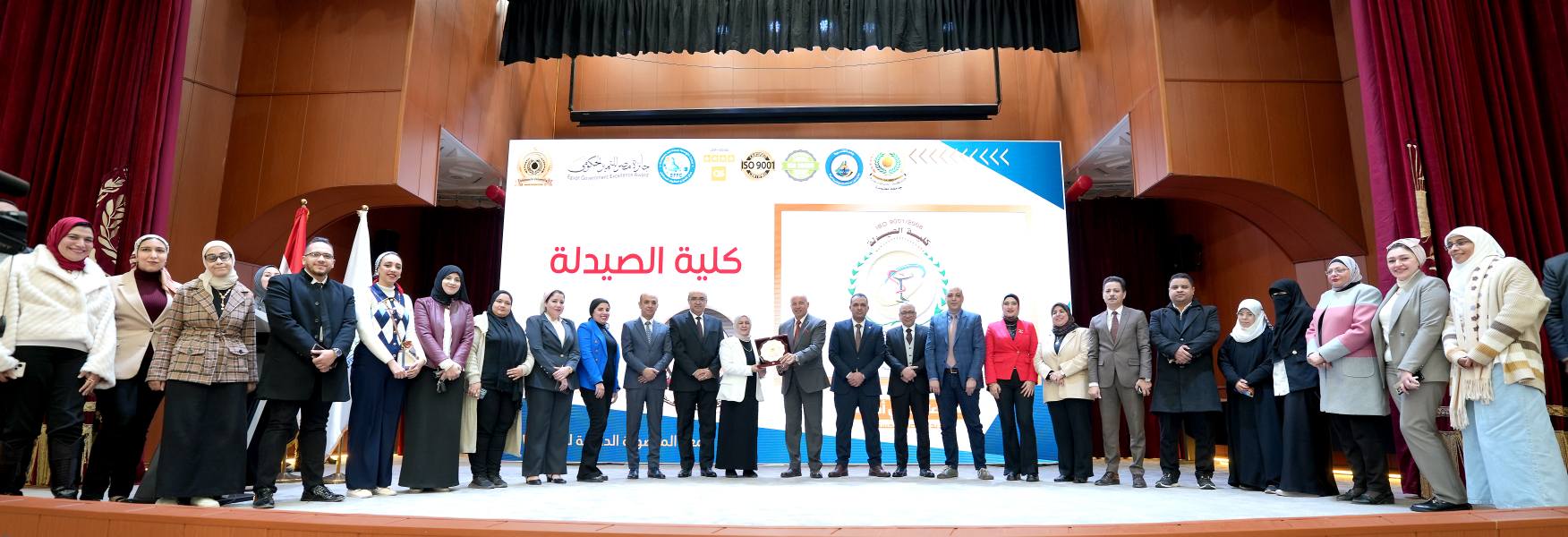
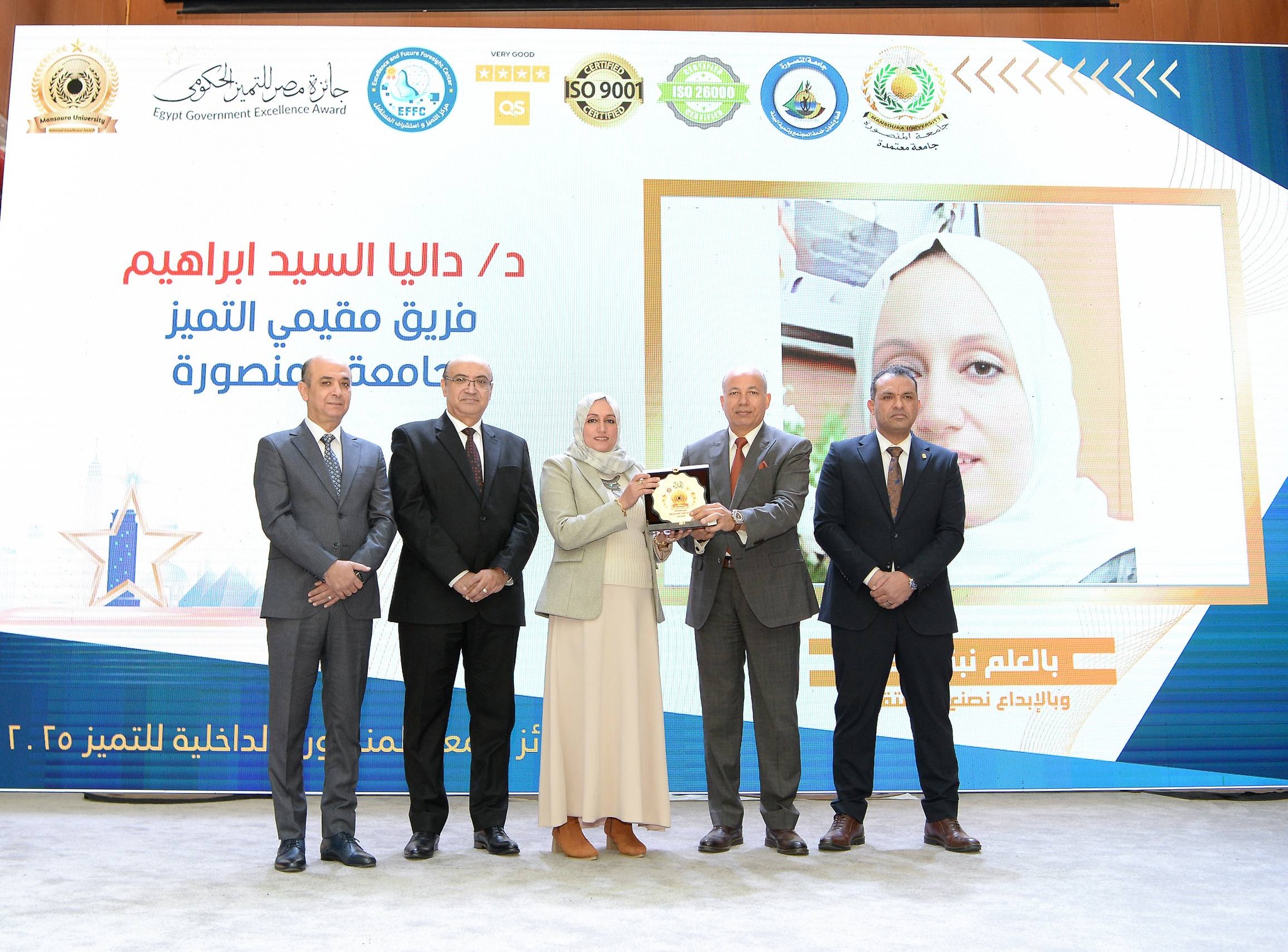
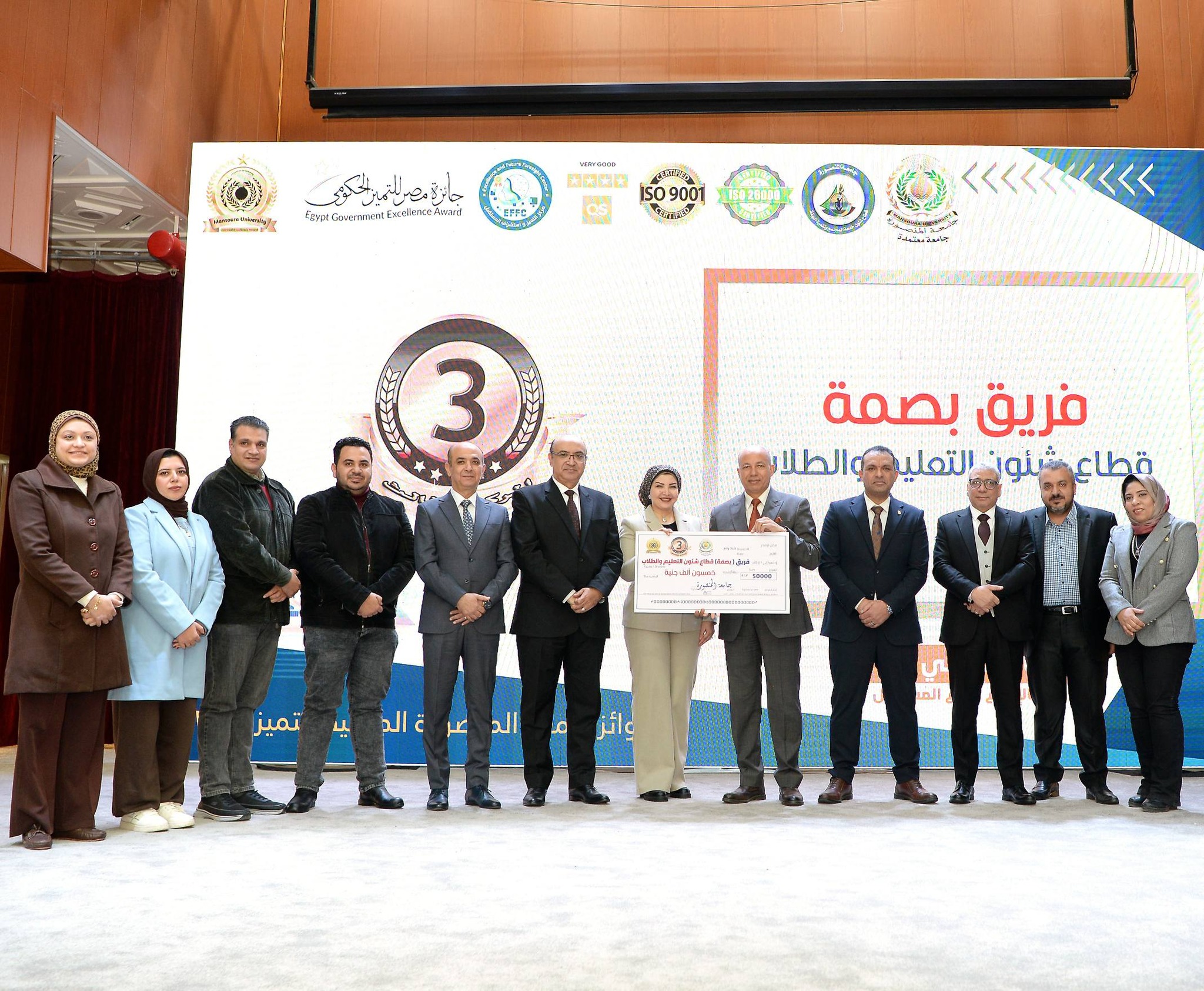
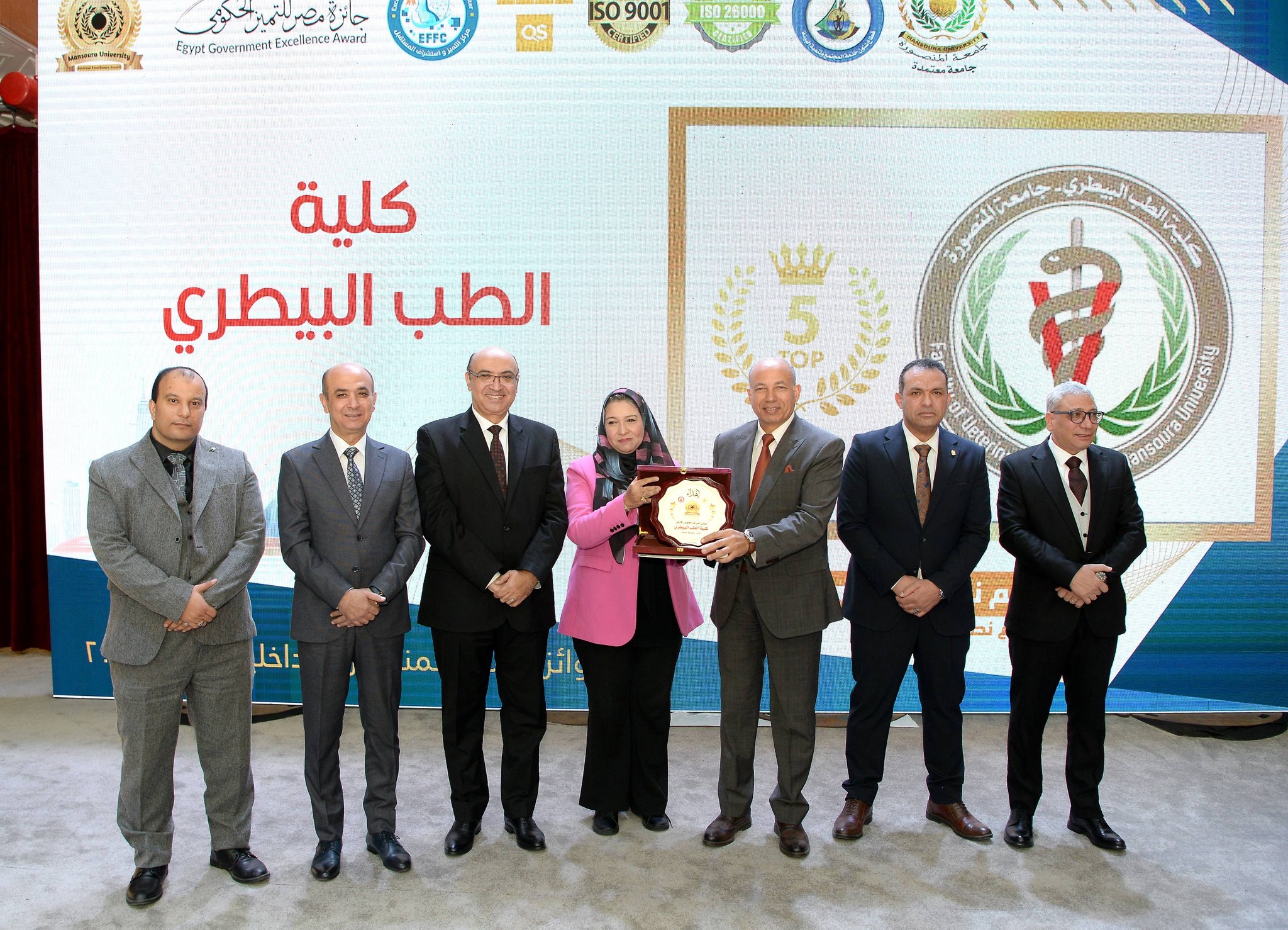
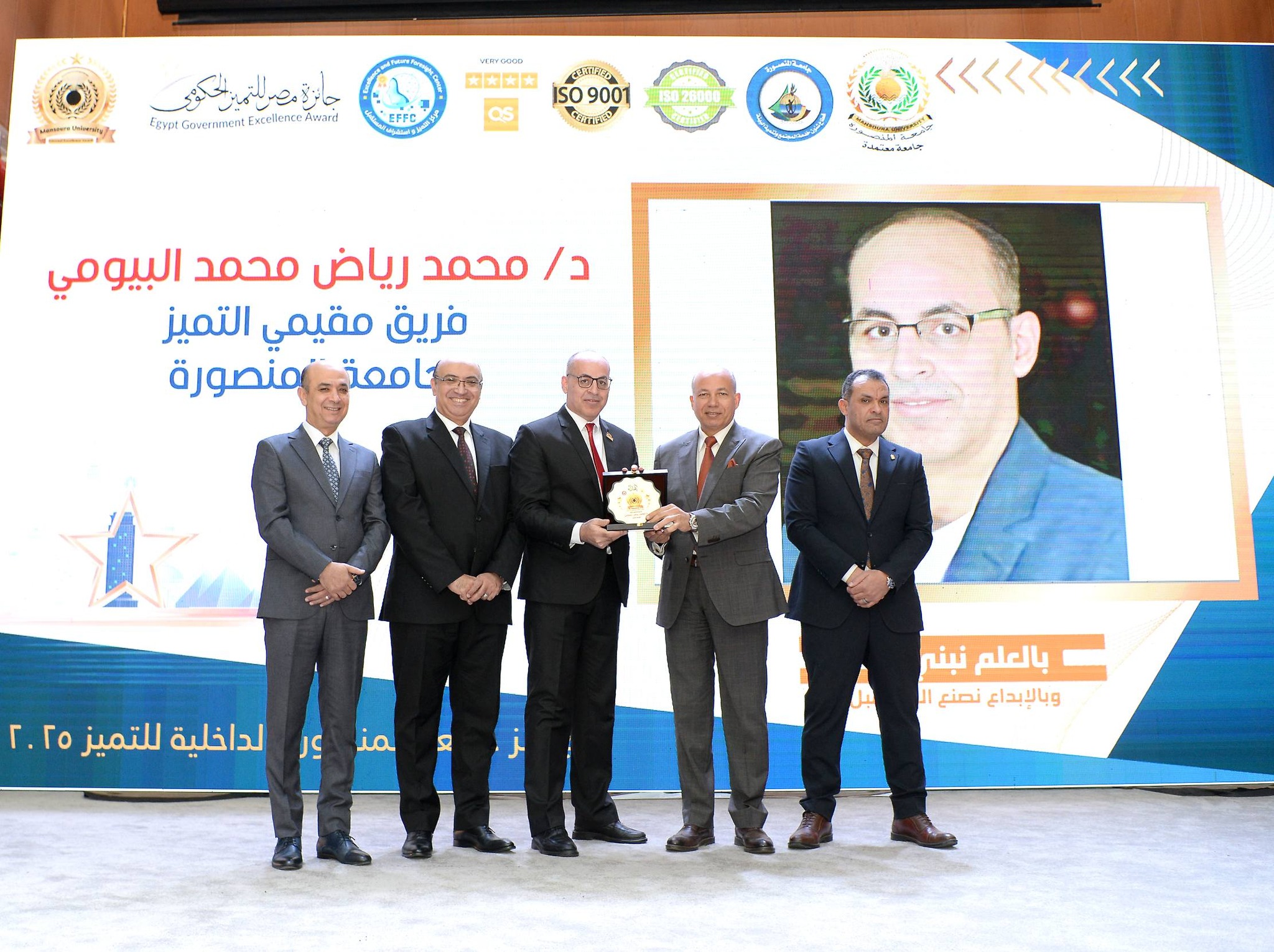
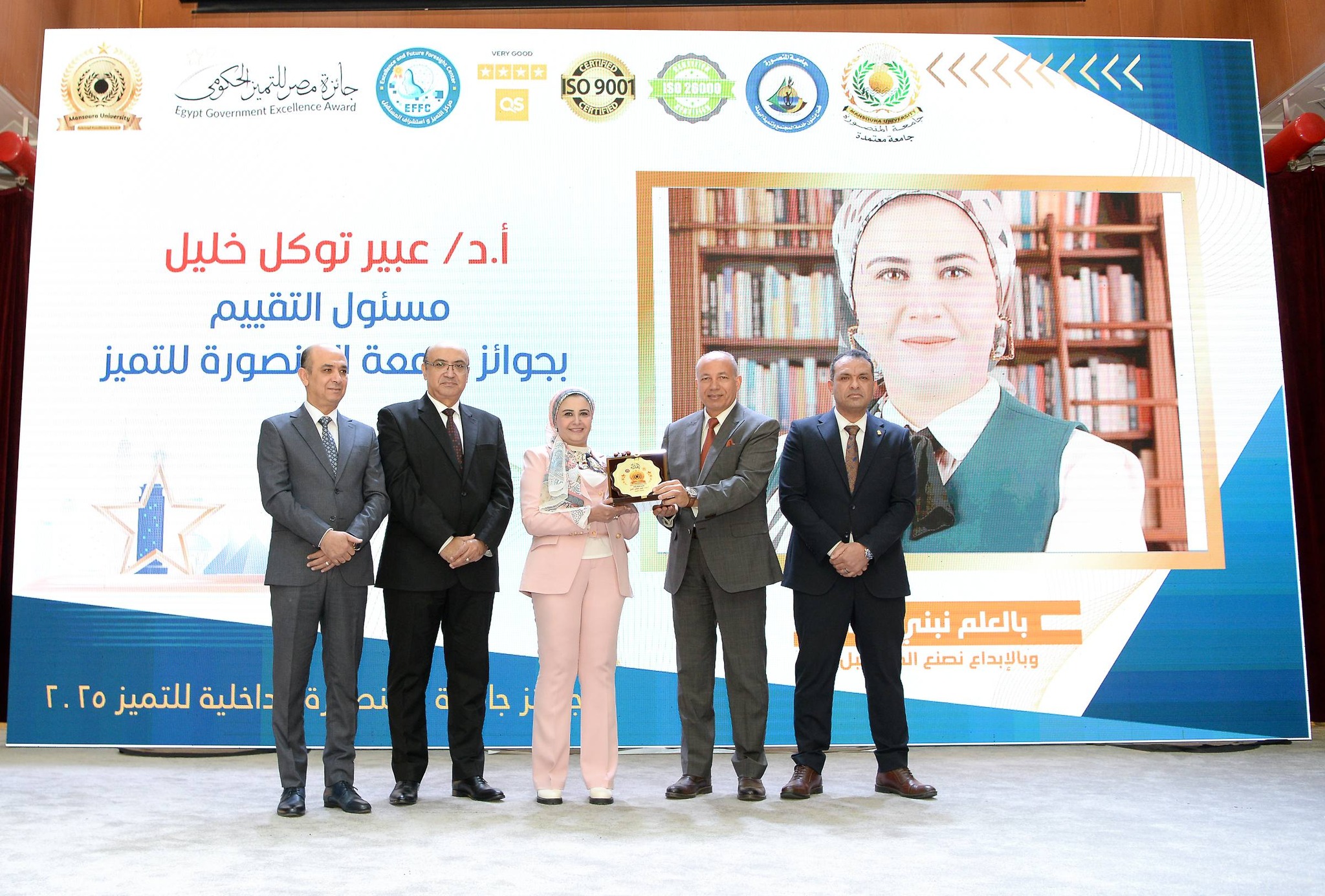
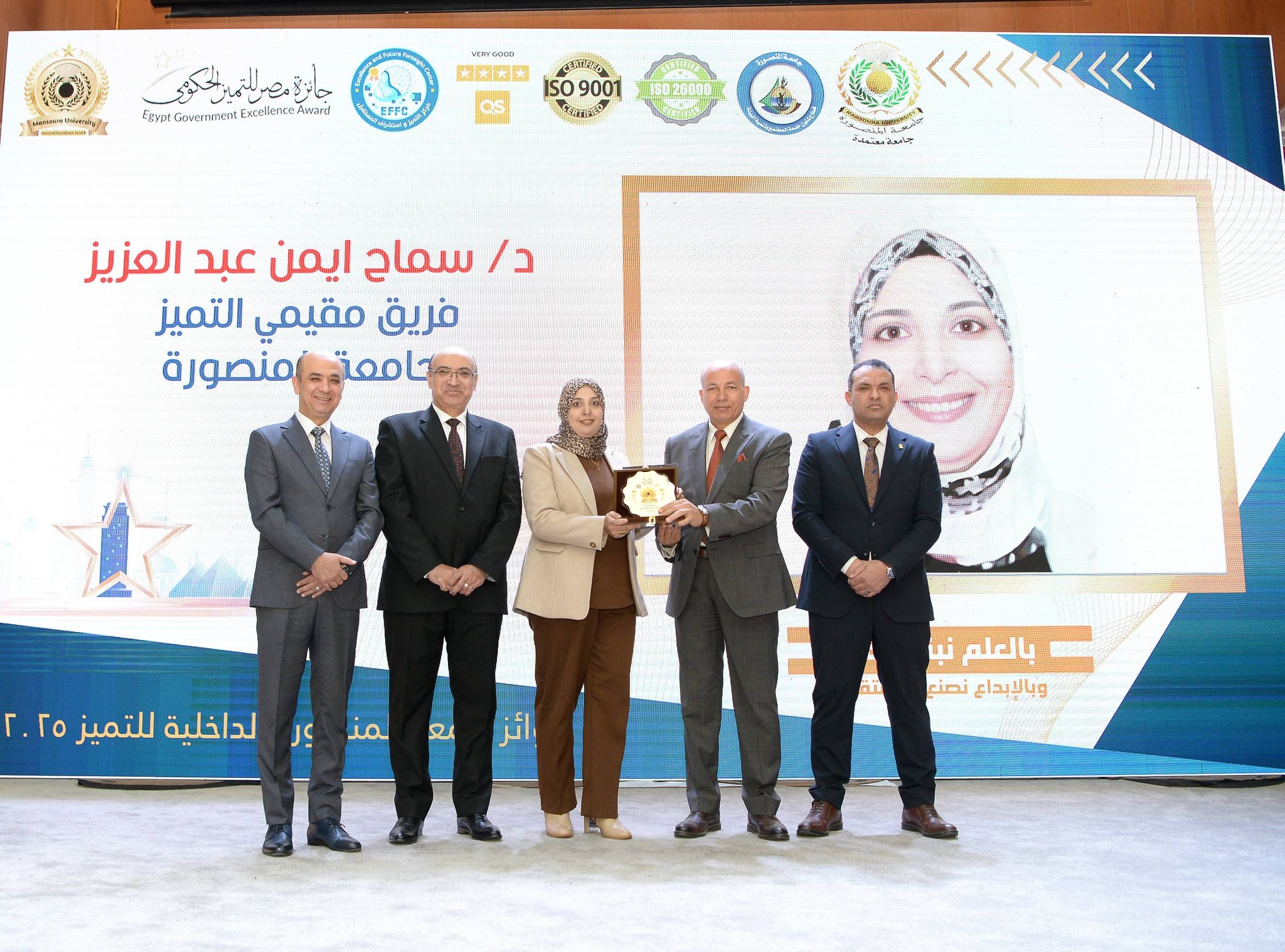
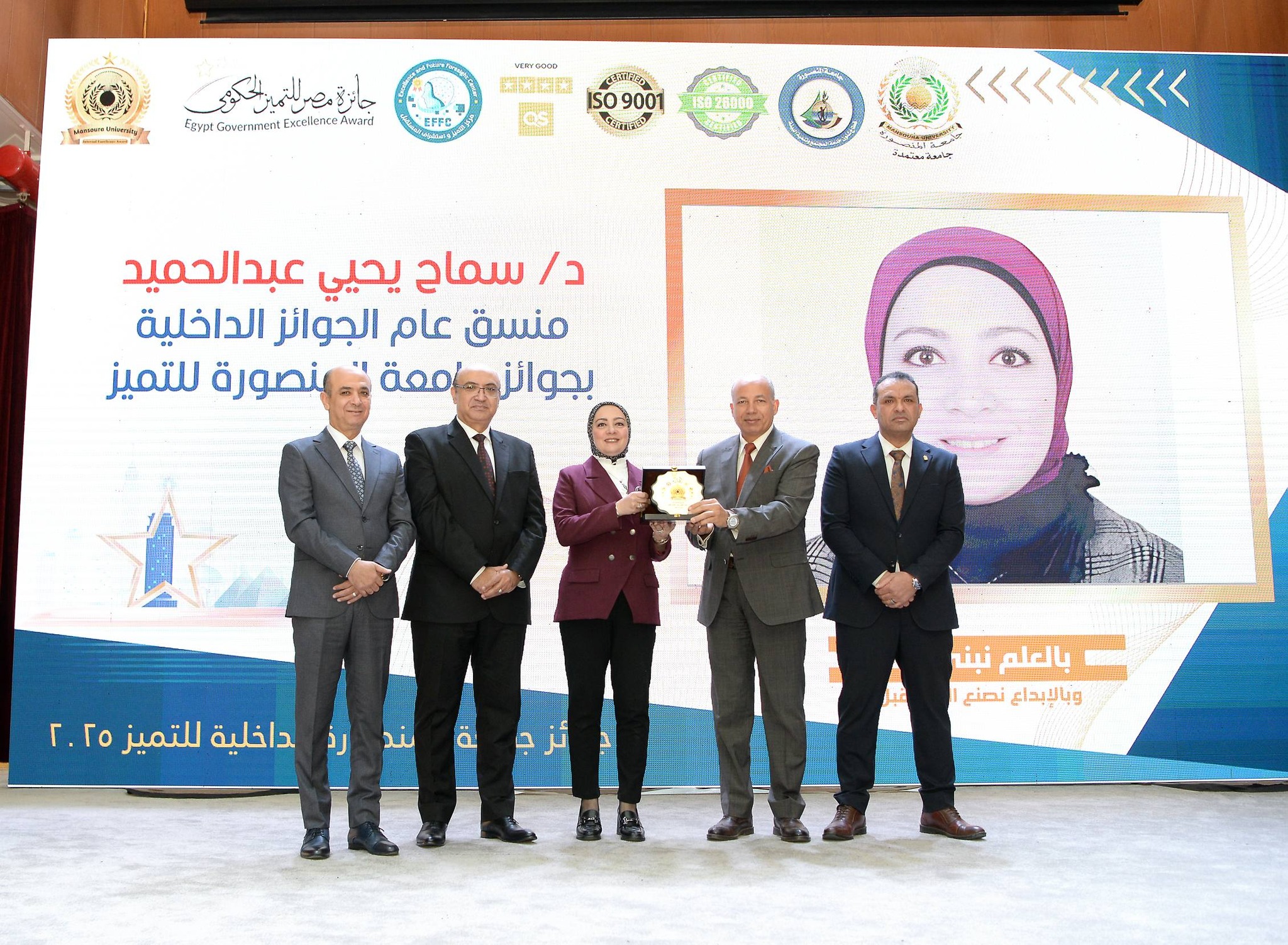
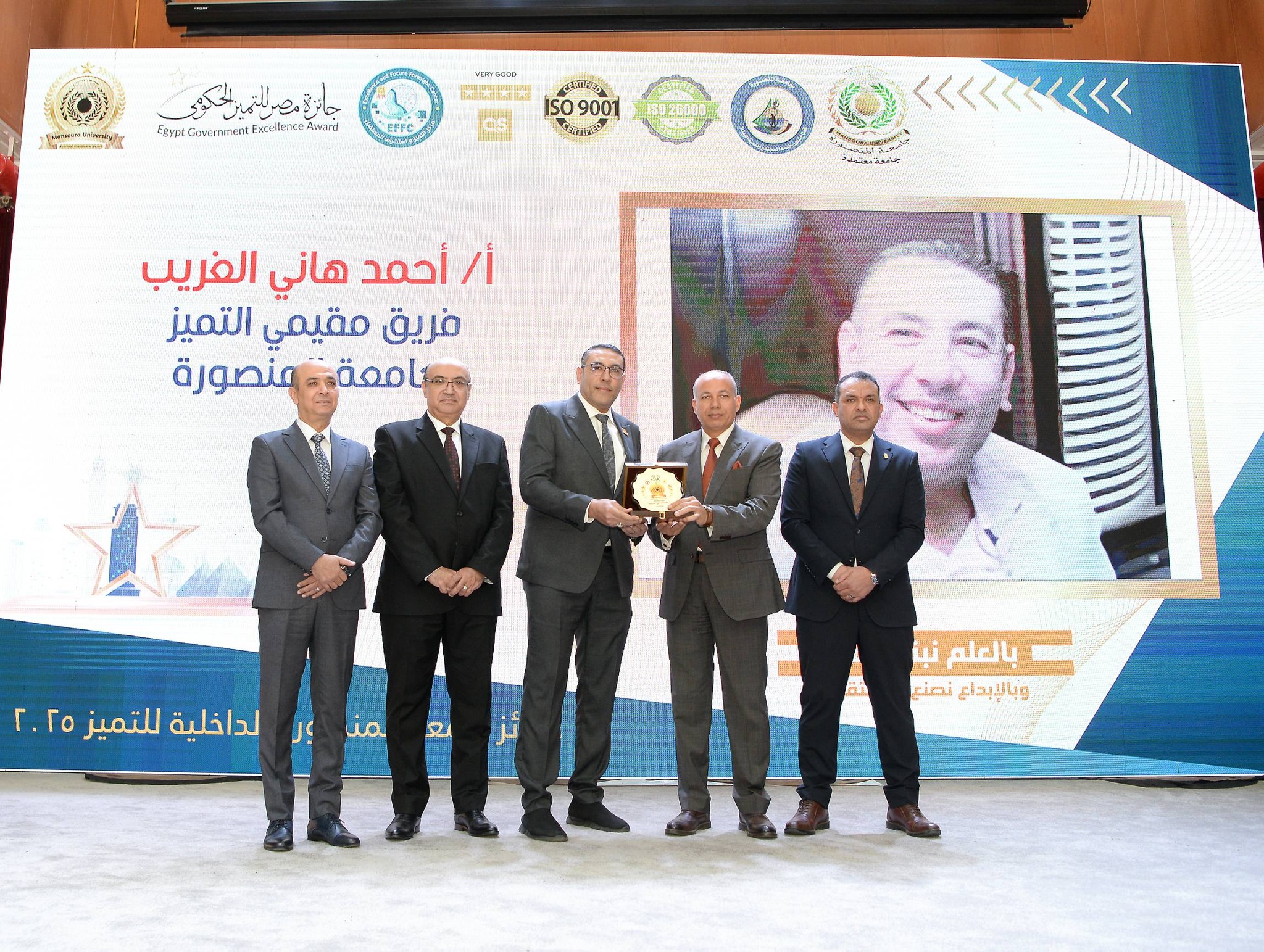
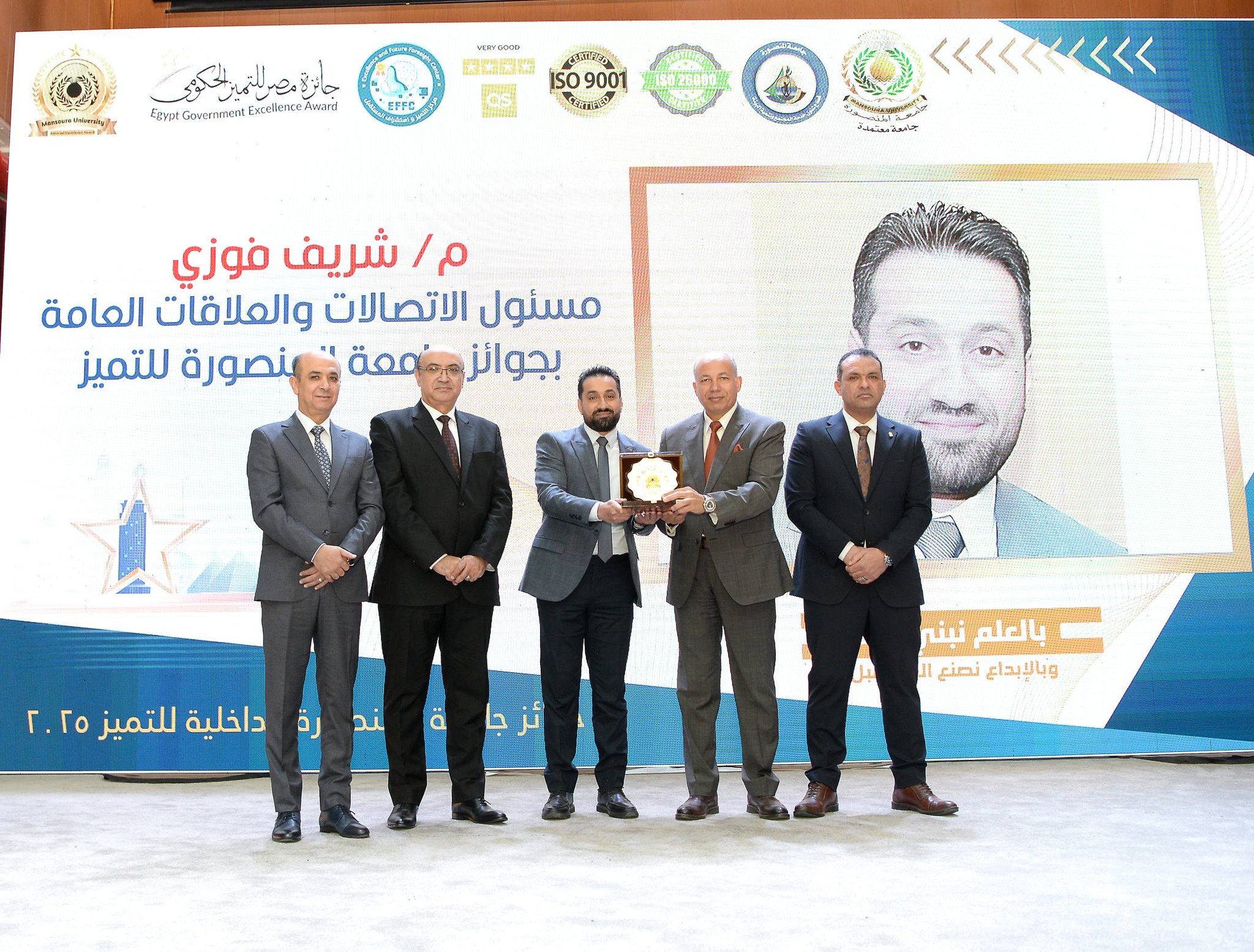
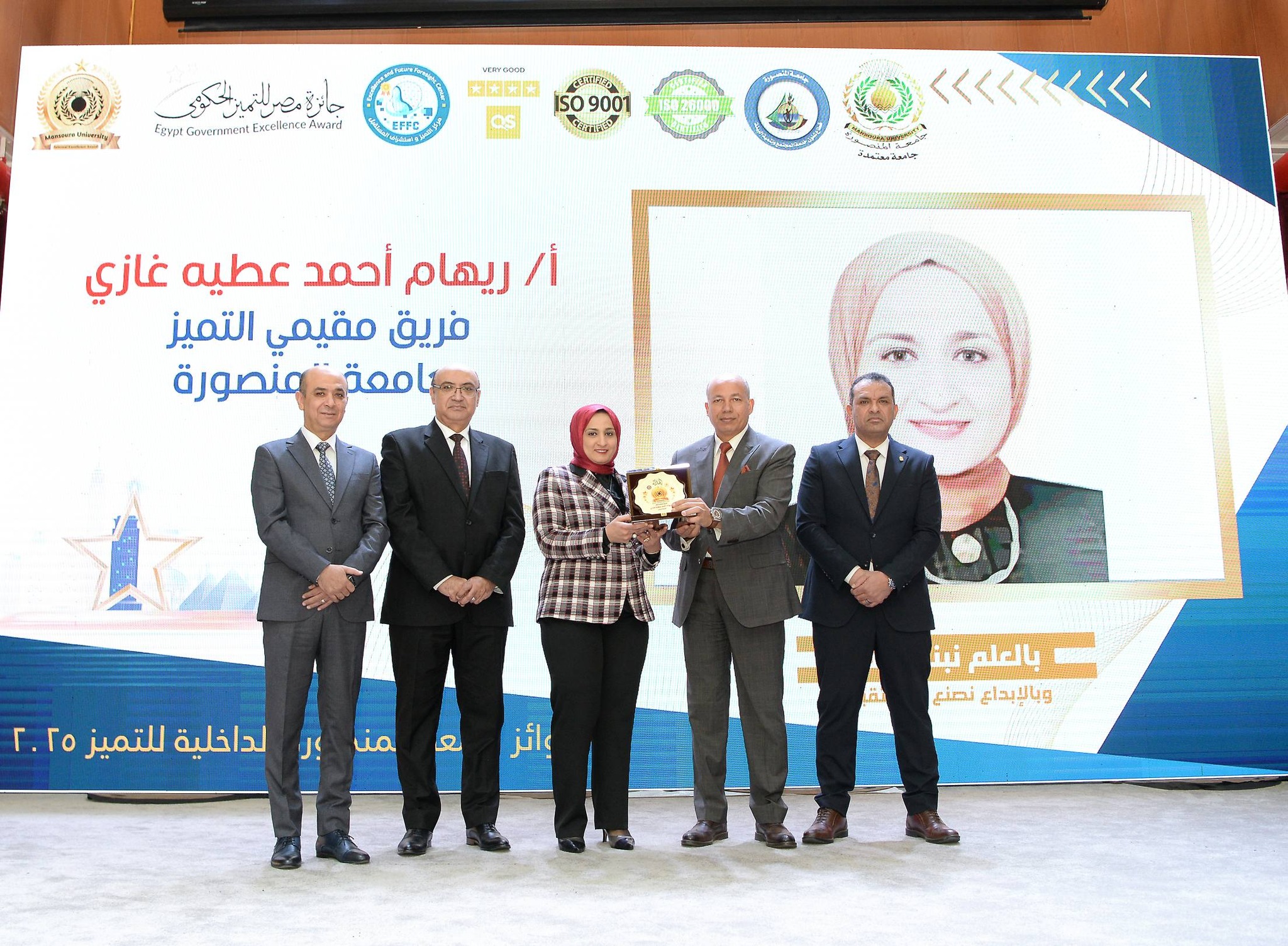
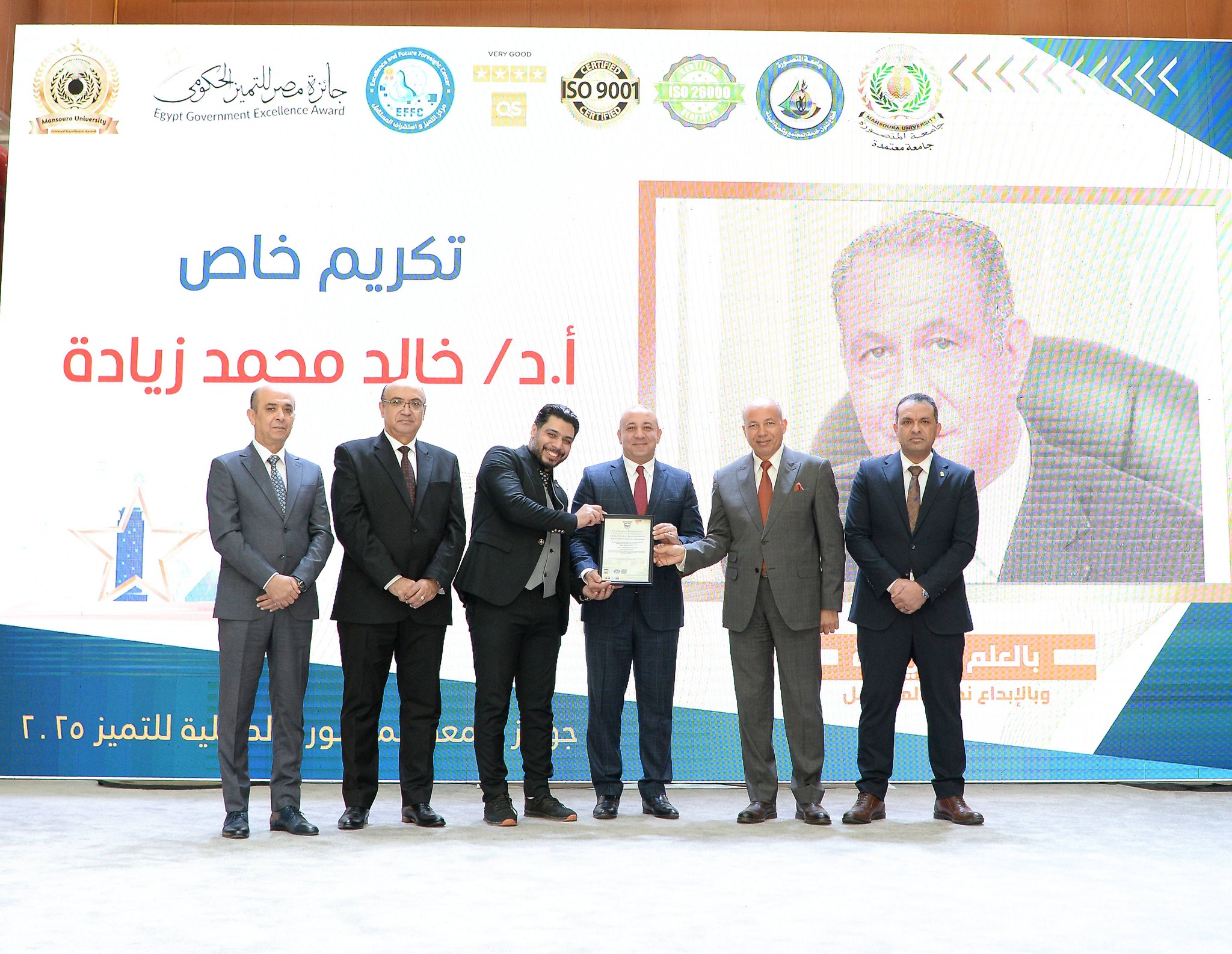
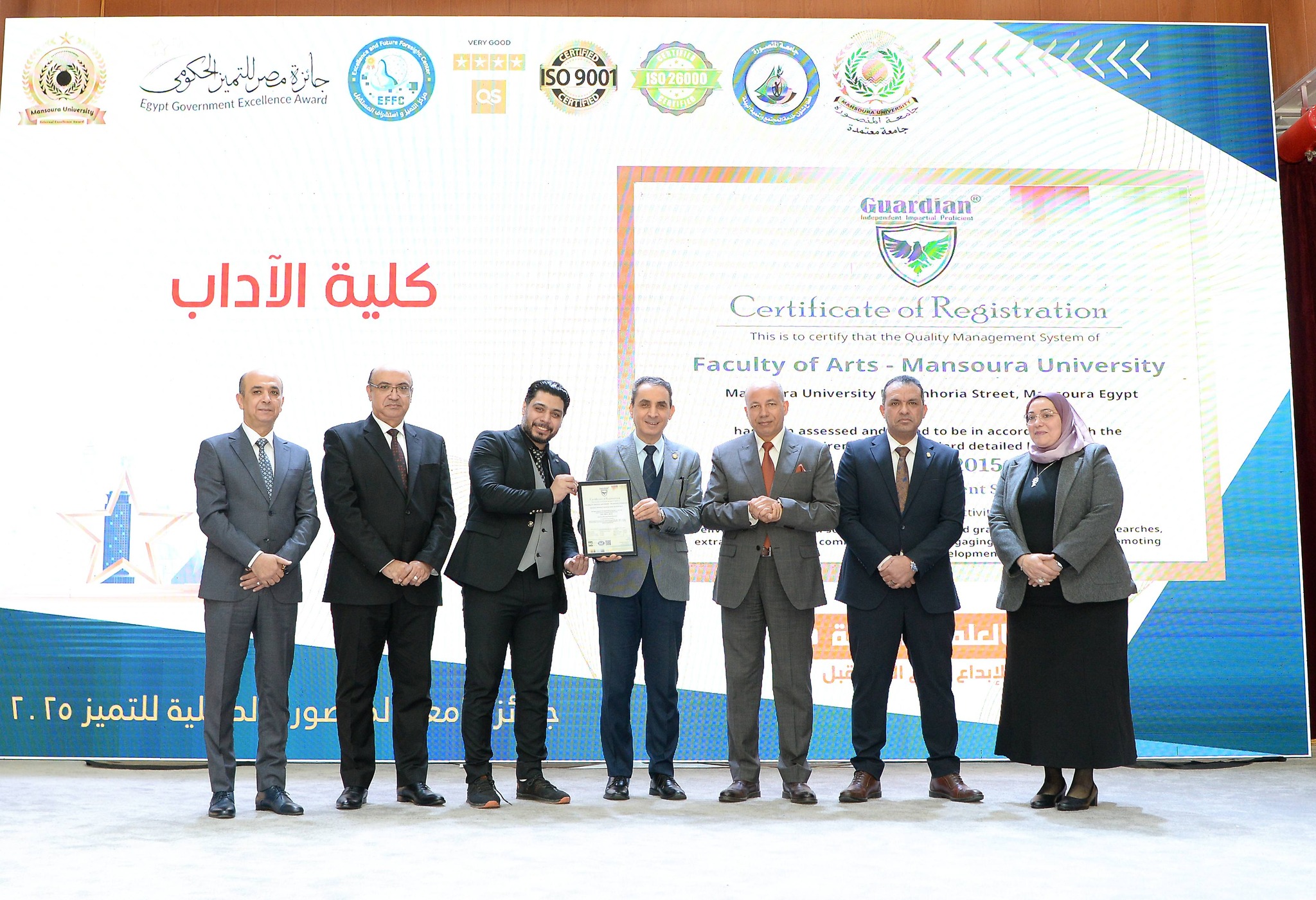
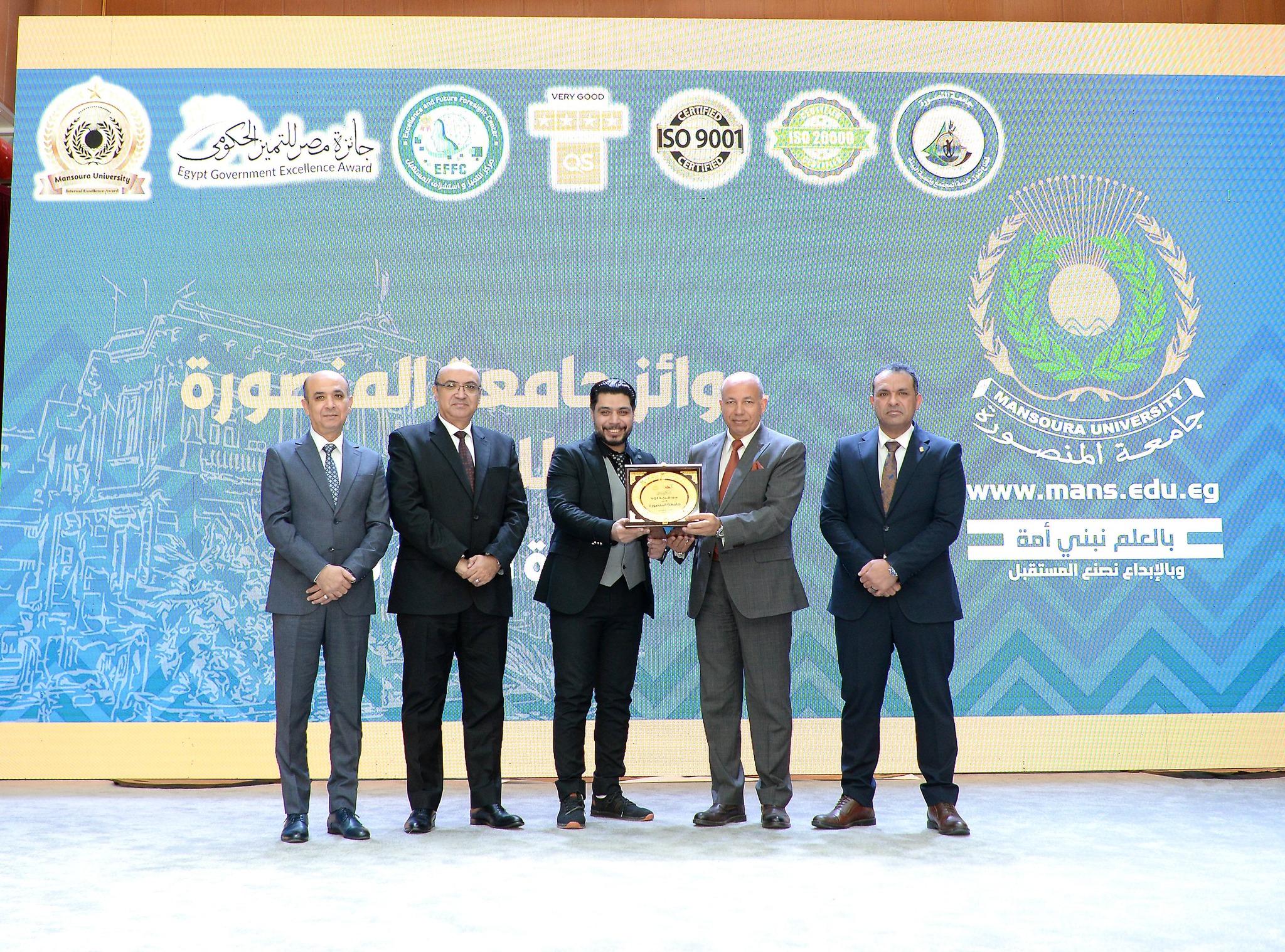
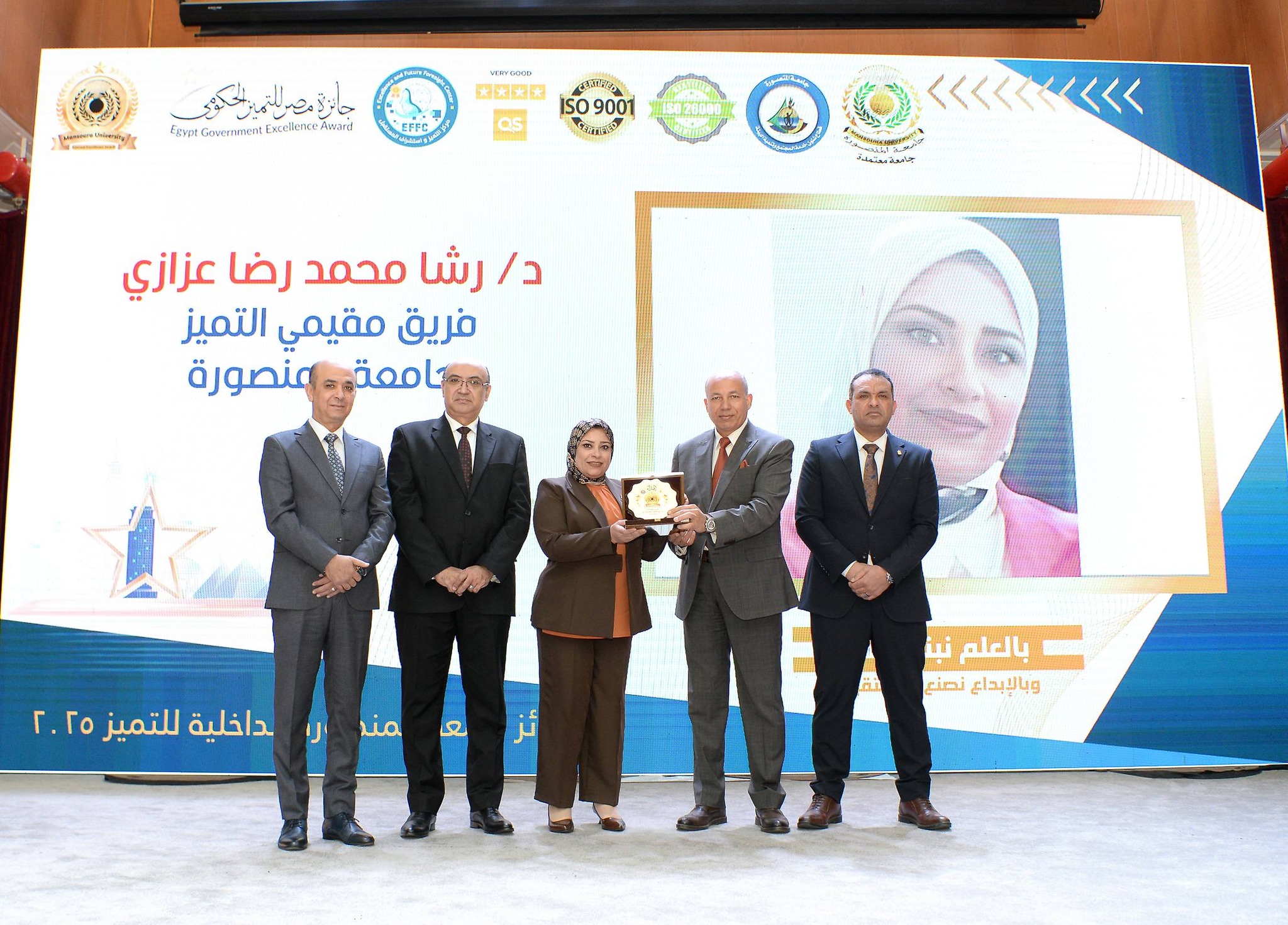
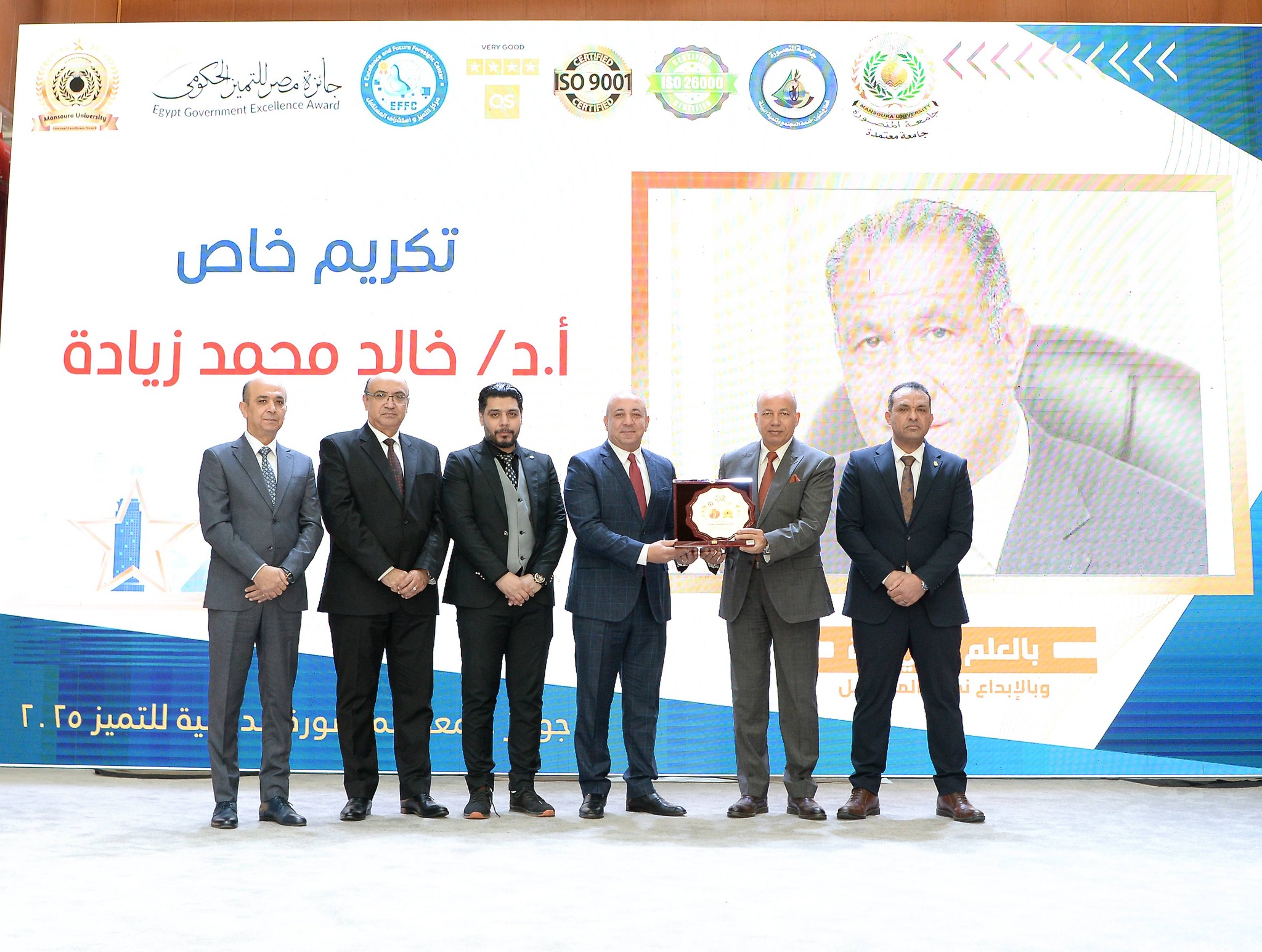
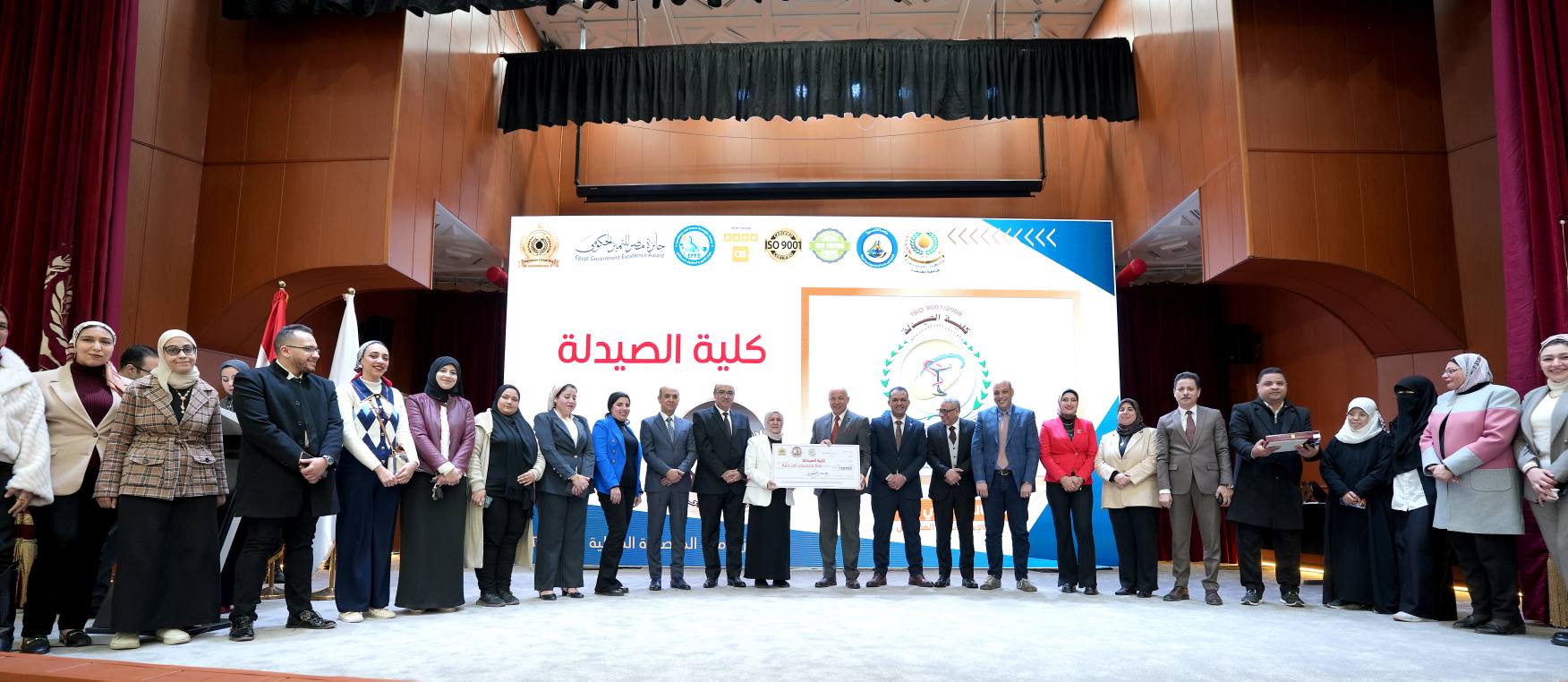
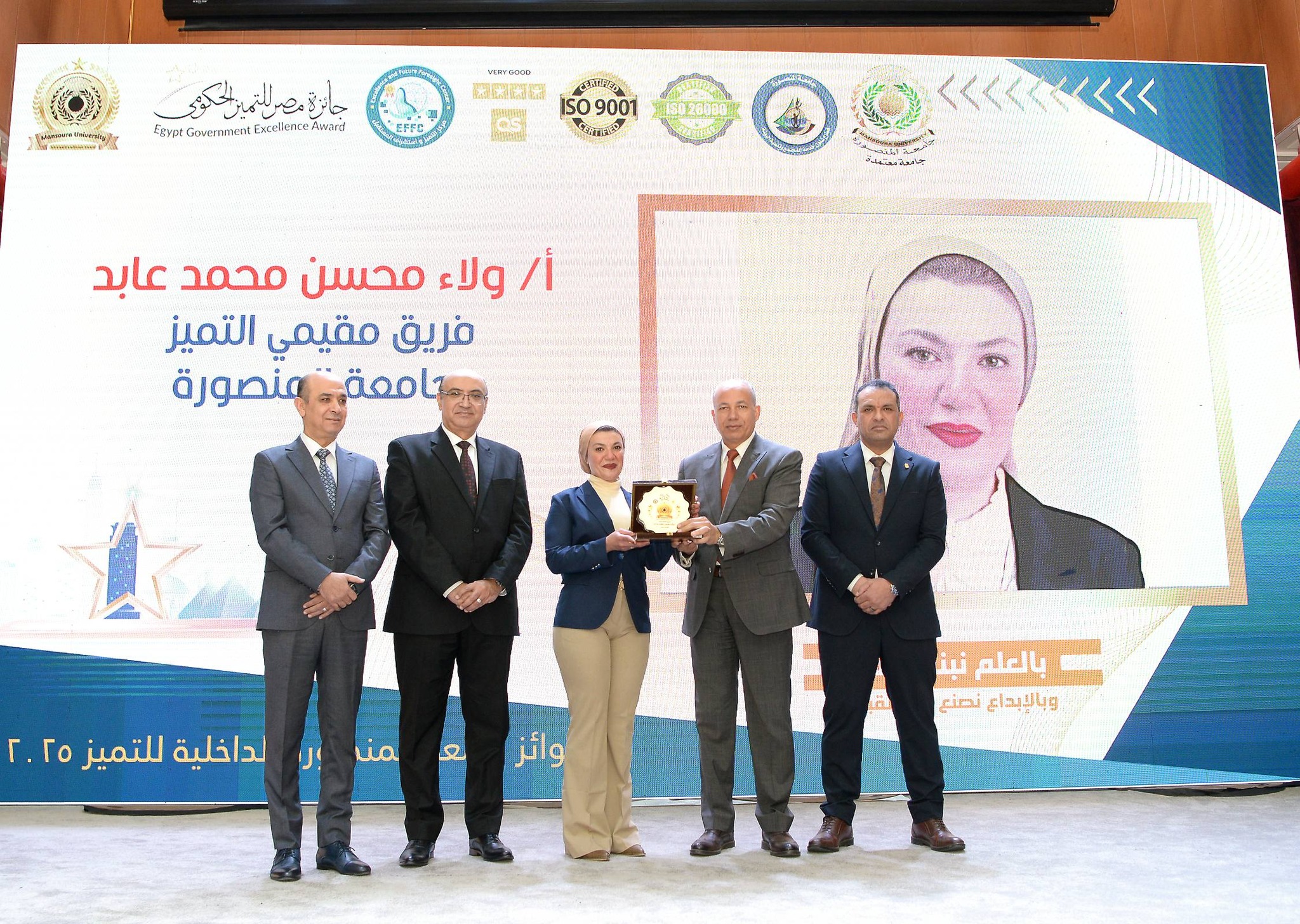
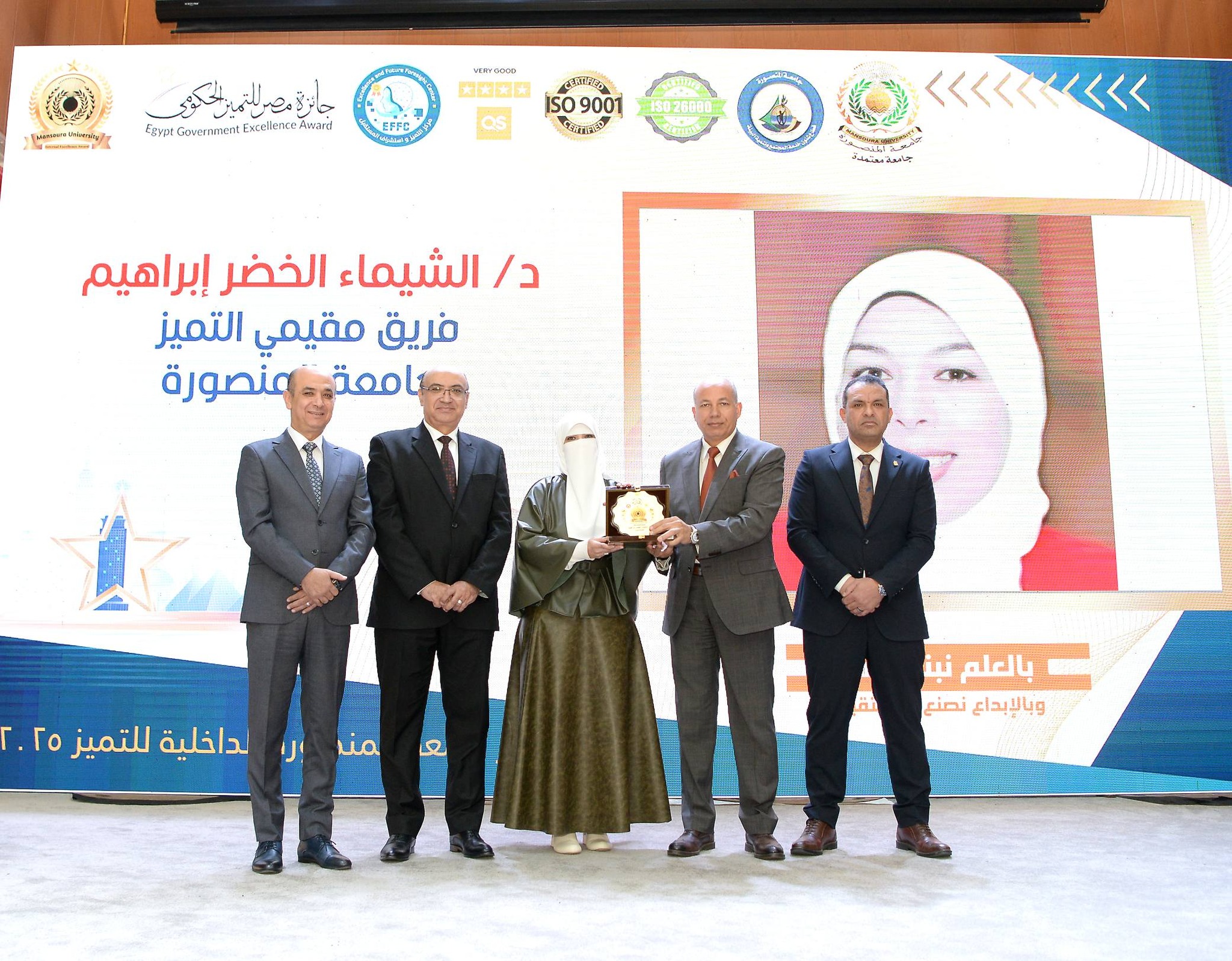
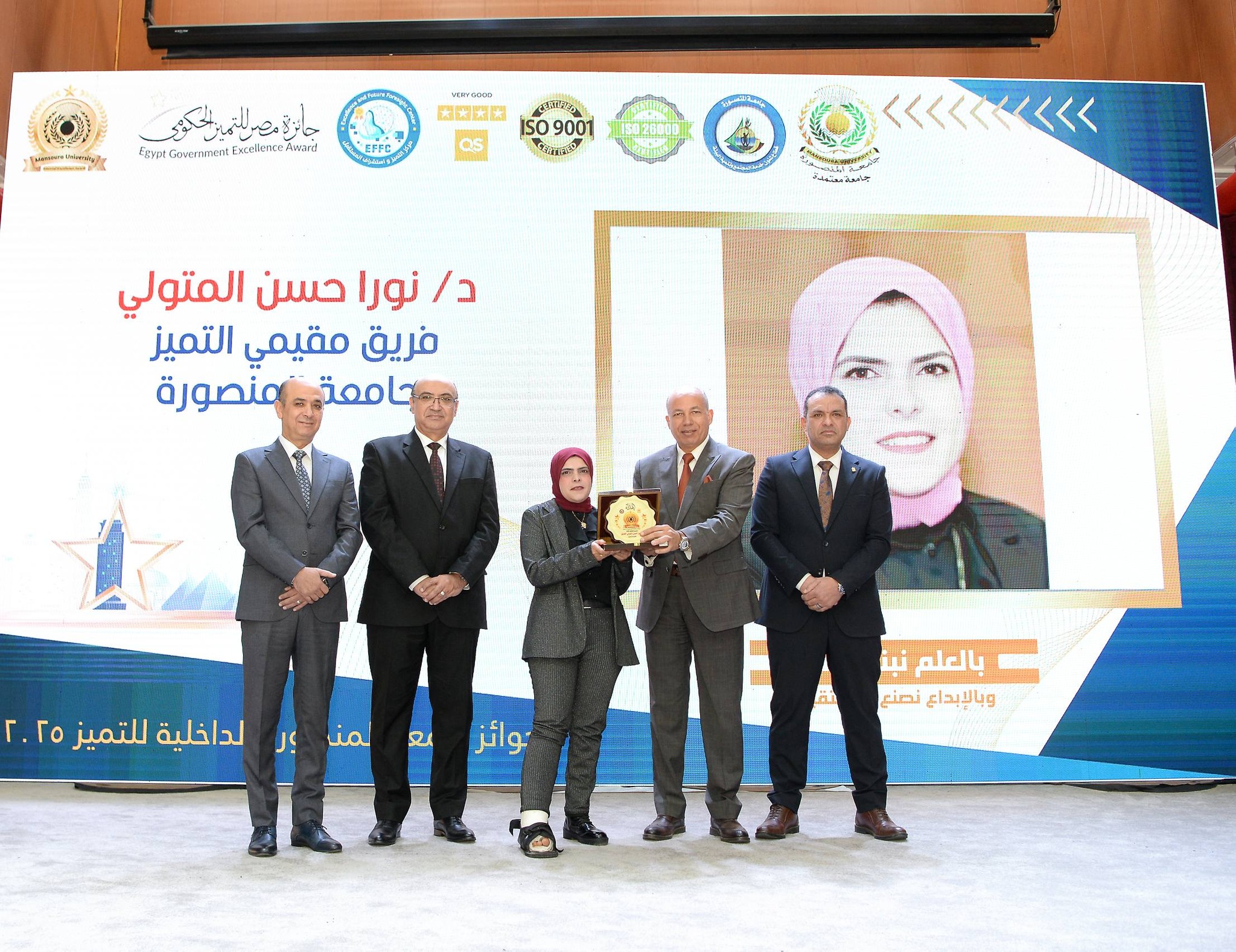
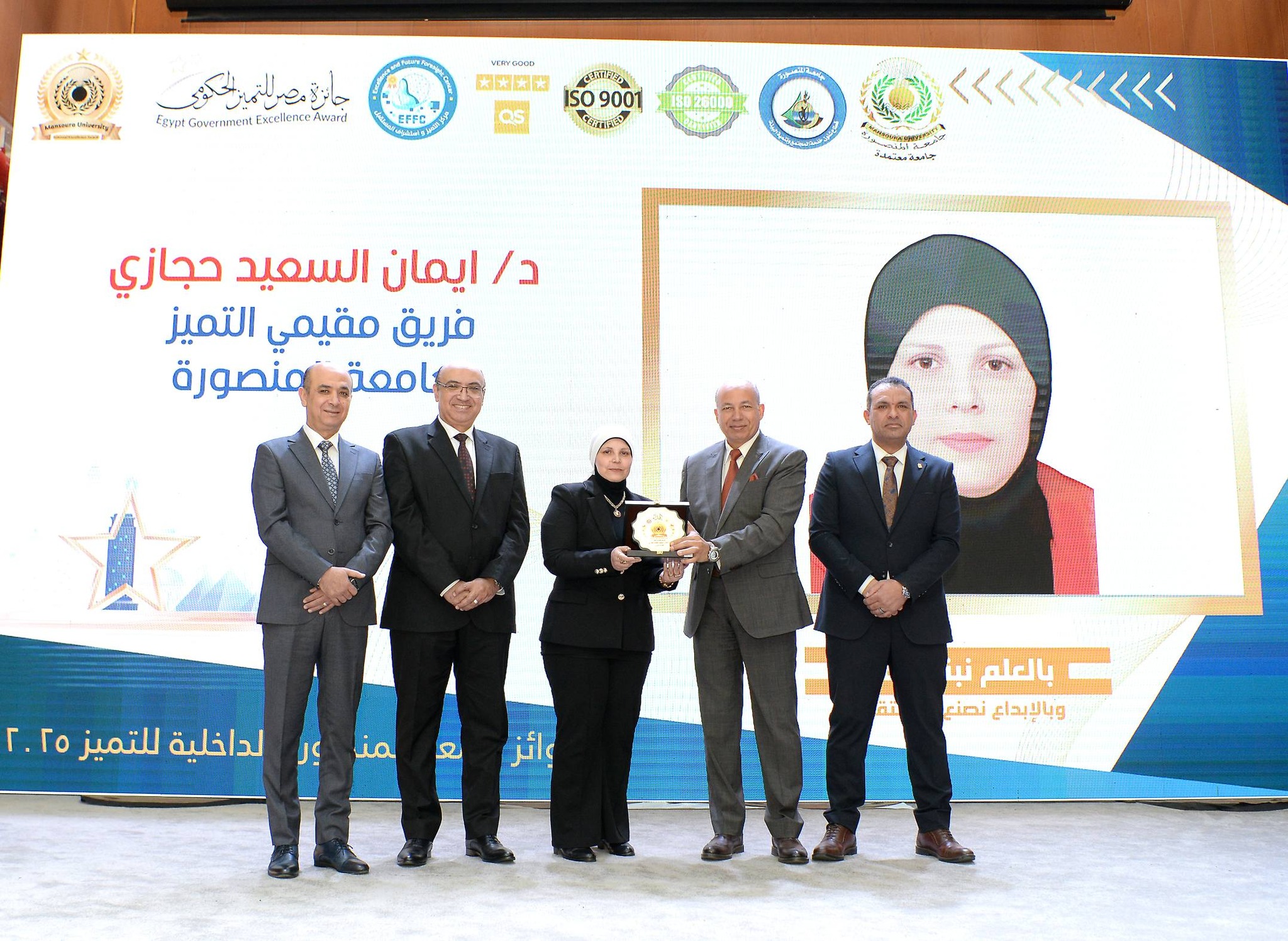
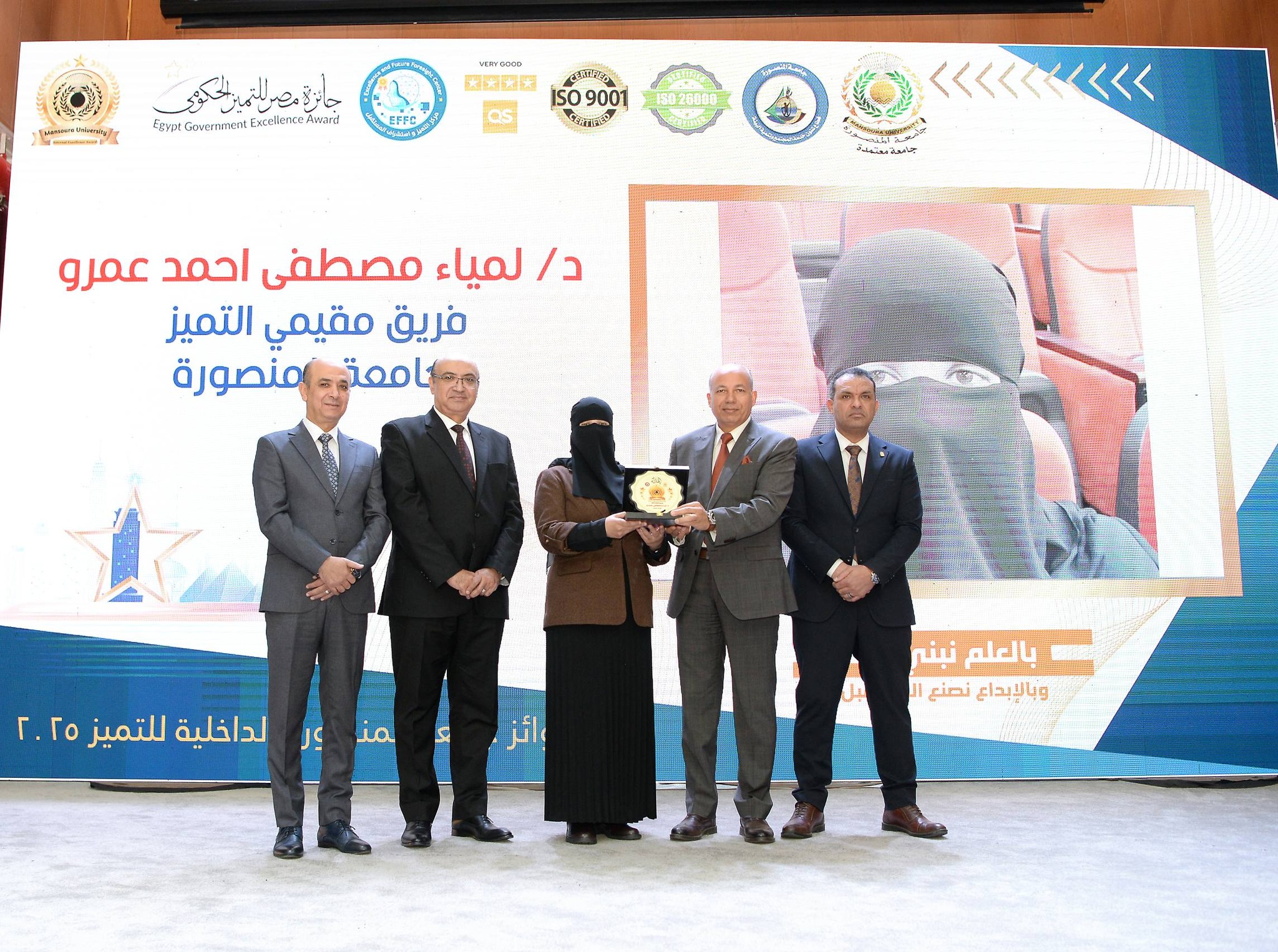
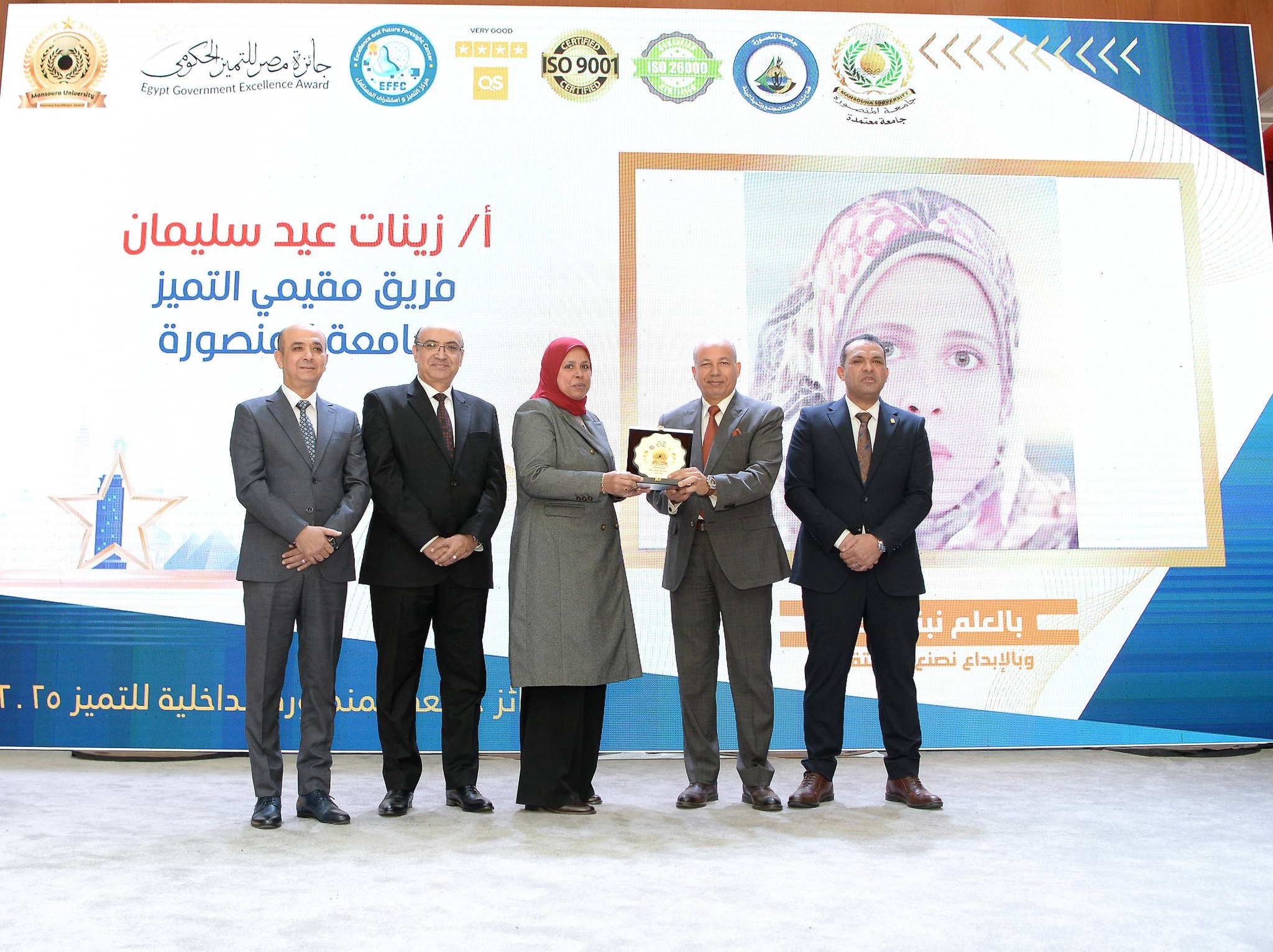
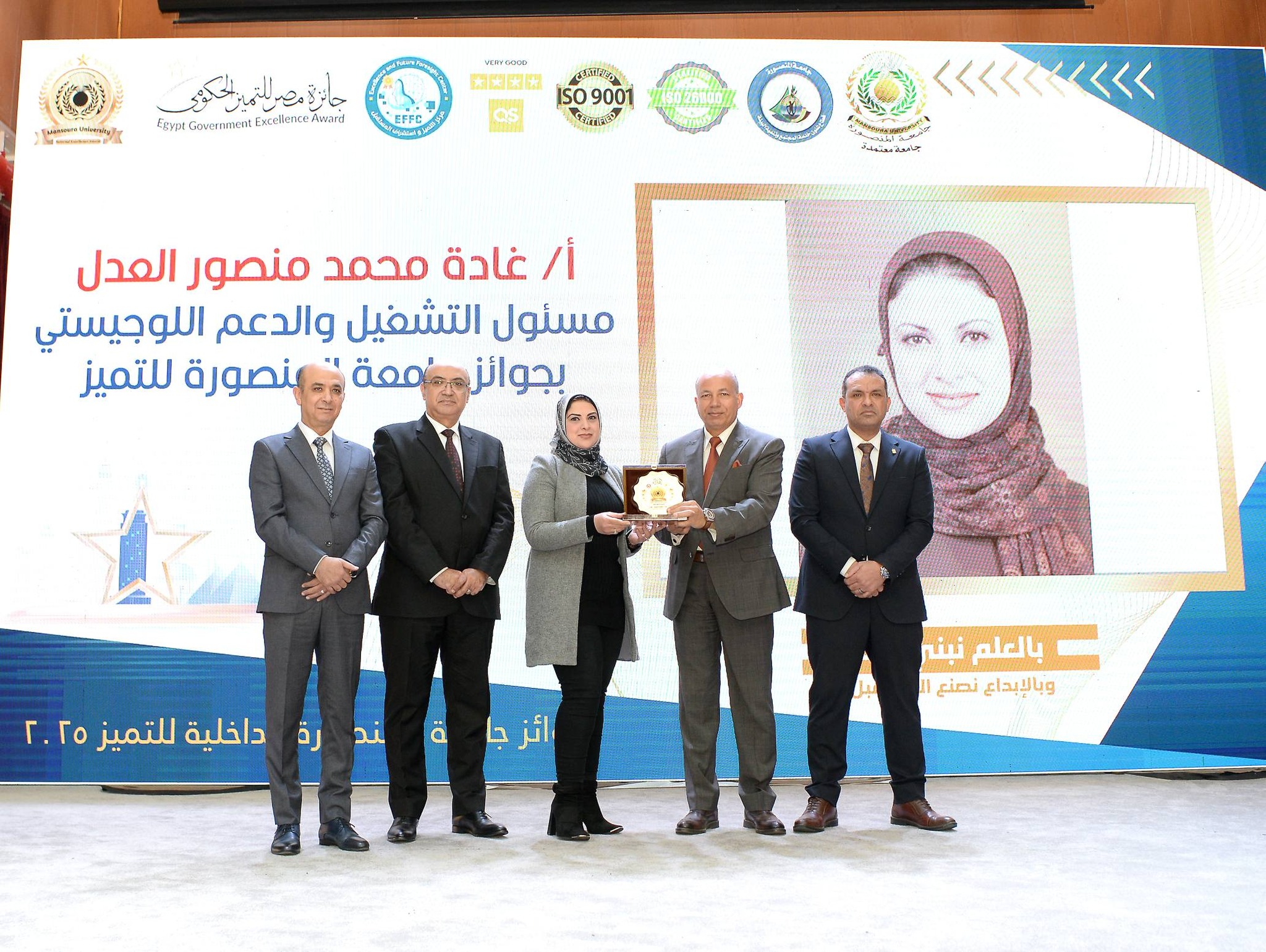
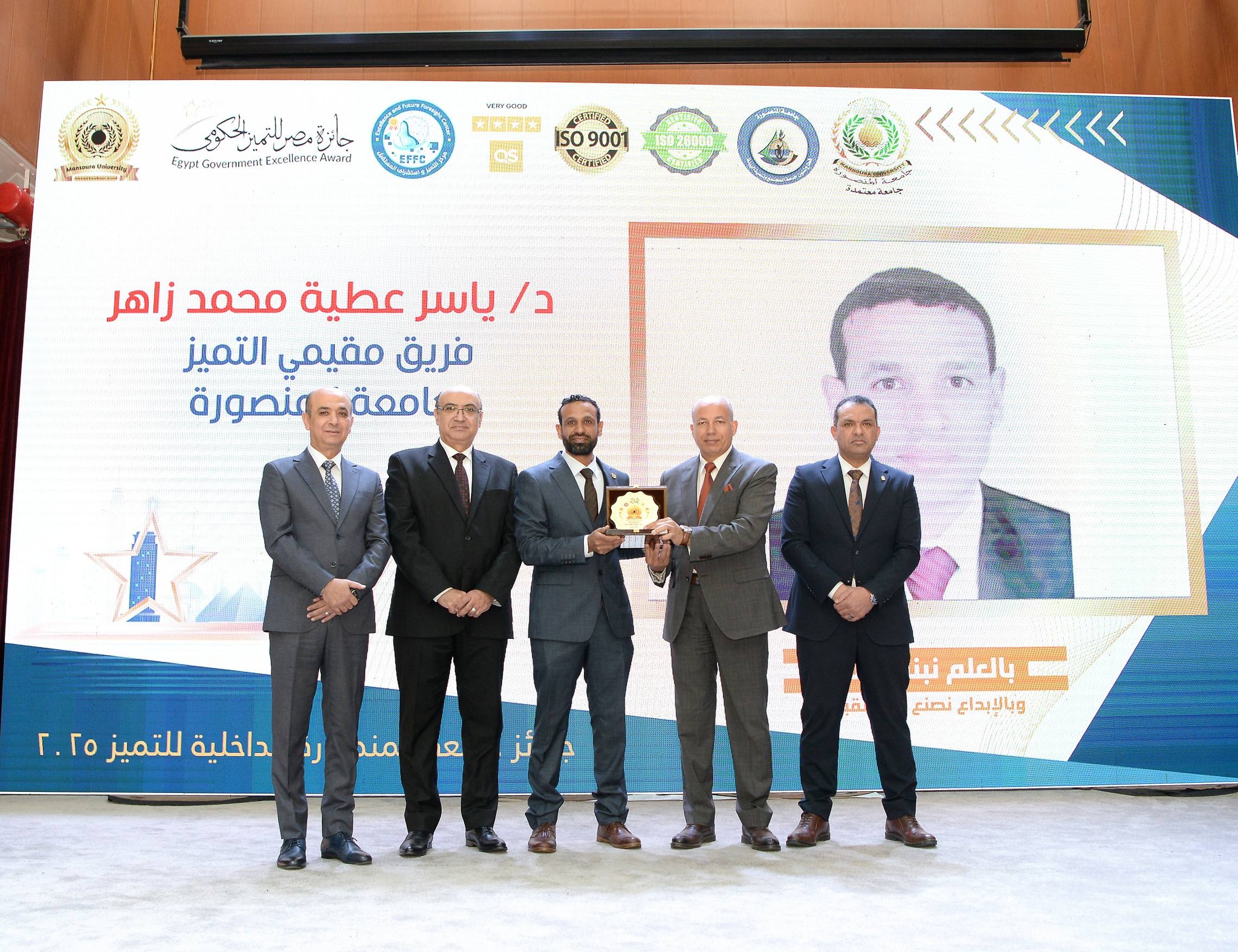
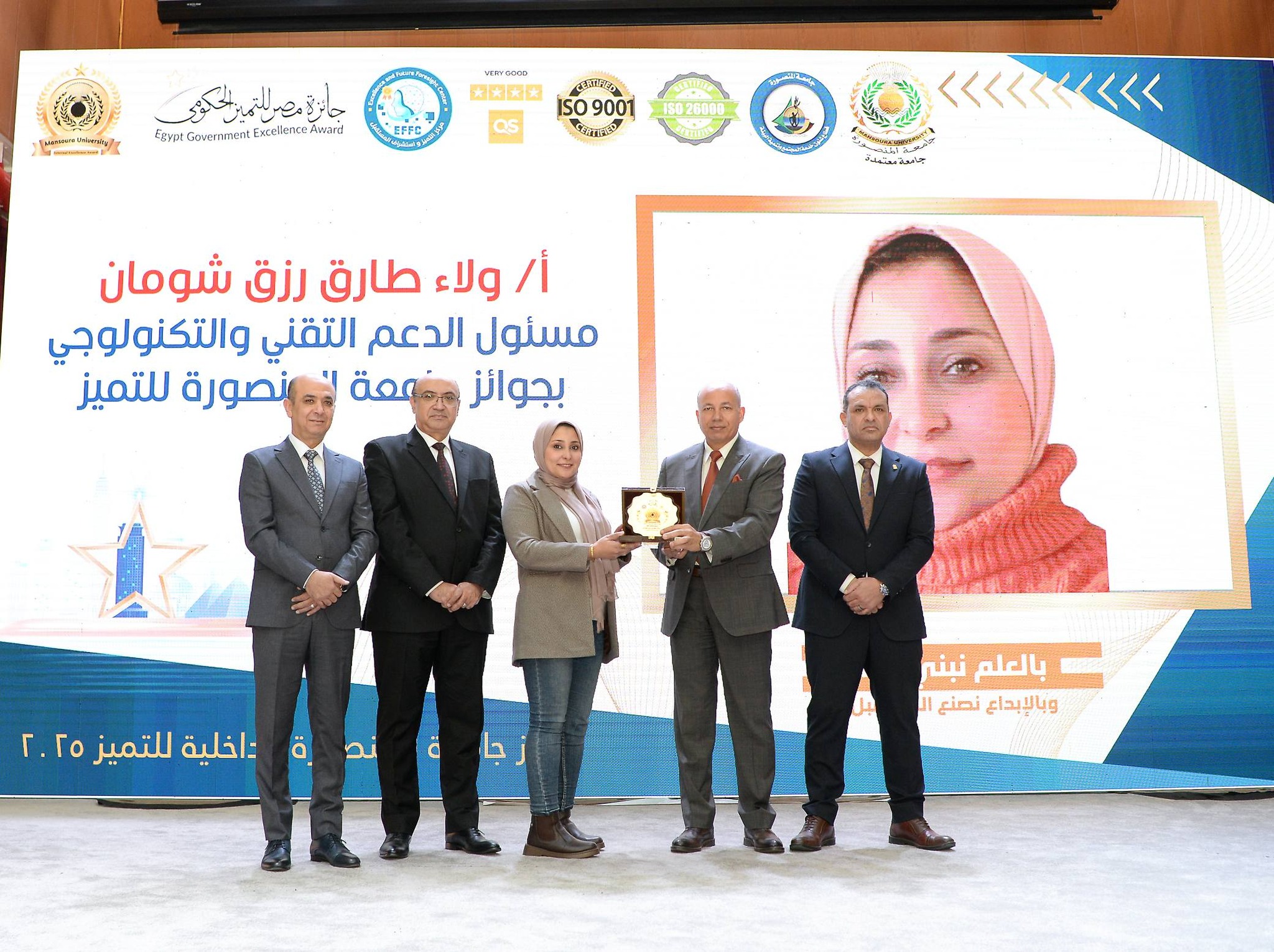
The ceremony witnessed the exchange of commemorative shields with the ISO certification company and the honoring of its leadership, in addition to honoring heads of ISO teams in faculties and various departments, and awarding international ISO 9001 quality certificates to university faculties.
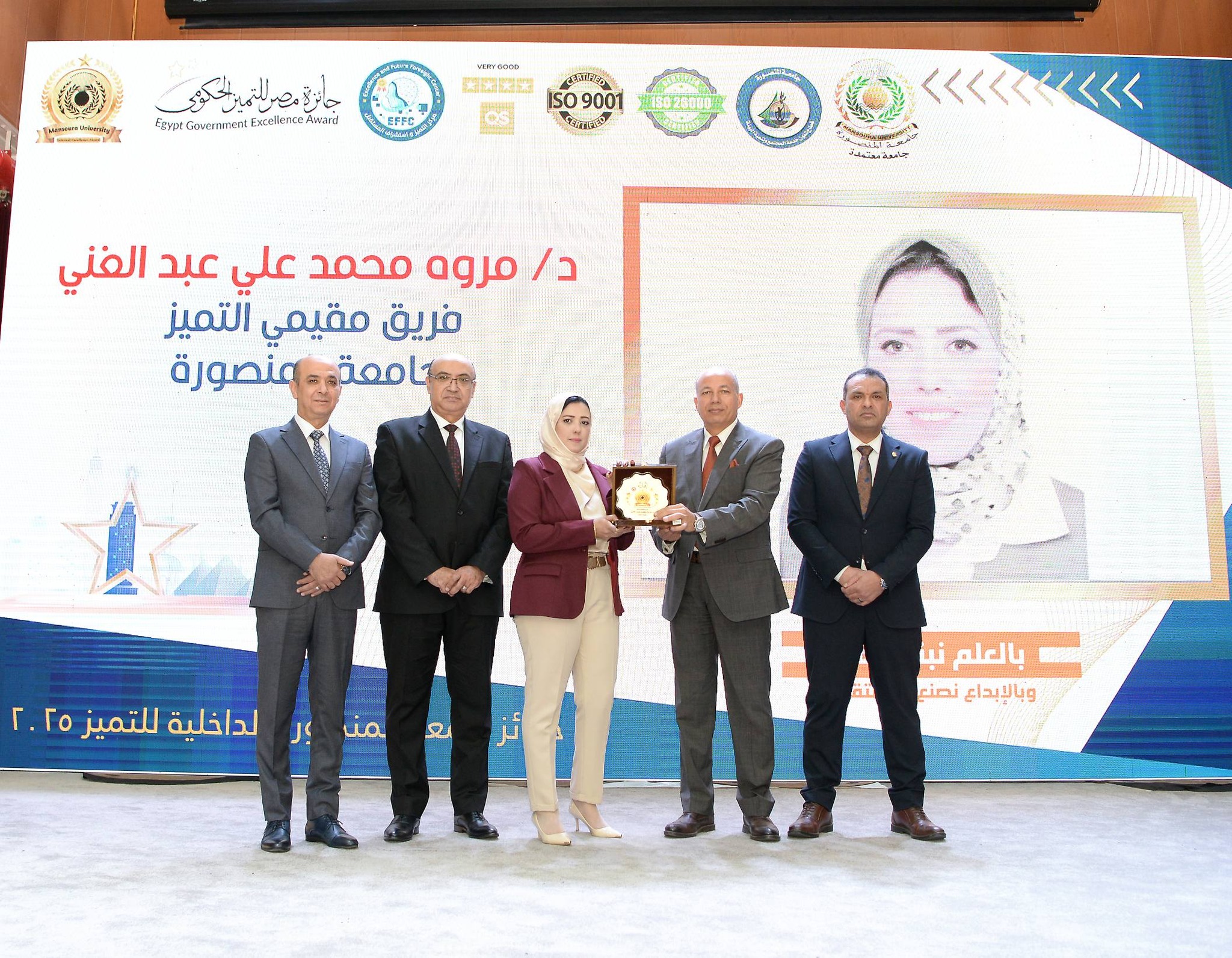
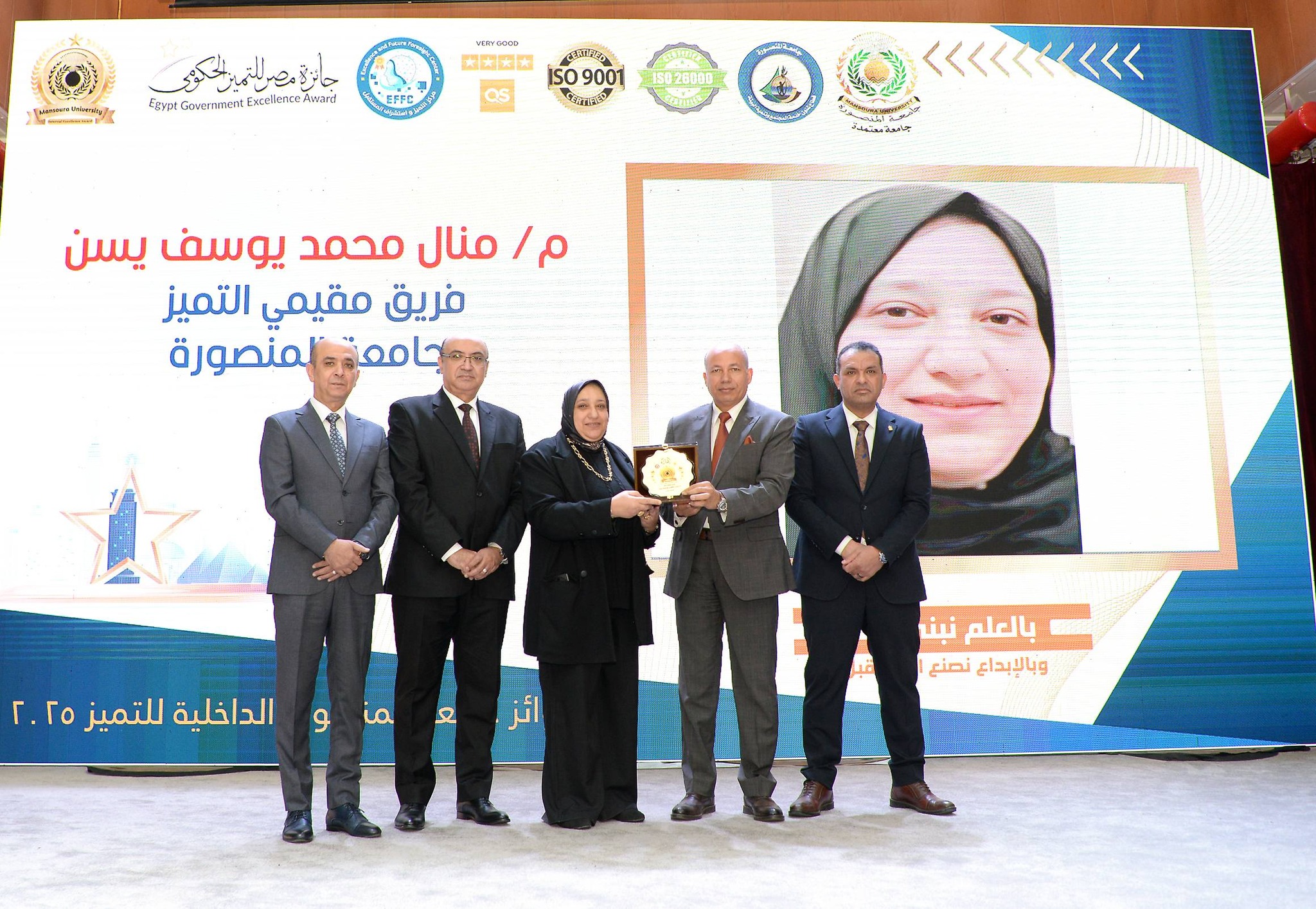
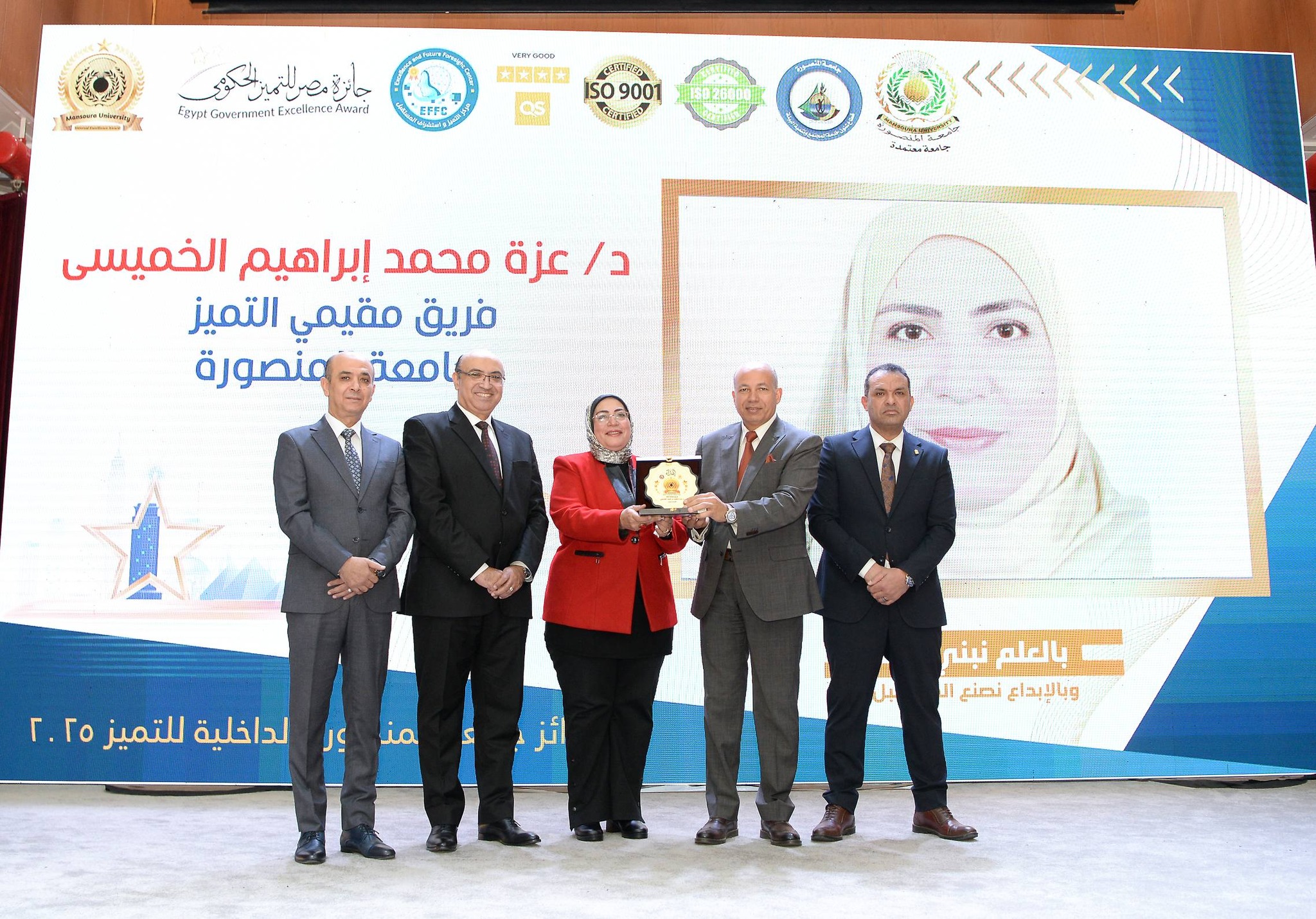
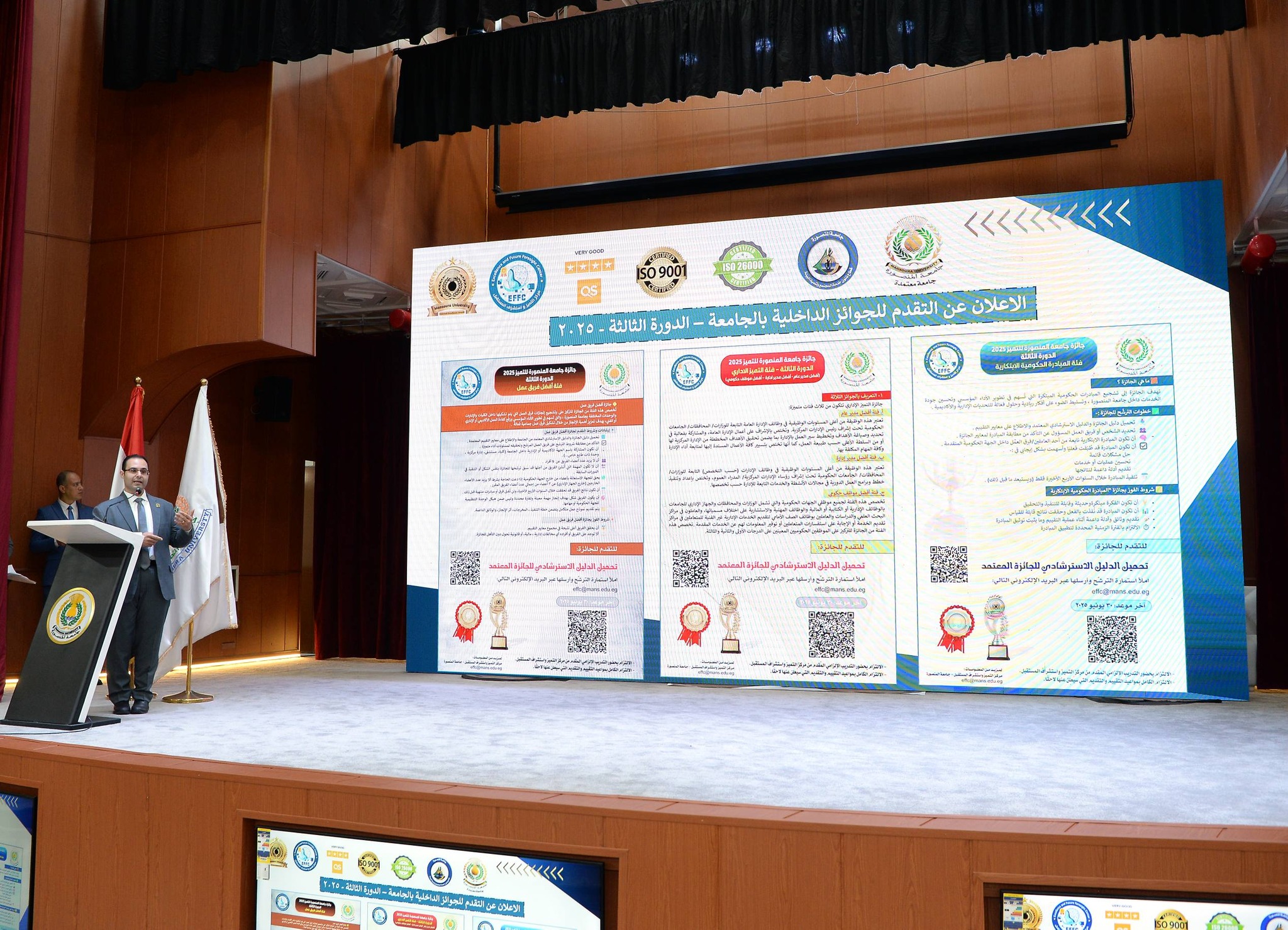
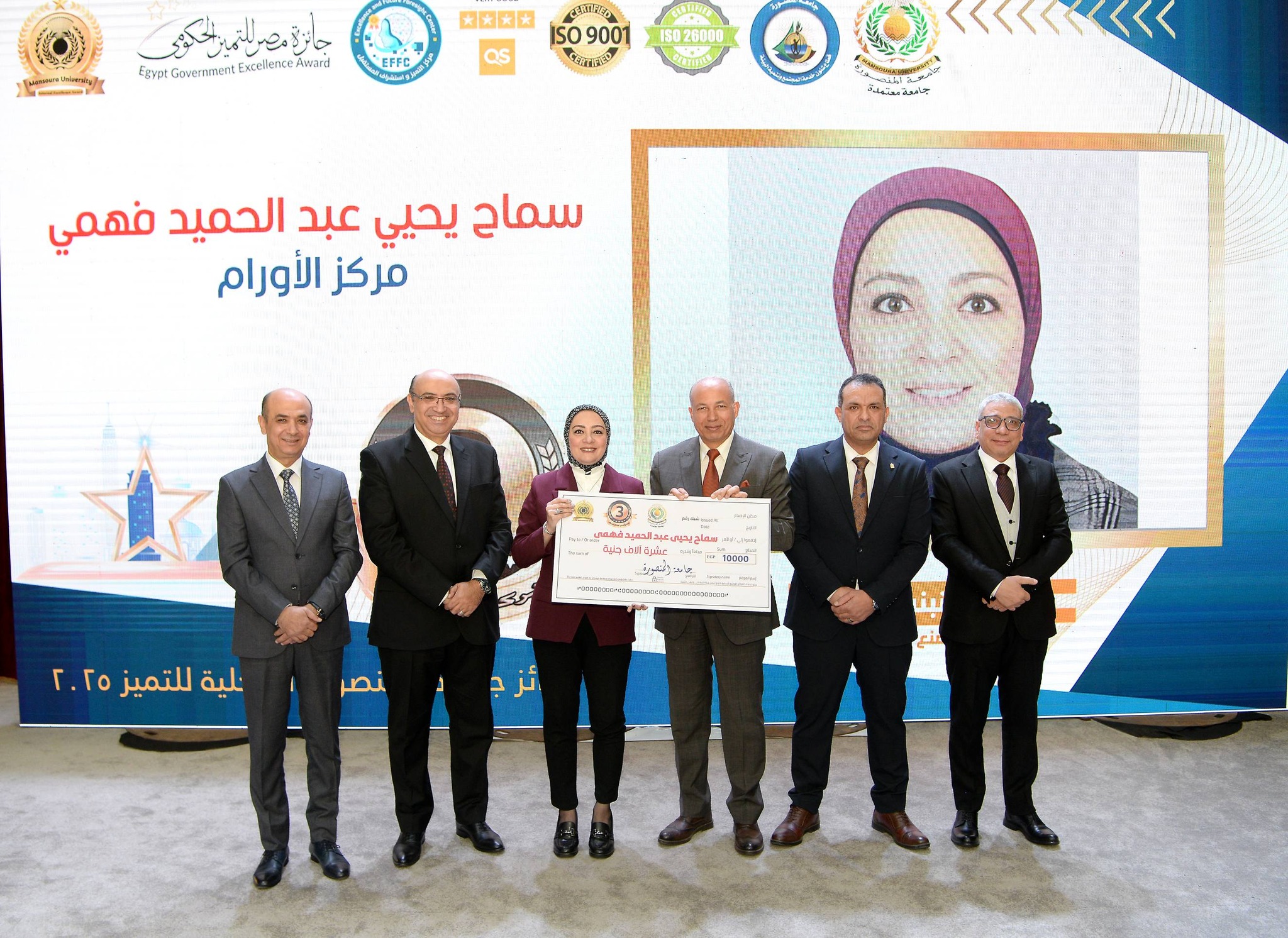
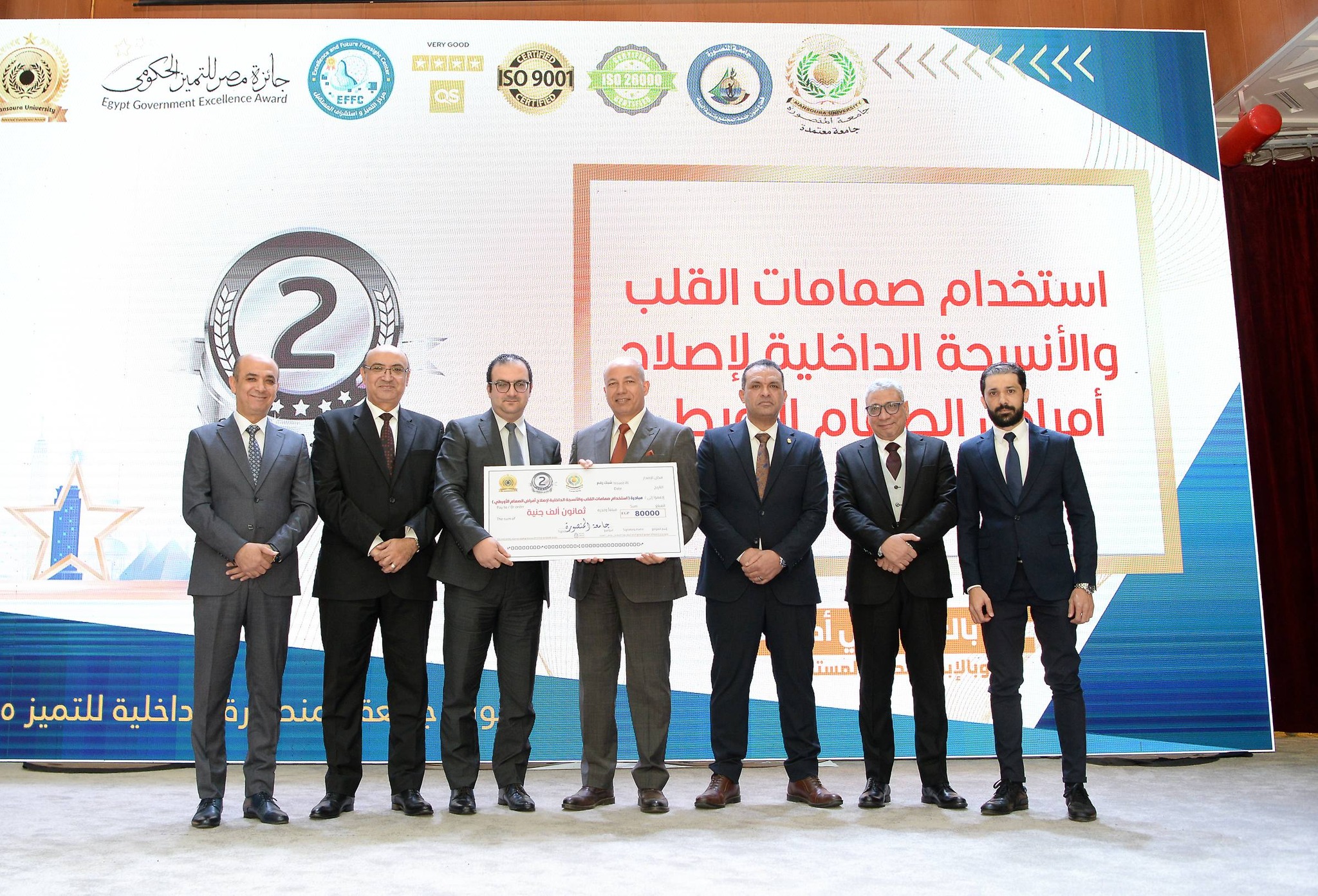
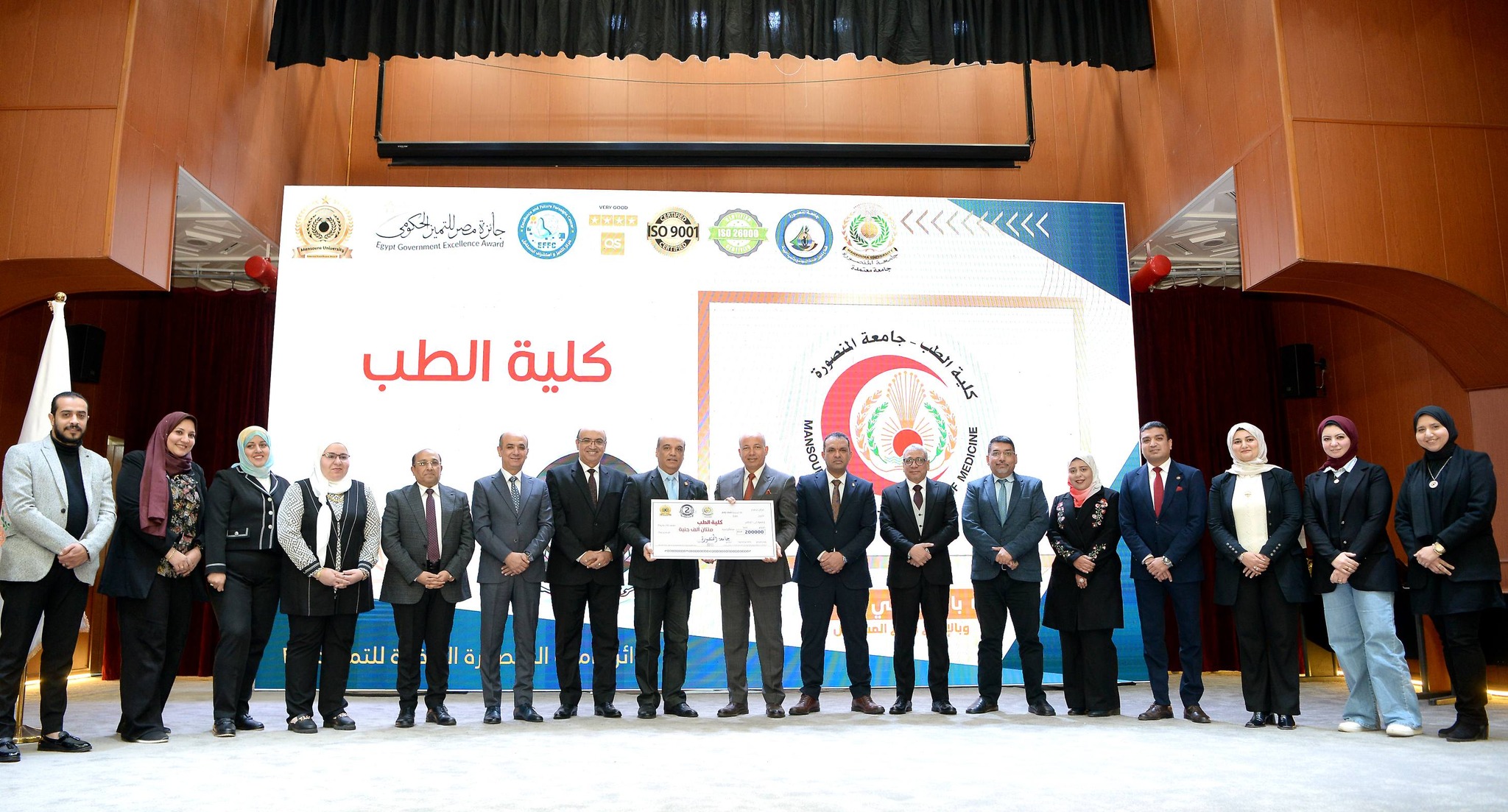
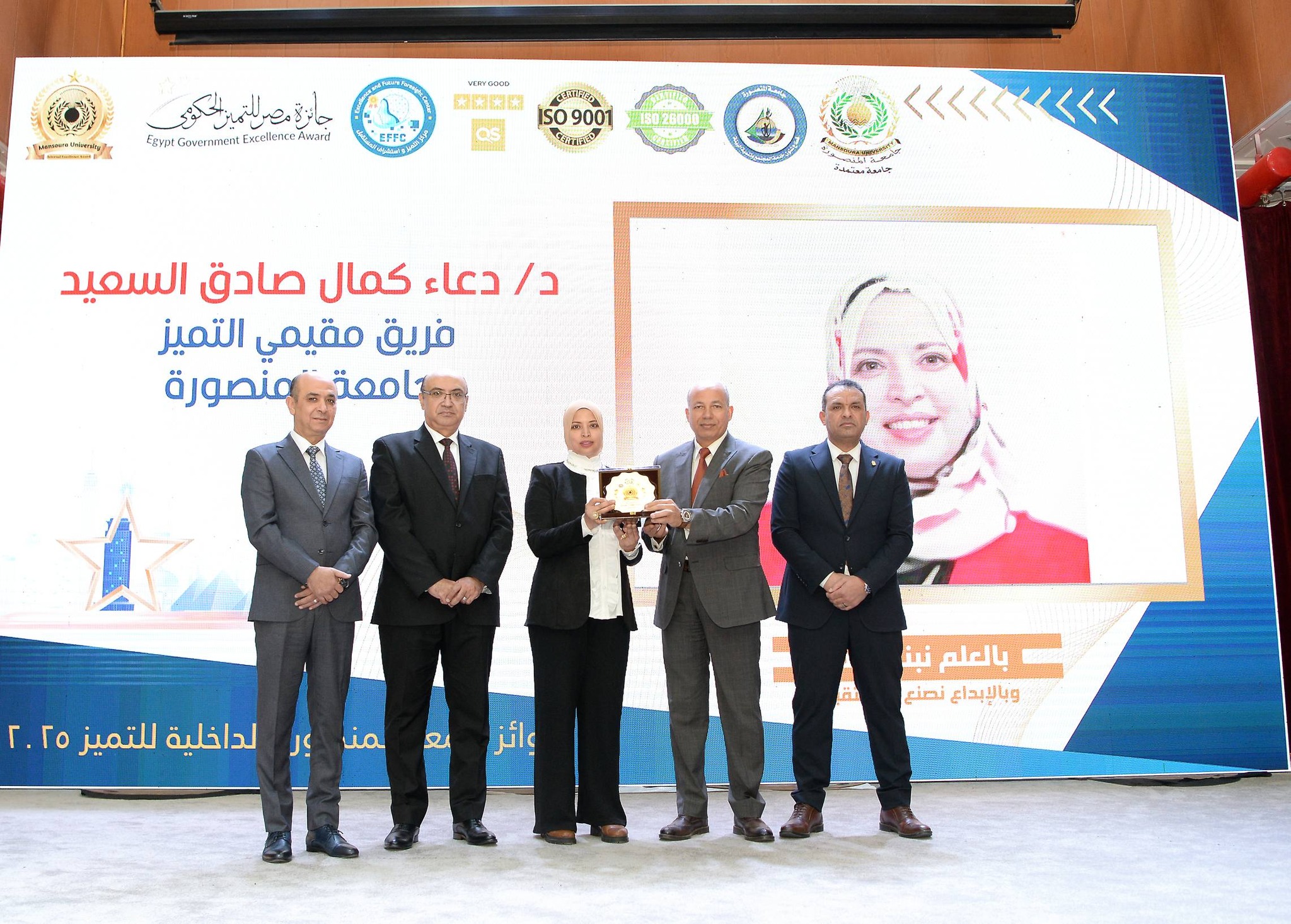
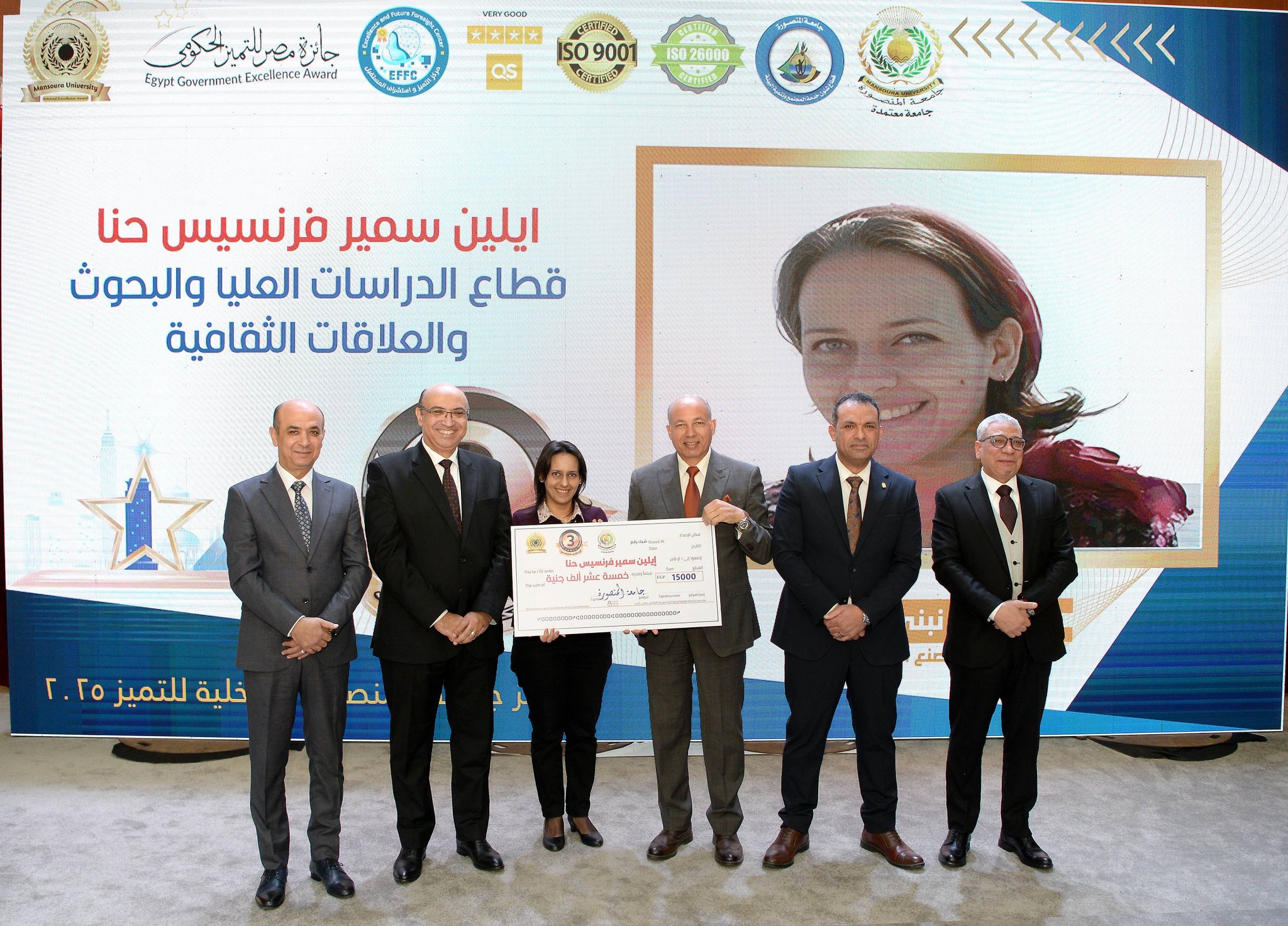
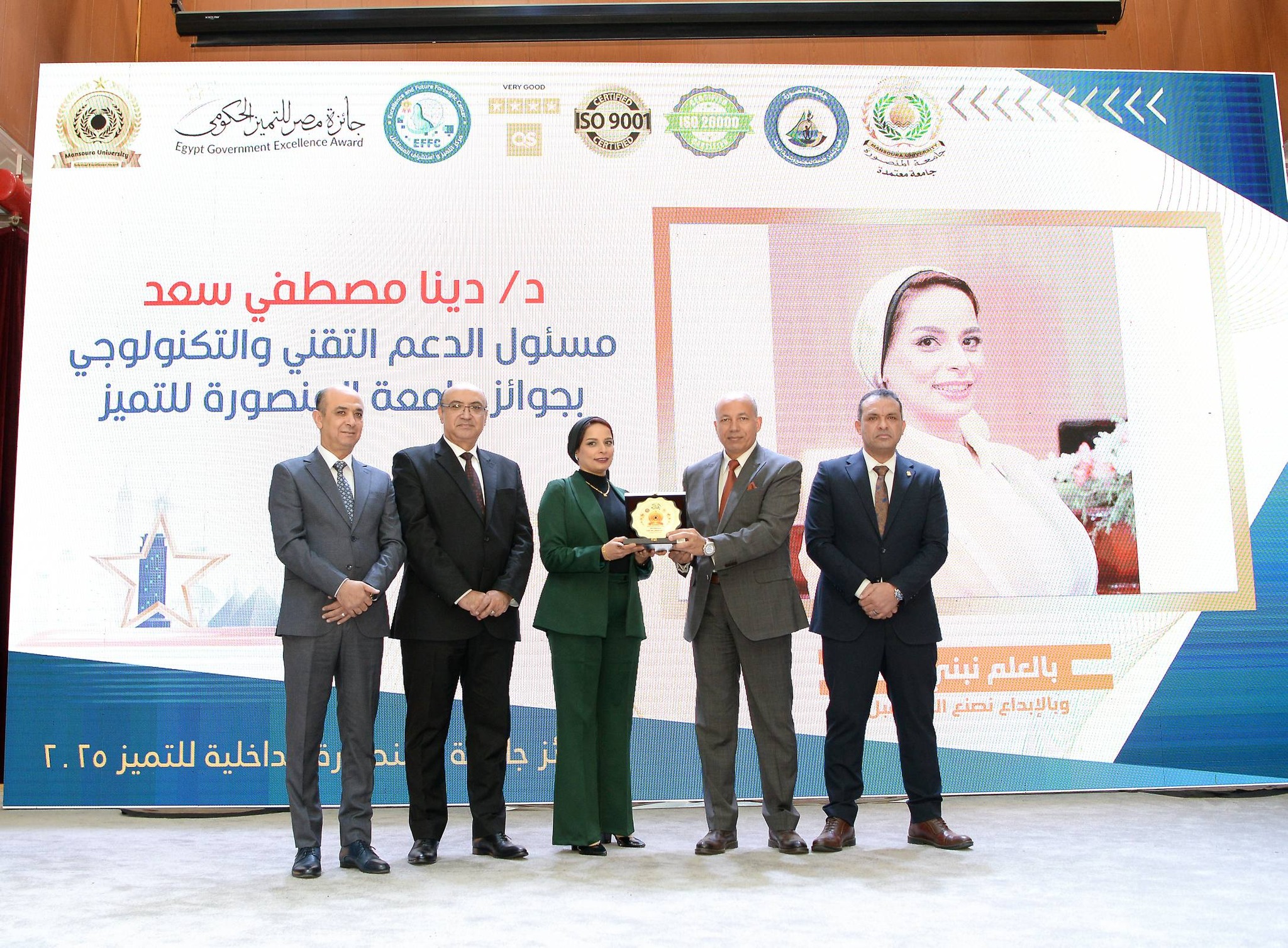
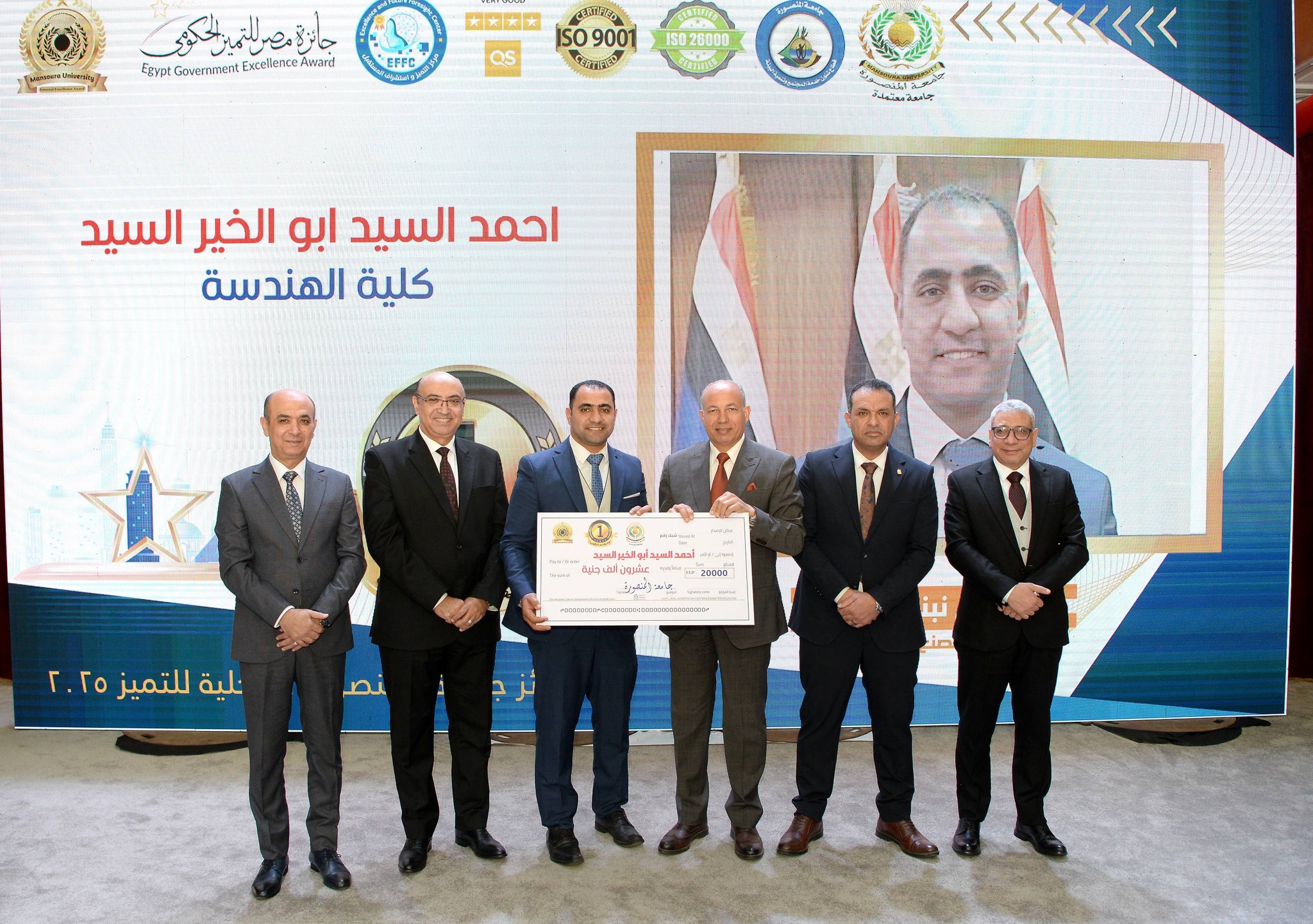
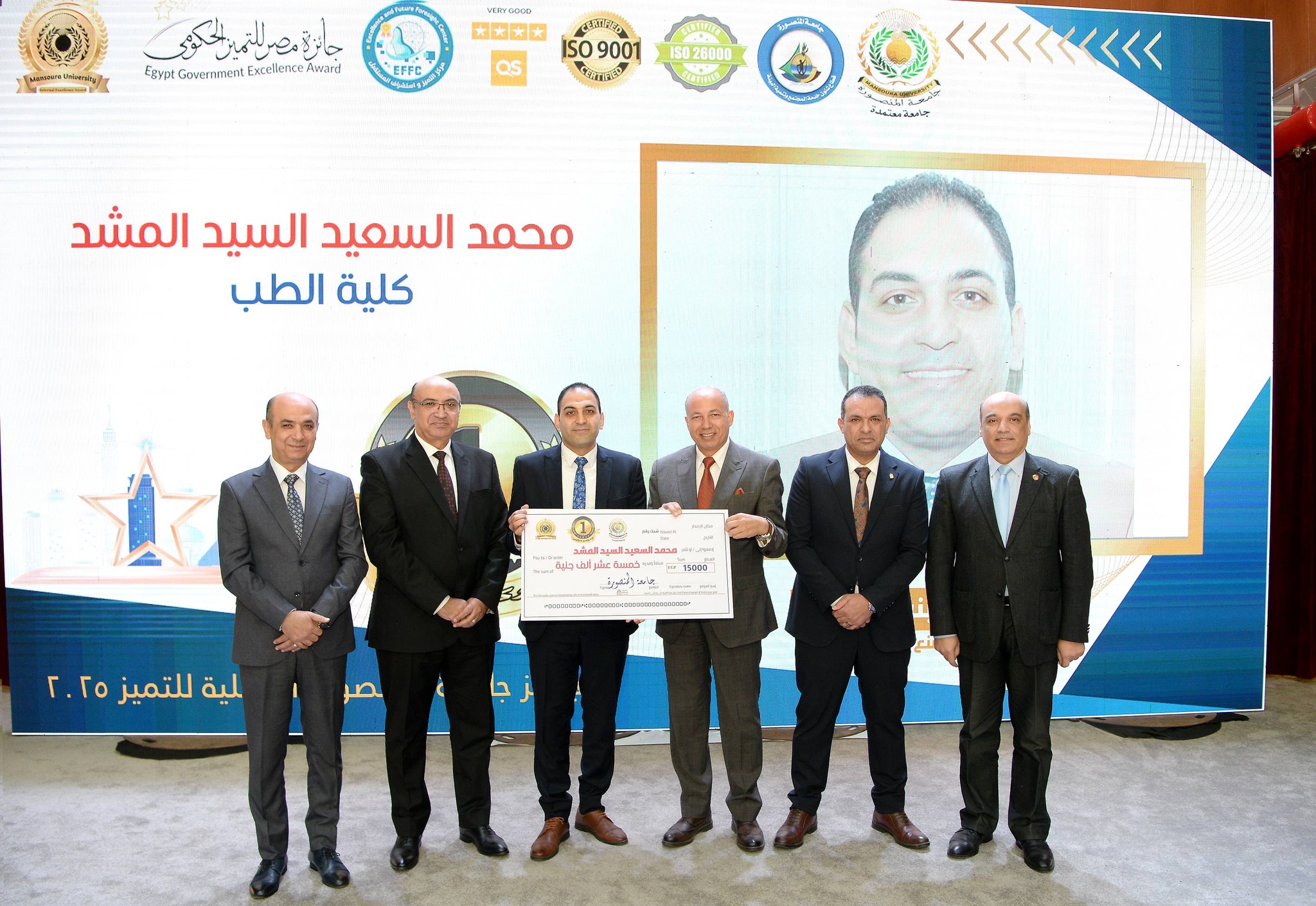
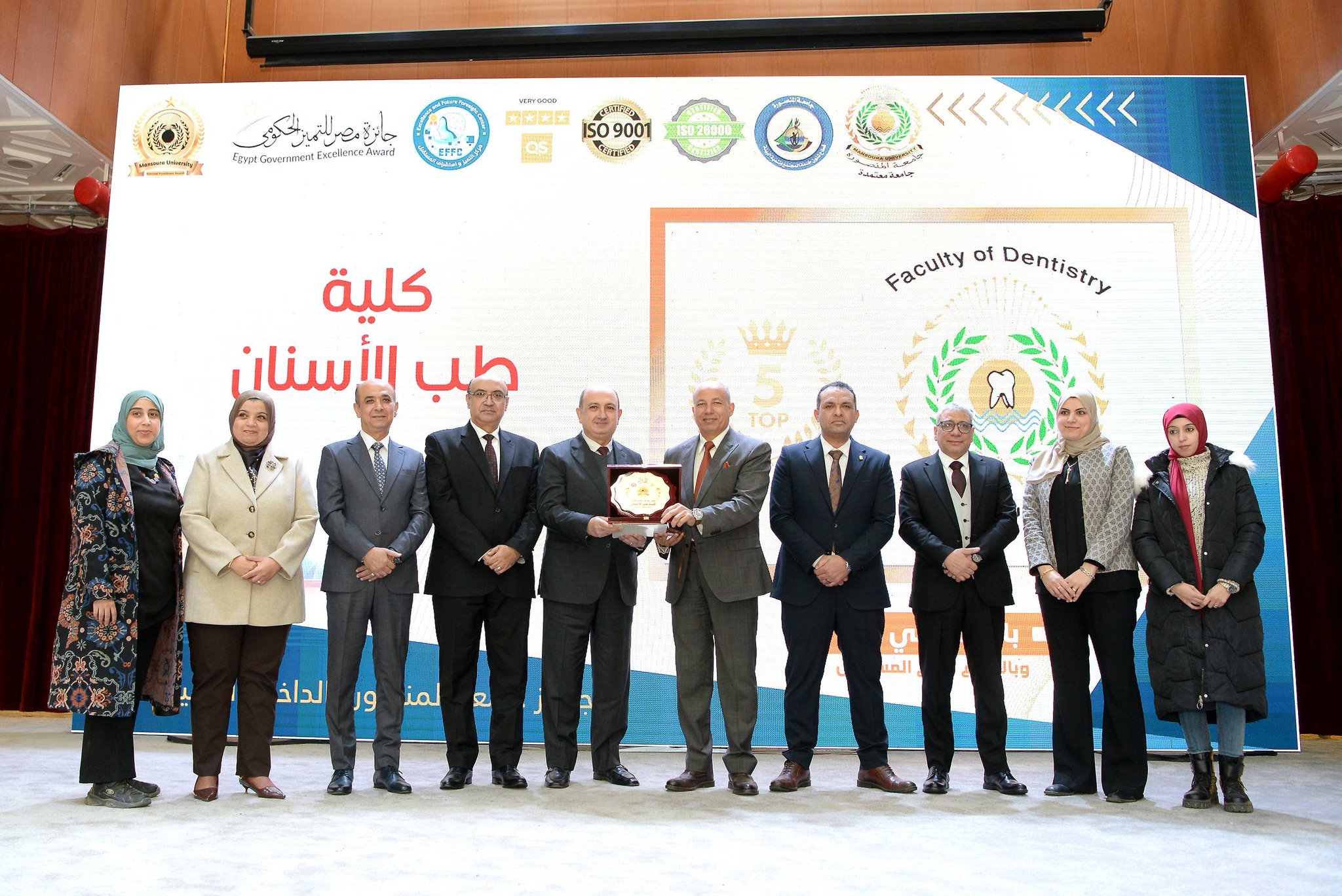
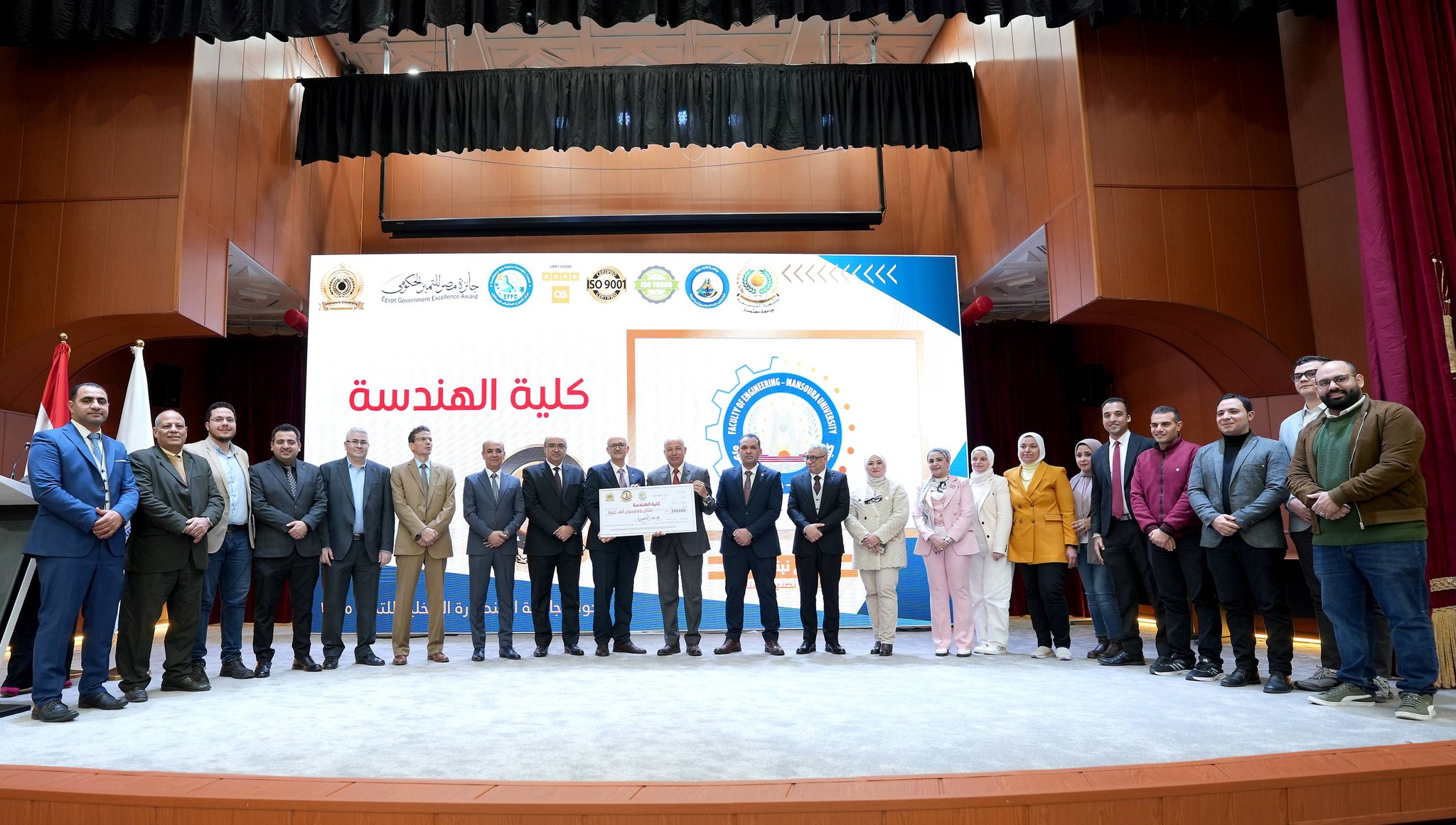
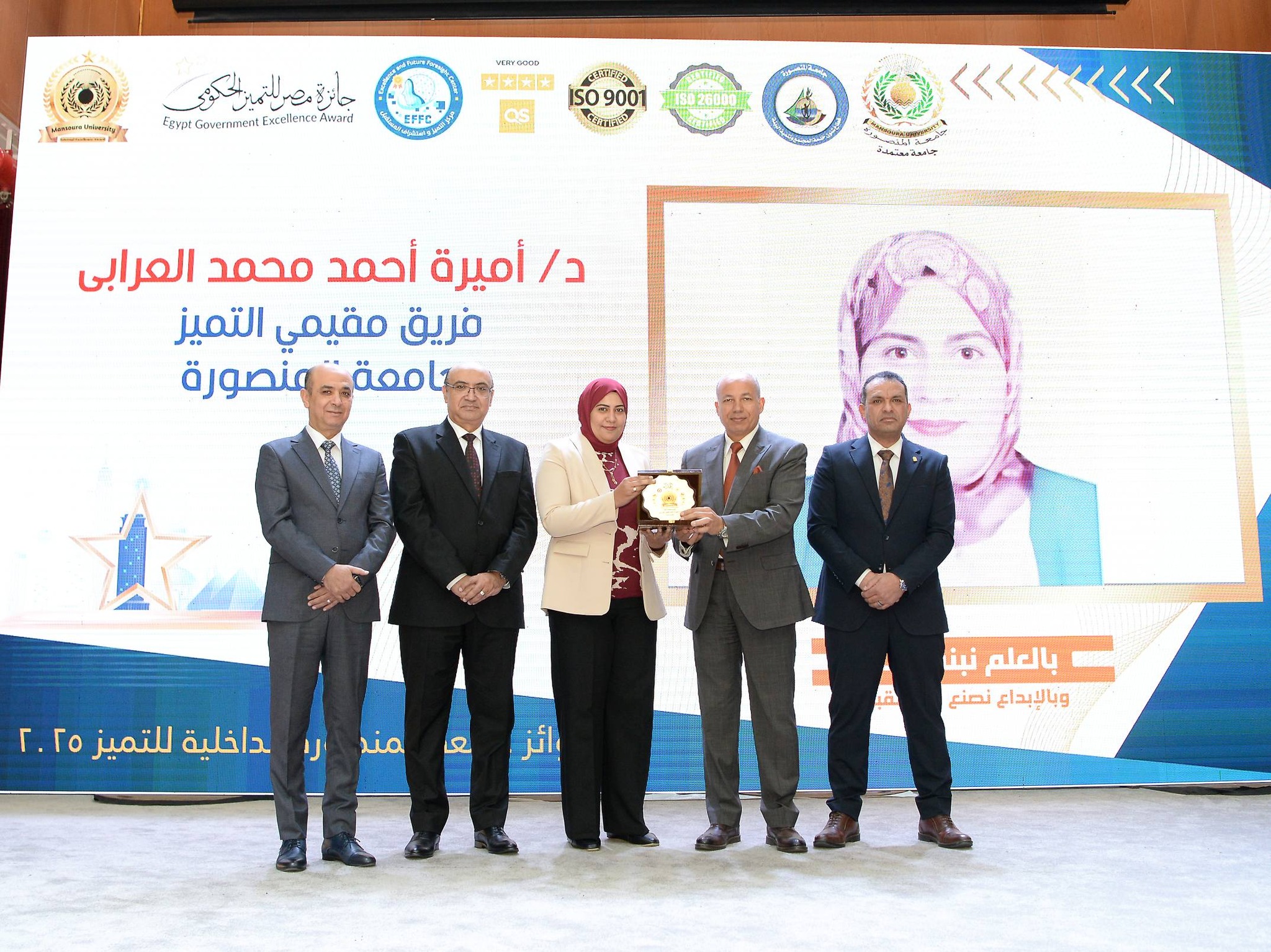
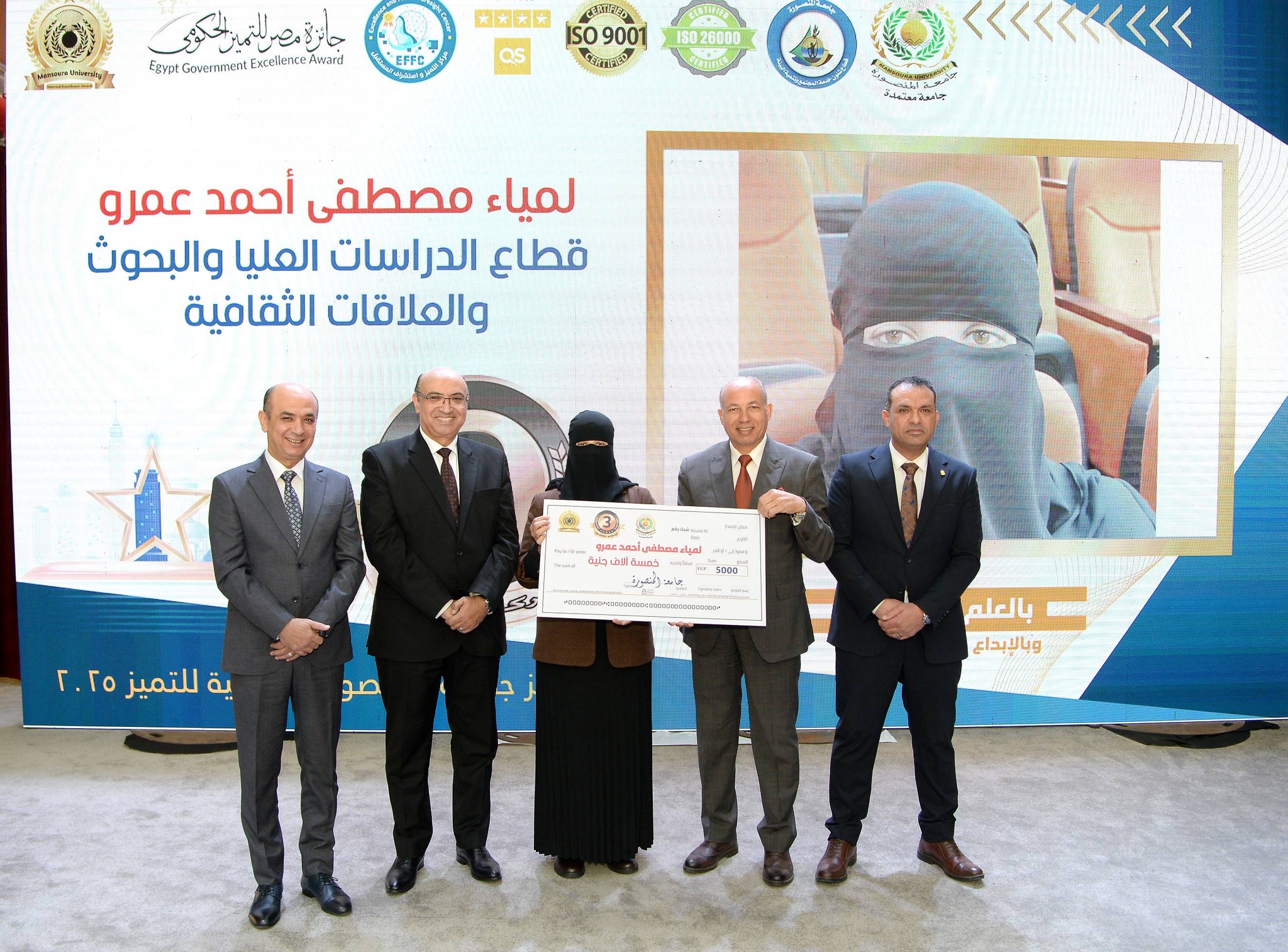
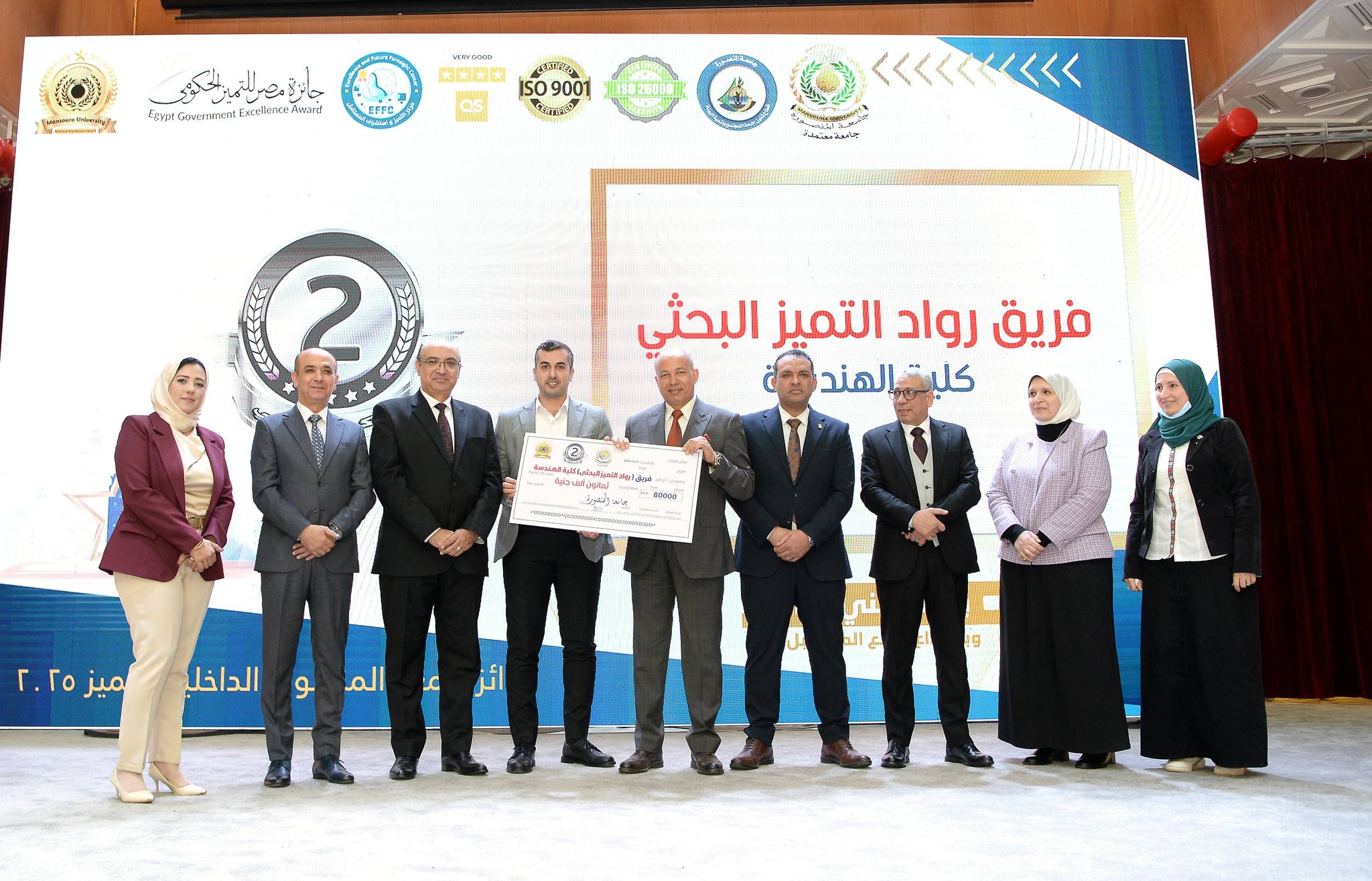
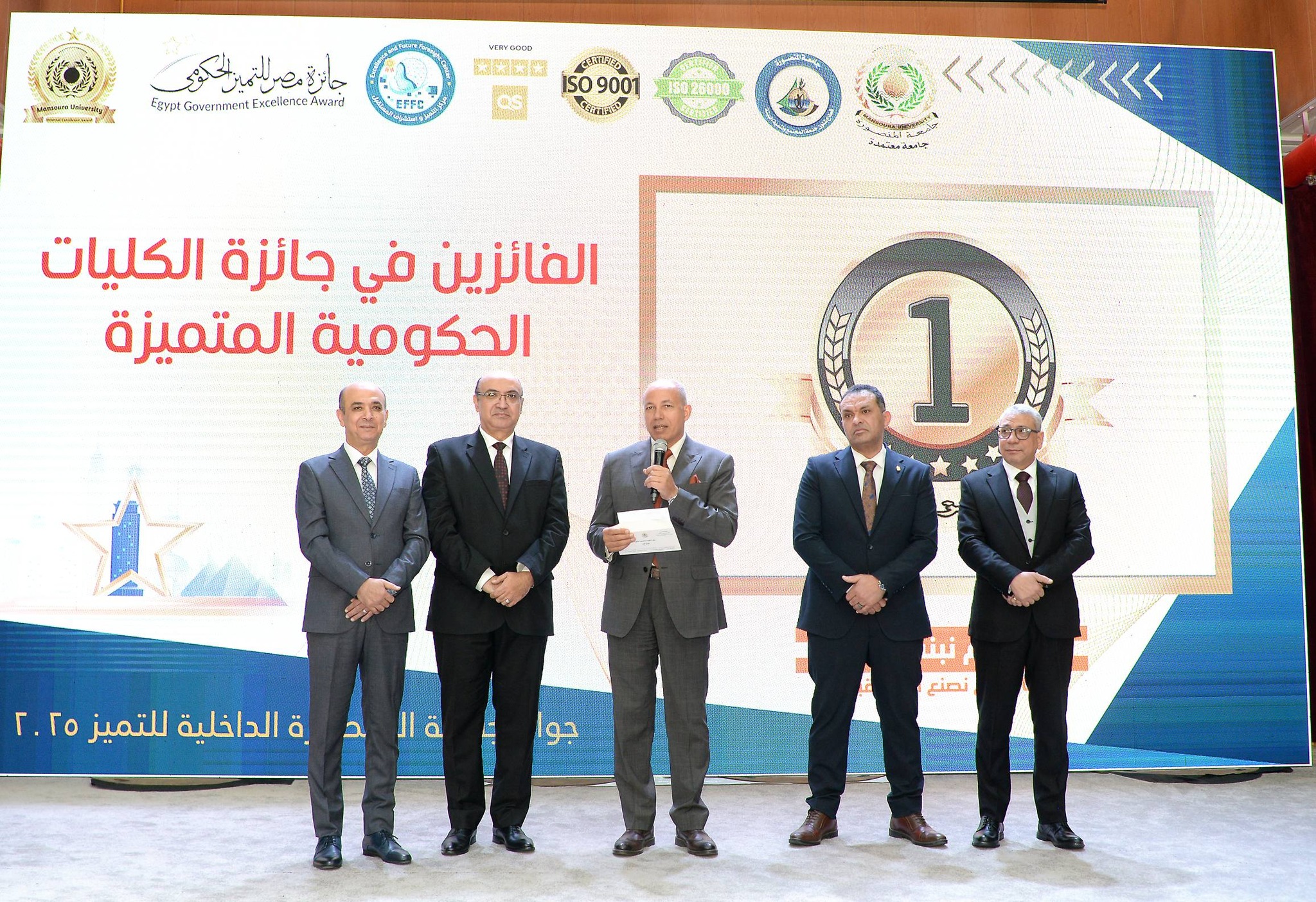
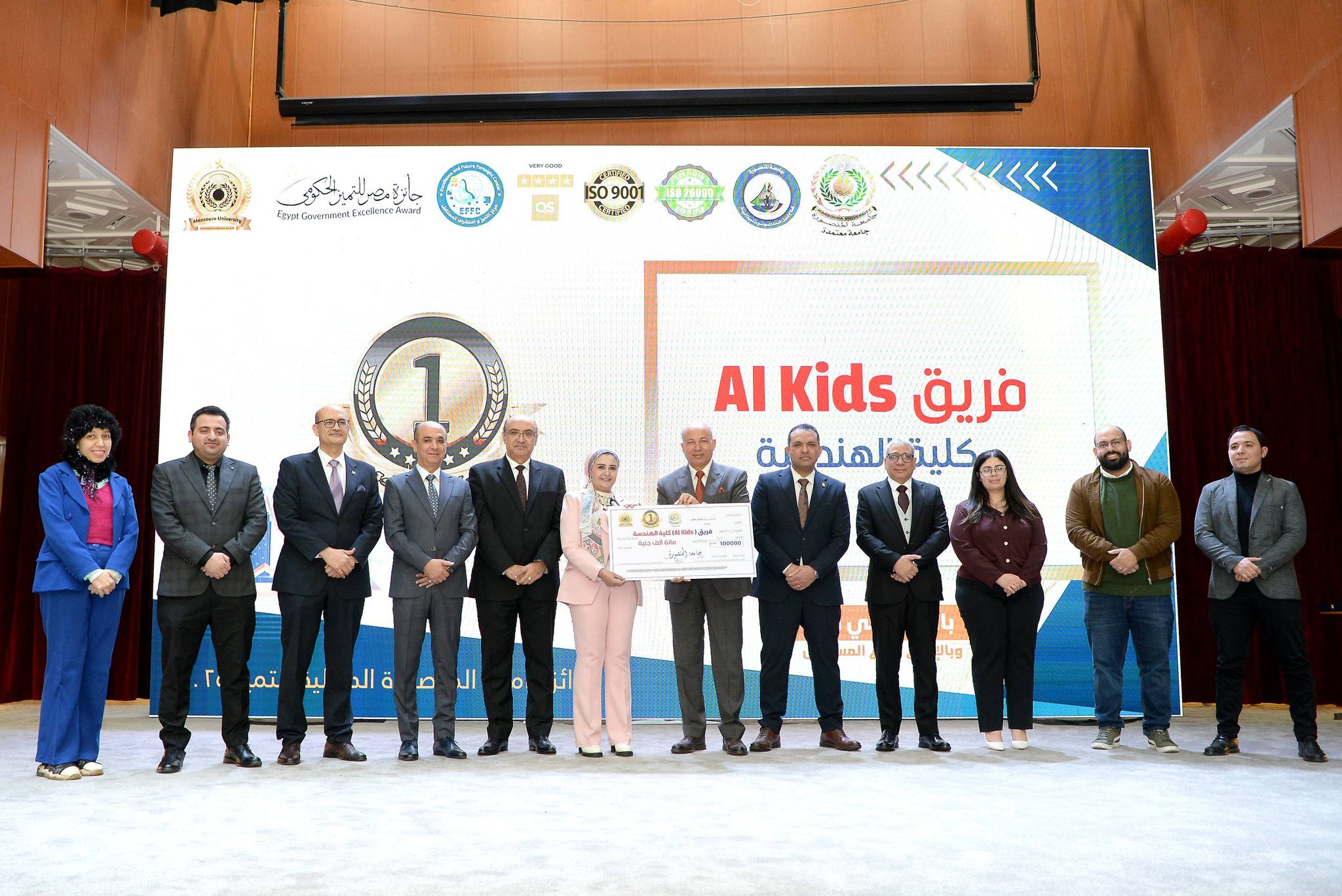
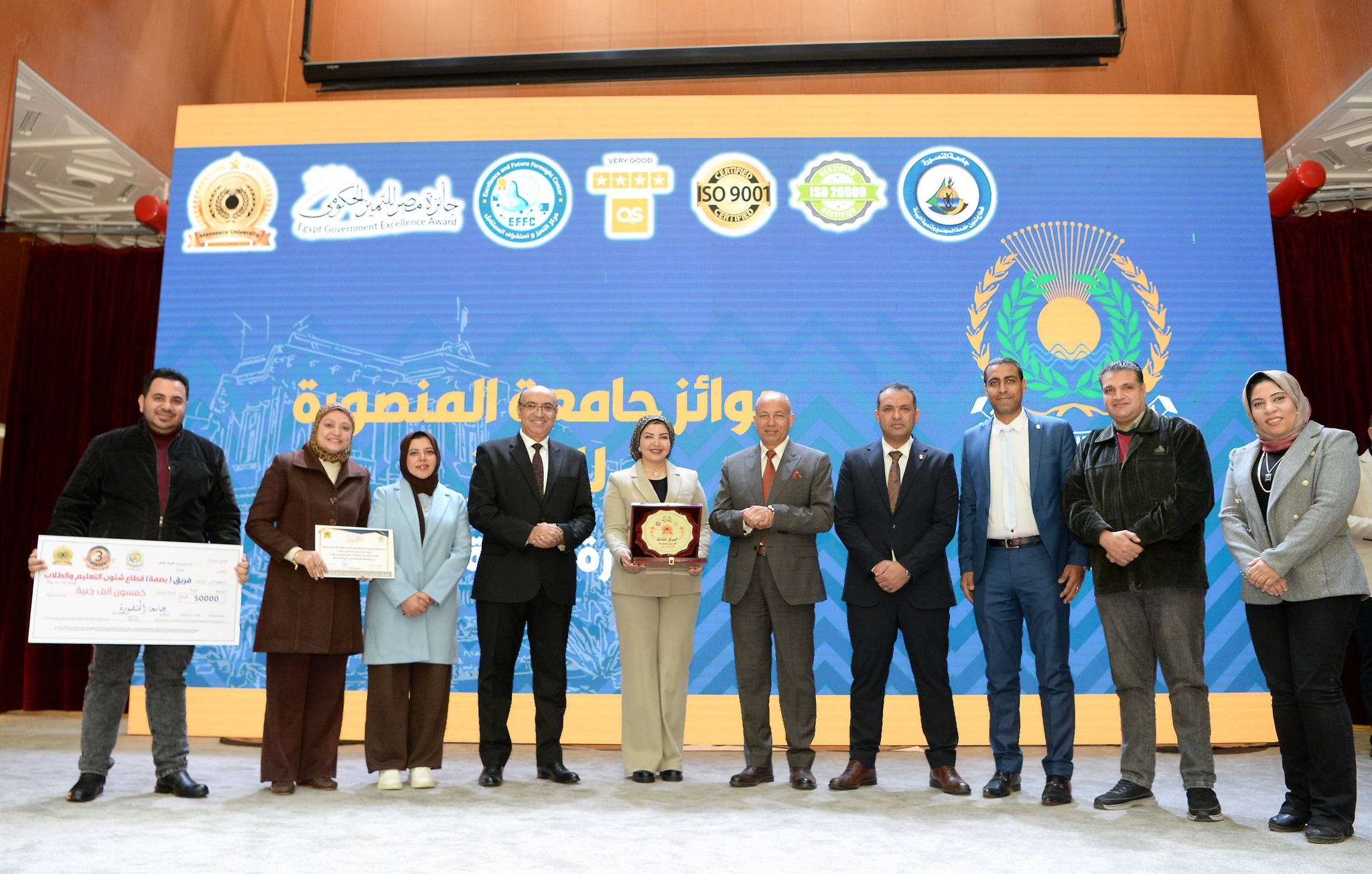
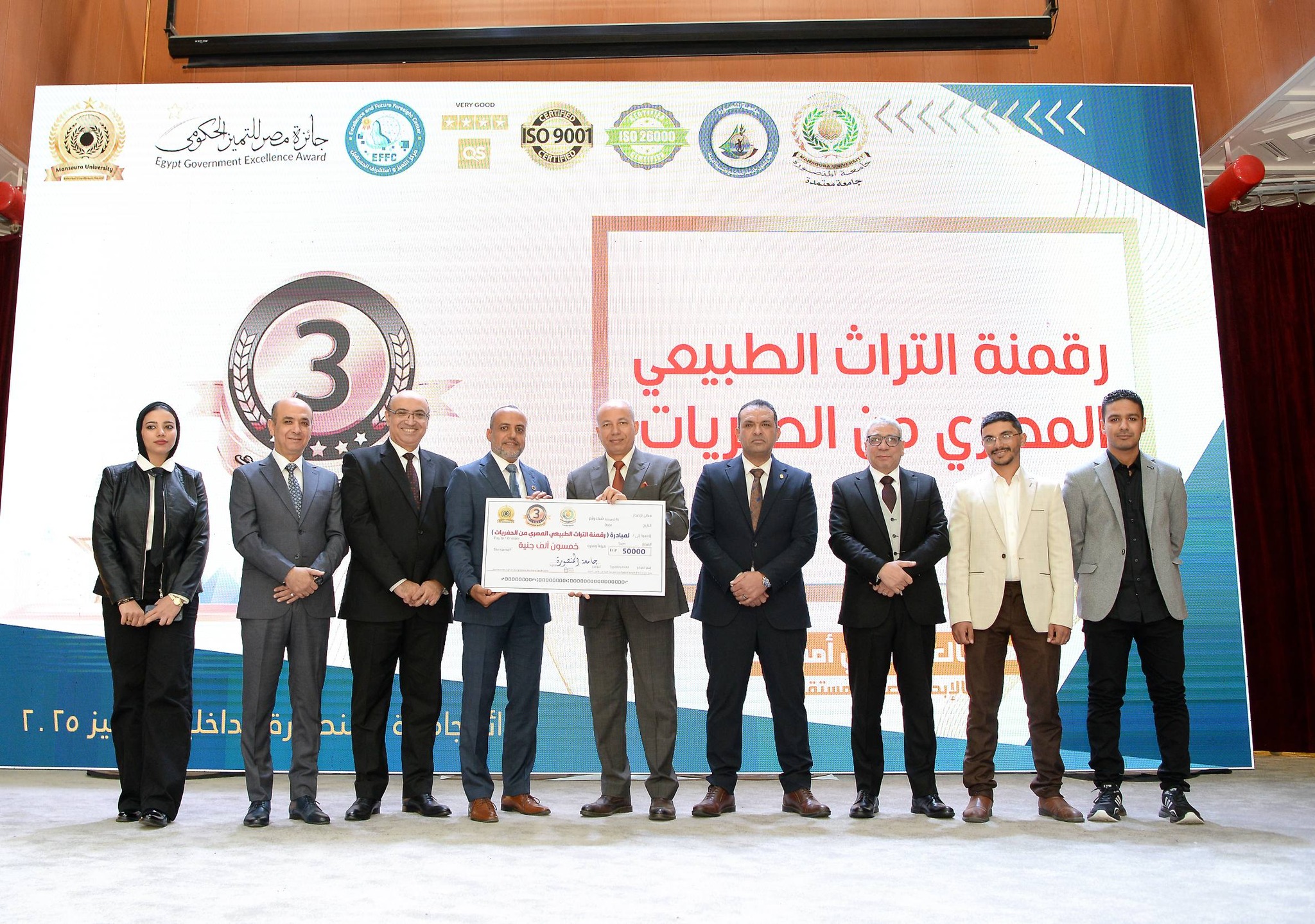
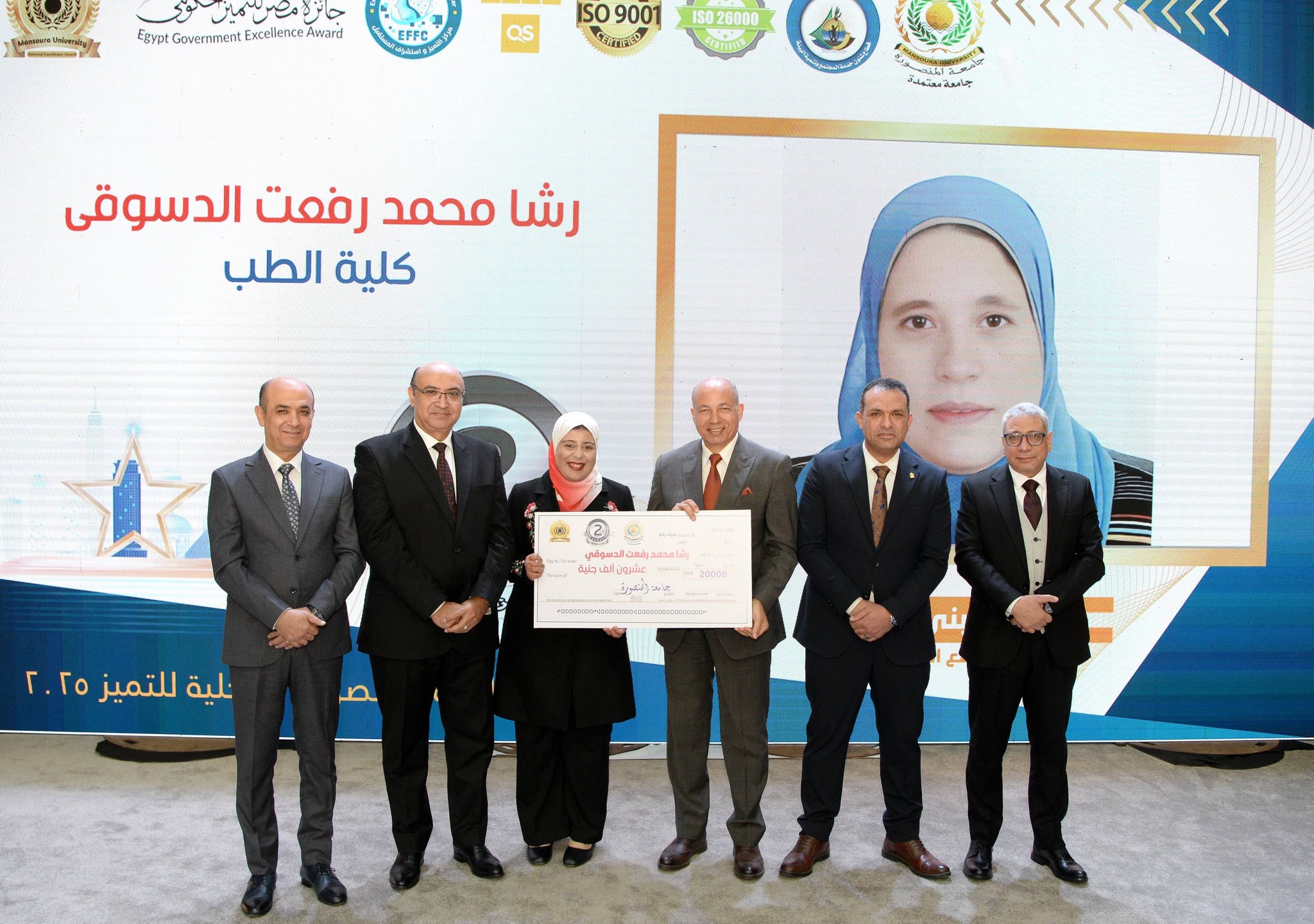
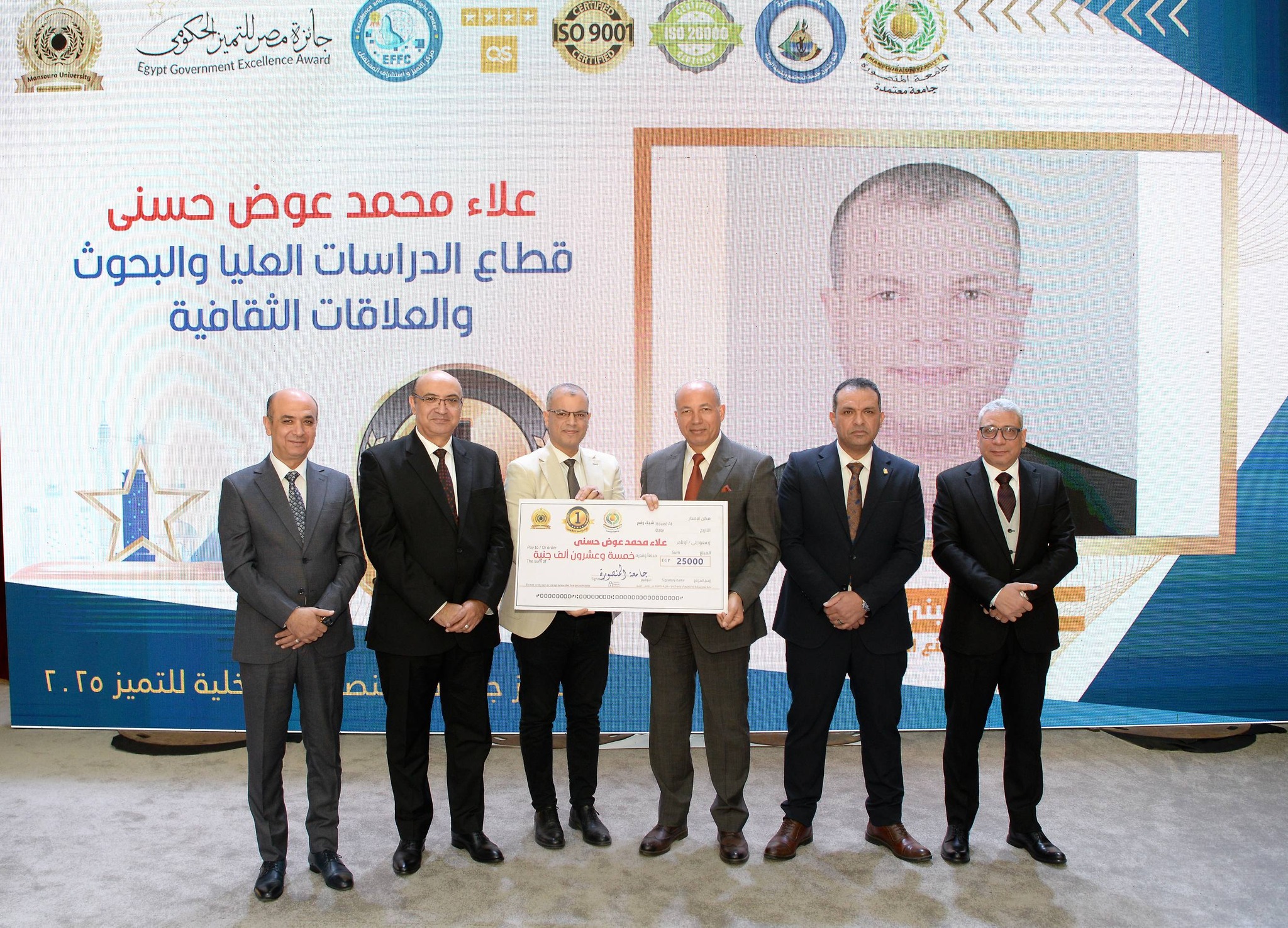
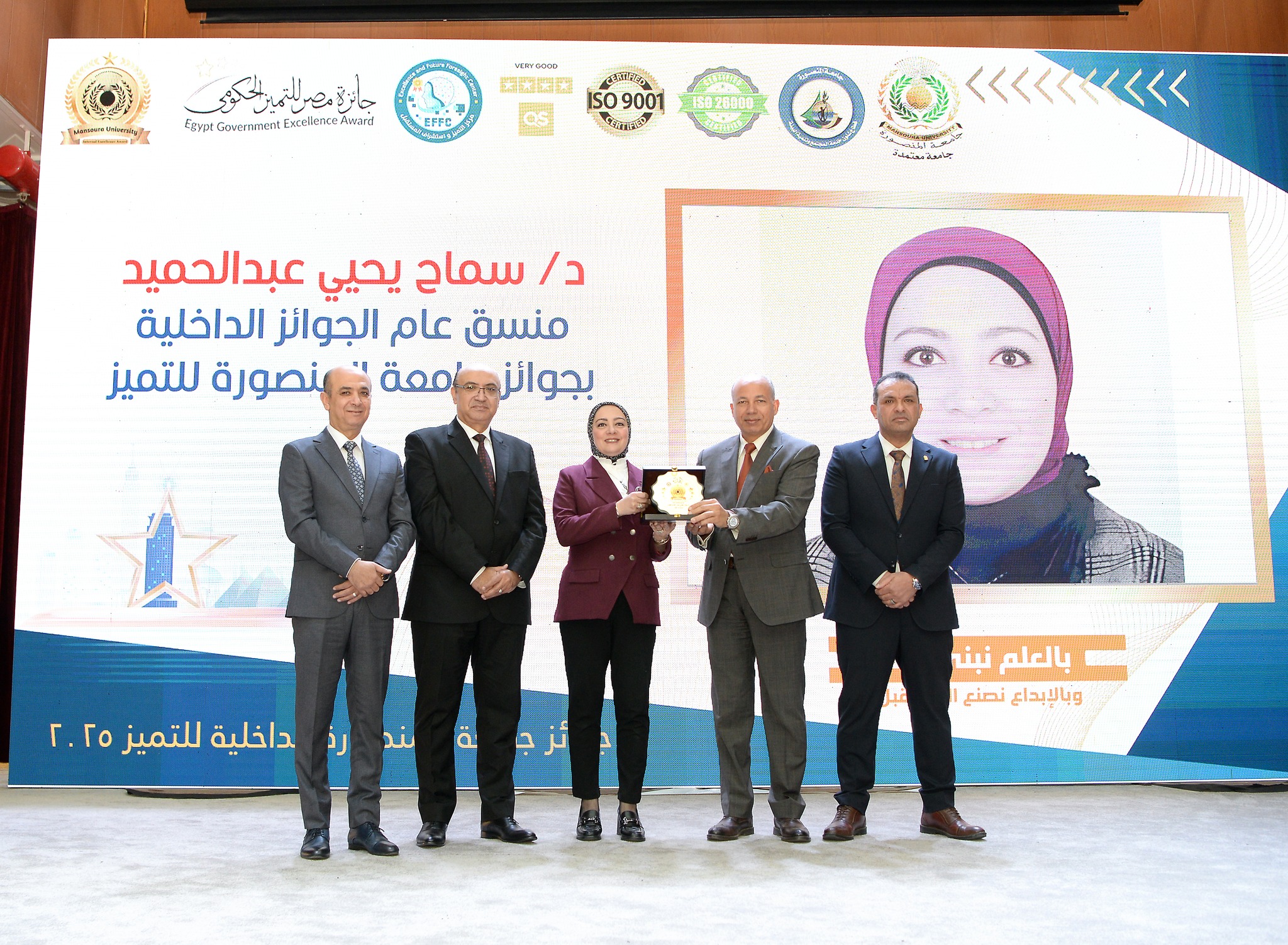
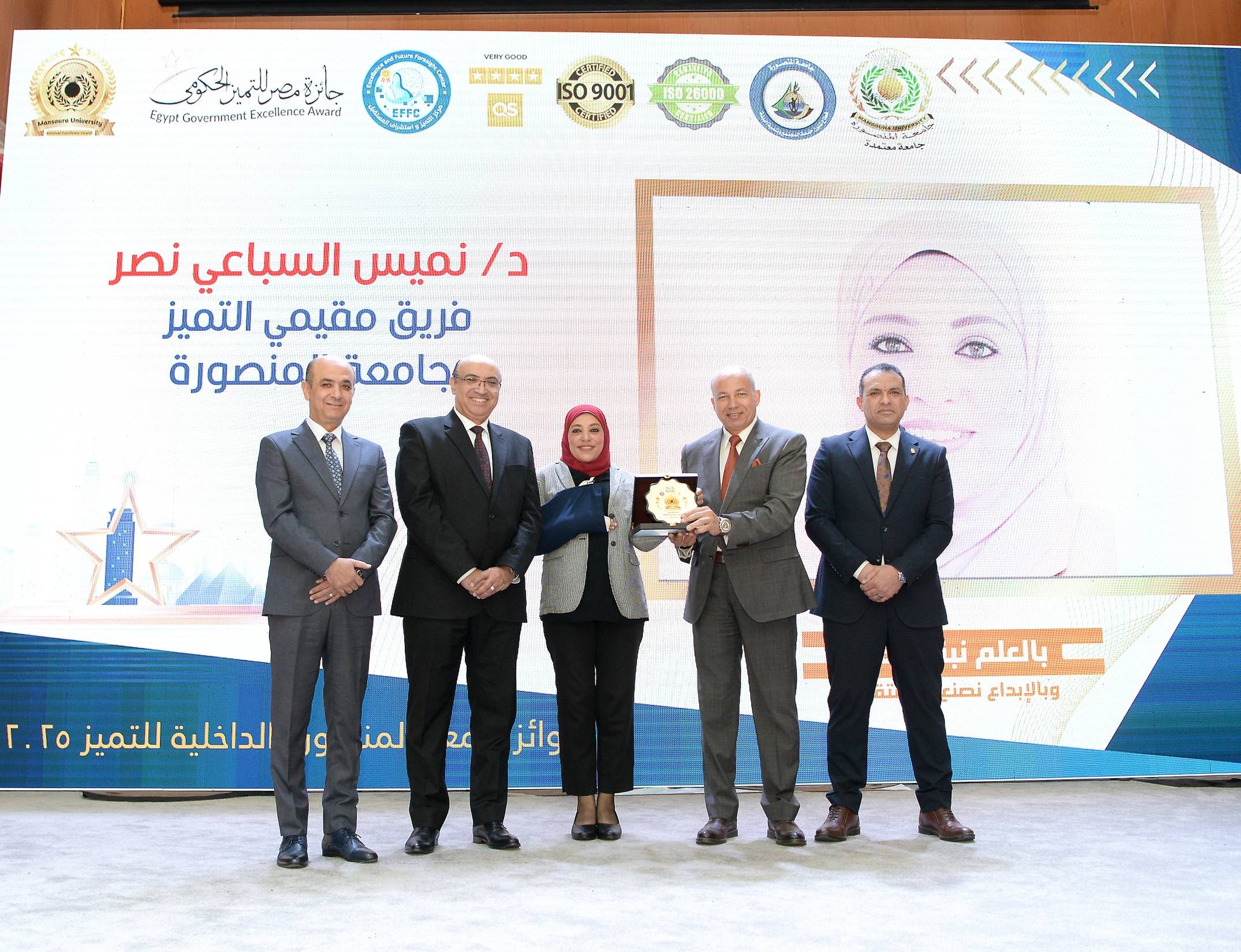
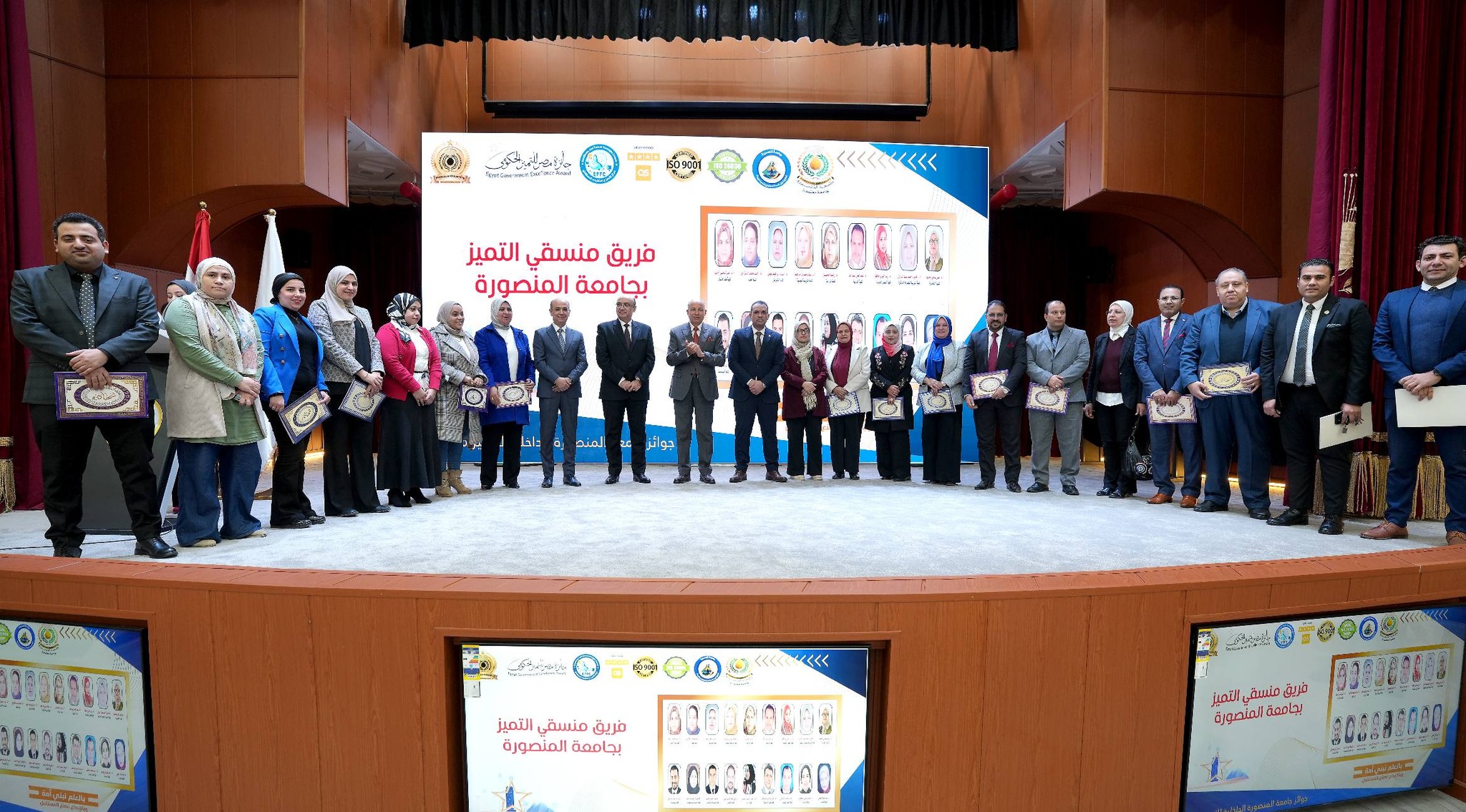
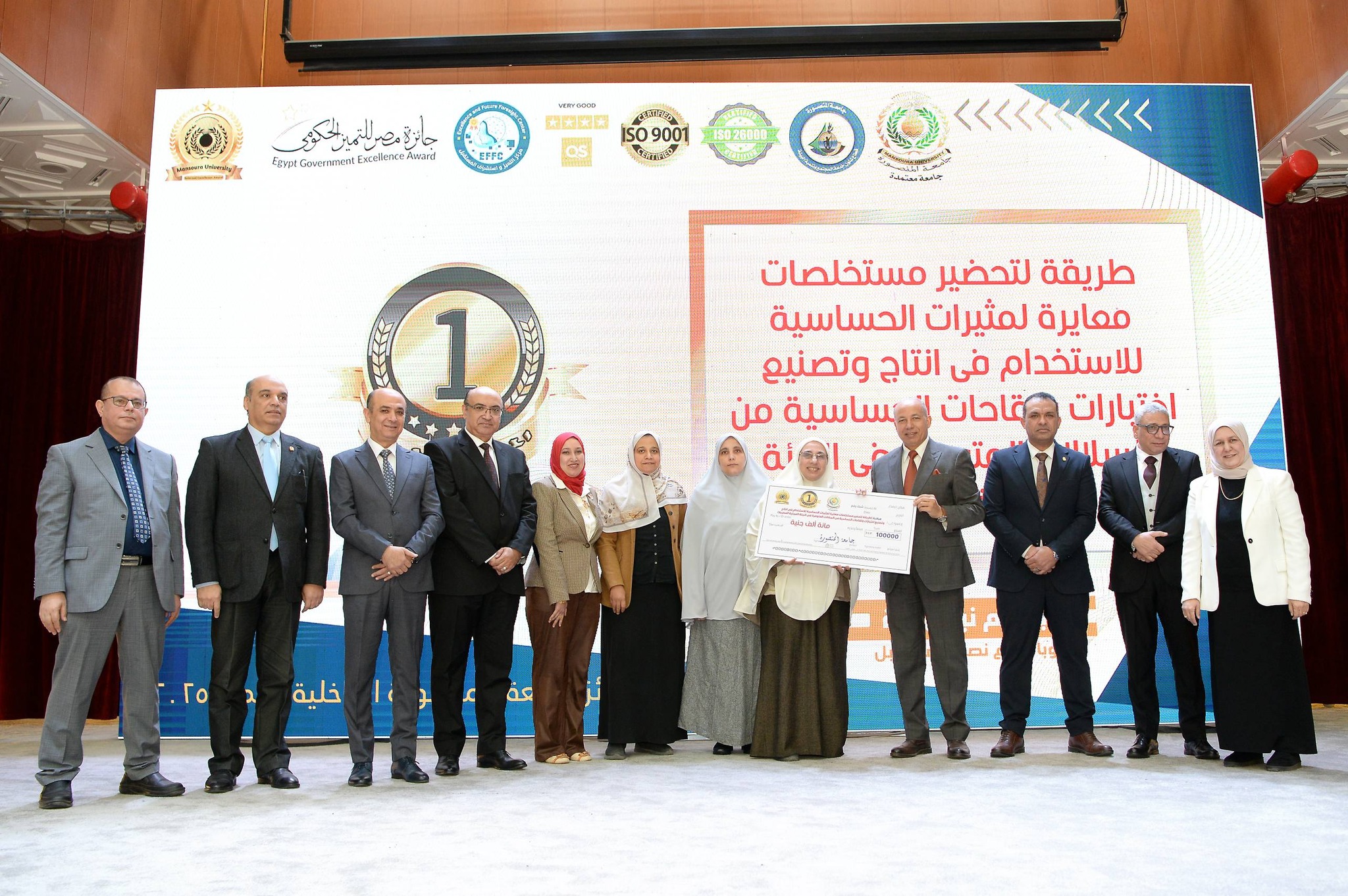
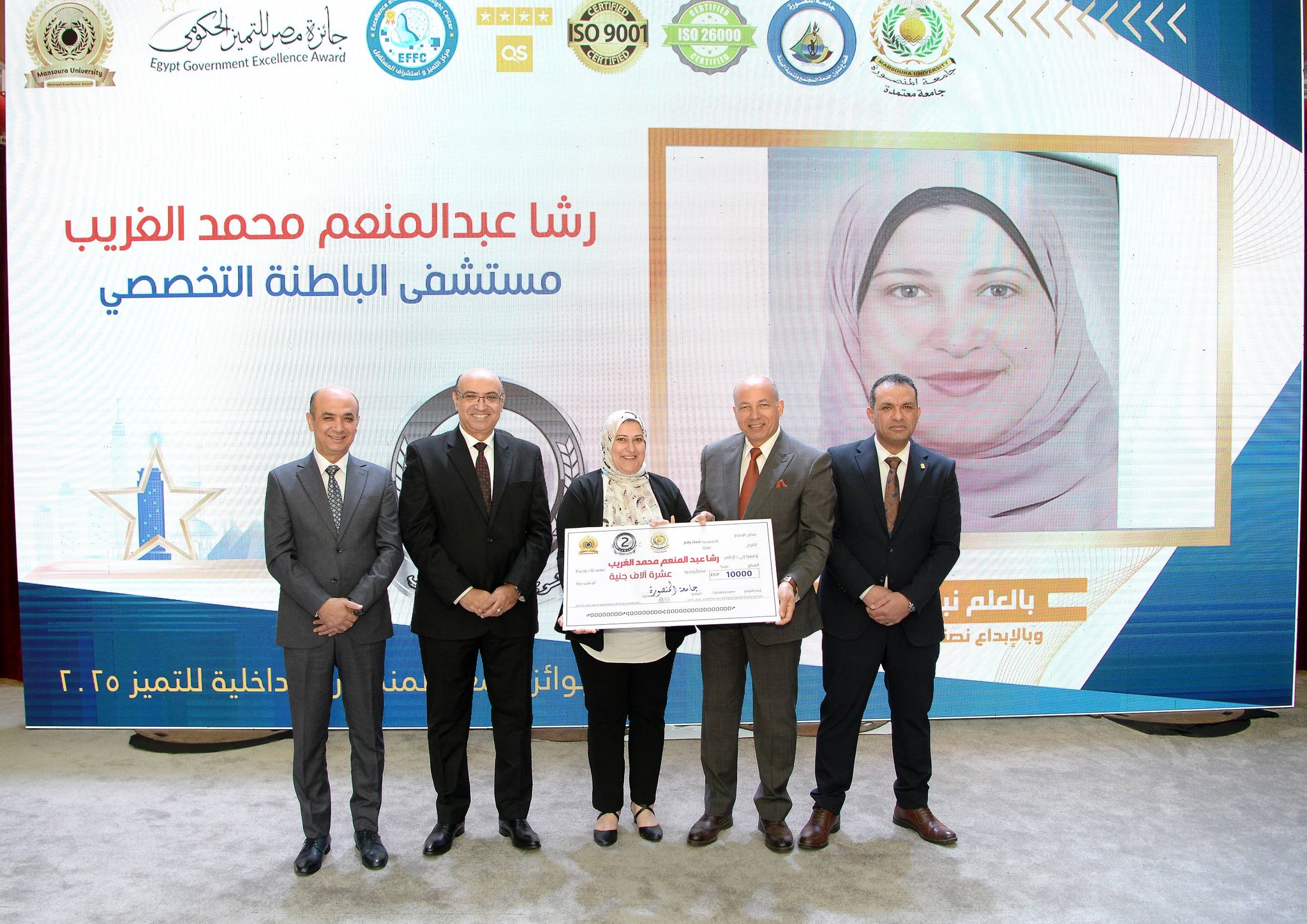
The ceremony also included honoring the Excellence Awards Management Team, excellence coordinators in faculties, and excellence evaluators at the university, as well as announcing the winners of the internal institutional excellence awards in the categories of: Best Government Employee, Best Department Director, Best General Director, Innovative Government Initiative, Best Government Work Team, and Distinguished Government Faculties.

View the embedded image gallery online at:
https://env.mans.edu.eg/en/news/current-news/5567-the-institutional-excellence-awards-ceremony-third-cycle-2025-monday-12#sigProIde58740d29e
https://env.mans.edu.eg/en/news/current-news/5567-the-institutional-excellence-awards-ceremony-third-cycle-2025-monday-12#sigProIde58740d29e